

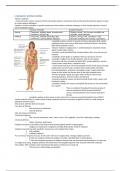
LYMPHATIC SYSTEM NOTES
LYMPHATIC SYSTEM NOTES -Disease resistance - Innate immunity- passive, present at birth and includes defense mechanisms that provide general protection against invasion by a wide range of pathogens -Adaptive- involves activation of specific lymphocytes that combat a particular pathogen or other foreign substance (carried out by lymphatic system) Passive Immunity Active Immunity Natural Temporary, antibody based, transplacental, colostrum, milk IgG, IgA Lifetime, strong T cell, increase morbidity and mortality, actual infections Artificial Temporary, antibody based (IgG, IgM), antivenoms, gamma-globulin injections Lifetime, strong B cells, sometimes T cells, decrease morbidity and mortality, vaccinations -Lymphatic system- consists of several structures and organs that contain lymphatic tissue, bone marrow (flat bones and head of femur), and lymph fluid within lymphatic vessels -Disease resistance- phagocytosis, T and B lymphocyte, lymphatic vessels, spleen, lymph nodes, thymus -Functions- drain interstitial fluid, transport dietary fats, carry out immune response -Lymphatic vessels begin as capillaries which are closed on one end -Lymphatic capillaries are located between cells of many tissues -Formation and flow of lymph-interstitial fluid lymph capillaries vessels lymph trunks lymph ducts subclavian veins - Lymph trunks and ducts- from the lymphatic vessels, lymph passes through lymph nodes and into trunks. Lymph trunks include lumbar, intestinal, bronchiomediastinal, subclavian, and jugular trunks. Lymph trunks then merge to form either the thoracic duct or the right lymphatic ducts. -Primary lymphatic organs are organs where immune cells become immunocompetent (re bone marrow and thymus) -Secondary lymphatic organs and tissues include lymph nodes, spleen, and lymphatic nodules -Lymphatic nodules are masses of lymphatic tissue that are not surrounded by a capsule ▪ They are scattered throughout the lamina propria of mucous membranes lining the gastrointestinal, urinary, and reproductive tracts and the respiratory airways ▪ Lymphatic nodules in these areas are also referred to as mucosa-associated lymphatic tissue (MALT) -Innate immunity refers to a wide variety of body responses that serve to protect us against invasion of a wide variety of pathogens and their toxins -We are born with this kind of immunity -Two lines of defense: ▪ Skin and mucous membranes ▪ Internal defenses -Skin and mucous membrane -Mechanical defenses ▪ Skin, mucous membranes, tears, saliva, mucus, cilia, epiglottis, urine flow, defecating, vomiting -Chemical defenses ▪ Sebum, lysozyme, gastric juice -Adaptive immunity is the ability of the body to defend itself against specific invading agents ▪ Antigens are substances recognized as foreign that provoke immune responses -Adaptive immunity has both specificity and memory and is divided into 2 types 1. Cell-mediated 2. Antibody-mediated -For an immune response to occur, B cells and T cells must recognize that a foreign antigen is present. ▪ B cells can recognize and bind to antigens in lymph, interstitial fluid, or blood plasma ▪ T cells only recognize fragments of antigenic proteins that are processed and presented in a certain way -In antigen processing, antigenic proteins are broken down into peptide fragments that associate with MHC molecules -The antigen–MHC complex is then inserted into the plasma membrane of a body cell ▪ This process is called antigen presentation -Cytokines- Small protein hormones that stimulate or inhibit many normal cell functions -In cell-mediated immunity: ▪ An antigen is recognized and bound ▪ A small number of T cells proliferate and differentiate into a clone of effector cells ▪ The antigen is eliminated -In antibody-mediated immunity: ▪ An antigen is recognized and bound ▪ Helper T cells costimulate the B cell so the B cell can proliferate and differentiate into a clone of effector cells that produce antibodies ▪ The antigen is eliminated -T cells undergo both positive and negative selection to ensure that they can recognize self-MHC (self-recognition) antigens and that they do not react to other self-proteins (self-tolerance) -B cells develop tolerance through deletion and anergy -Psychoneuroimmunology (PNI) is a field that deals with common pathways that link the nervous, endocrine, and immune systems ▪ Research in this field indicates that thoughts, feelings, moods, and beliefs influence your level of health and the course of disease -Aging results in: ▪ Increased susceptibility to infections and malignancies ▪ Increased production of autoantibodies ▪ Decreased response to vaccines ▪ Decreased immune system function -Acquired immunodeficiency syndrome (AIDS) is a condition in which a person experiences an assortment of infections due to the progressive destruction of immune system cells by the human immunodeficiency virus (HIV) ▪ -Allergies occur when a person is overly reactive to a substance that is well-tolerated by most others ▪ When an allergic reaction occurs so does tissue damage ▪ There are 4 types of hypersensitivity reactions, Type I-IV -An autoimmune disease occurs when the immune system fails to display self-tolerance and, instead, attacks the person’s own body tissue(s) RESPIRATORY SYSTEM -Respiration is the exchange of gases between the atmosphere, blood, and cells -The combination of 3 processes is required for respiration to occur ▪ Ventilation (breathing) ▪ External (pulmonary) respiration ▪ Internal (tissue) respiration -The cardiovascular system assists the respiratory system by transporting gases -Structurally, the components of the respiratory system are divided into 2 parts: 1. Upper respiratory system 2. Lower respiratory system -Functionally, the components of the respiratory system are divided into 2 zones: 1. Conducting zone 2. Respiratory zone -The upper respiratory system consists of the nose, pharynx, and associated structures -The lower respiratory system consists of the larynx, trachea, bronchi, and lungs -The external portion of the nose is made of cartilage and skin and is lined with mucous membrane -The bony framework of the nose is formed by the frontal, nasal, and maxillary bones -The pharynx functions as a passageway for air and food, provides a resonating chamber for speech sounds, and houses the tonsils, which participate in immunological reactions against foreign invaders -The larynx (voice box) is a passageway that connects the pharynx and trachea -The larynx contains vocal folds, which produce sound when they vibrate -The trachea extends from the larynx to the primary bronchi -At the superior border of the 5th thoracic vertebrae, the trachea branches into a right primary bronchus which enters the right lung and a left primary bronchus which enters the left lung -Upon entering the lungs, the primary bronchi further divide to form smaller and smaller diameter branches -The terminal bronchioles are the end of the conducting zone -When the conducting zone ends at the terminal bronchioles, the respiratory zone begins -The respiratory zone terminates at the alveoli, the “air sacs” found within the lungs
Document information
- Uploaded on
- January 18, 2024
- Number of pages
- 5
- Written in
- 2023/2024
- Type
- Exam (elaborations)
- Contains
- Questions & answers


