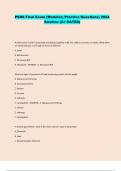
PEDS Final Exam (Modules; Practice Questions) 2024 Solution (A+ RATED)
PEDS Final Exam (Modules; Practice Questions) 2024 Solution (A+ RATED) A child comes in with Tachycardia and delayed capillary refill, this child is currently is in shock. What other s/s would indicate a LATE sign of shock in children? A. Fever B. Restlessness C. Decreased B/P D. Headache - ANSWER - C. Decreased B/P What are signs of symptoms of lead positioning (select all that apply) A. Nausea and Vomiting B. Increased activity C. Seizure D. No pain E. Lethargy F. Constipation - ANSWER - A. Nausea and Vomiting C. Seizure E. Lethargy F. Constipation In School-age children, what is the most common type of poisoning? A. Chemical B. Lead C. Acetaminophen (Tylenol) D. Alcohol - ANSWER - C. Acetaminophen (Tylenol) Which is a clinical manifestation of acetaminophen poisoning? A. Hyperpyrexia B. Hepatic involvement C. Severe burning pain in stomach D. Drooling and inability to clear secretions - ANSWER - B. Hepatic involvement Which is the most frequent source of acute childhood lead poisoning? A. Folk remedies B. Unglazed pottery C. Lead-based paint D. Cigarette butts and ashes - ANSWER - C. Lead-based paint Cardiopulmonary resuscitation (CPR) is begun on a toddler. Which pulse is usually palpated because it is the most central and accessible? A. Radial B. Carotid C. Femoral D. Brachial - ANSWER - B. Carotid Which drug is considered the most useful in treating childhood cardiac arrest? A. Bretylium tosylate (Bretylium) B. Lidocaine hydrochloride (Lidocaine) C. Epinephrine hydrochloride (Adrenaline) D. Naloxone (Narcan) - ANSWER - C. Epinephrine hydrochloride (Adrenaline)
Document information
- Uploaded on
- January 3, 2024
- Number of pages
- 15
- Written in
- 2023/2024
- Type
- Exam (elaborations)
- Contains
- Questions & answers