Chapter 4 Exam Prep Biomechanics
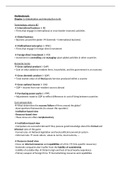
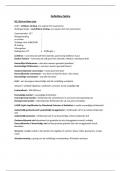
1. Describe the concept related to a. Role of the Neuromuscular Skeletal System b. Role of the nervous system i. Major divisions, such as the central and peripheral nervous systems ii. Know the functional areas of the human brain iii. Know the term Homunculus and its significance c. Neurons and its structure (parts) i. Types of Neurons 2. What is the neuromuscular junction? a. Know the term like Synapse and how it helps communicate between neurons/neurons to muscle. 3. What is a Motor unit? a. Know its anatomy b. Significance of the ratio of fibers to neurons that are innervated. 4. Understand the differences between the three motor unit types (I, IIa, and IIb). 5. Review the concept (from Chapter 3) like twitch influencing single muscle contraction a. Describe the pattern of motor unit contribution to a muscle contraction through i. the size principle, ii. synchronization, iii. motor unit recruitment, and rate coding. 6. What is Electromyography (EMG)? a. What are its applications? b. How do we collect EMG? i. List the different types of Electrodes Types used. ii. How do electrodes are configured (placed onto) the skin while collecting EMG iii. Understand the difference between raw EMG and how noises impact EMG signals. c. What is MU action potential? d. What are the factors that could influence EMG signal? e. Discuss the steps involved in processing the EMG signal. 7. Review the concept (from Chapter 3) of Electromechanical delay 8. Explain the force-EMG relationship 9. Discuss the components of a reflex action and provide examples. a. List the different types of reflexes. 10. Describe the anatomy of the muscle spindle and the functional characteristics of the spindle to stretch. 11. Describe the anatomy of the Golgi tendon organ (GTO) and how the GTO responds to tension in the muscle. a. What is the Inverse Stretch Reflex (Autogenic Inhibition Reflex) role? 12. Discuss the types of Tactile and Joint Sensory Receptors in our synovial joint. 13. Discuss the effect of exercise and training on neural input and activation levels in the muscle.
Written for
- Institution
-
Illinois College
- Course
-
KI 341
Document information
- Uploaded on
- December 18, 2023
- Number of pages
- 6
- Written in
- 2023/2024
- Type
- Class notes
- Professor(s)
- N/a
- Contains
- All classes
Subjects
- biomechanics
- motor unit
- emg
-
role of the neuromuscular skeletal system