Multinationals
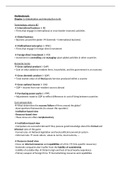
Chapter 1: Globalization and introduction to IB
Terminology: what is IB?
International business (= IB)
= Firms that engage in international or cross-border economic activities
Global business
= Business around the globe ( Domestic + international business)
Multinational enterprise (= MNE)
= Firms that engage in foreign direct investment
Foreign direct investment (= FDI)
= Investment in controlling and managing value-added activities in other countries
Economic terms
Gross national product (= GNP)
= Sum of value added by resident firms, households, and the government in an economy
Gross domestic product (= GDP)
= Total market value of all final goods/services produced within a country
Gross national income (= GNI)
= GDP + income from non-resident sources abroad
Purchasing power parity (= PPP)
= Adjustments made to GDP to reflect differences in cost of living between countries
Core perspectives
What determines the success/failure of firms around the globe?
- 2 perspectives/frameworks (to answer this question)
- Institution-based view
- Resource-based view
- These views are often complementary
Institution-based view
- Companies are successful abroad if they possess good knowledge about the formal and
informal rules of the game
- Formal rules National legislation and local political/economical system
- Informal rules Local culture, values & norms, local customs, …
Resource-based view
- Focus on internal resources and capabilities of a firm ( Firm-specific resources)
- Domestic companies don’t suffer from the liability of outsidership
- Liability of outsidership Distant origin and lack of local/nearby experience
- Primary weapon of foreign firms Overwhelming resources and capabilities
,What is globalization?
Different definitions of globalization ( Both positive & negative)
- Accelerated spread of communication and transportation technology
- Rising power of MNE’s (+ increased inequality in the world)
- Increased competition for jobs ( Especially for low skilled workers)
- Elimination of differences among national cultures and identities
- A process leading to greater interdependence and mutual awareness
3 different views on globalization
1) The world is flat Globalization is advanced and inevitable (Friedman, 2005)
2) The world is spiky Globalization is concentrated and stable (Florida, 2005)
3) Semi-globalization Globalization is partial and limited (Ghemawat, 2007)
How to measure?
- Compute/compare the transnationality index of MNE’s
- Transnationality index (= TNE) Mean of 3 different ratios
- Ratio of foreign assets over total assets
- Ratio of foreign sales over total sales
- Ratio of foreign employment over total employment
De-globalization and political pressure of protectionism
De-globalization is happening (at the same time) due to
- Protectionism
- Trade wars
- Political polarization
- Fragmentation of society
- Conflicts
-…
2 major views
- Liberalism Reversal of globalization is result of domestic political pressure
- Realism Reversal of globalization is result of end of US hegemony + rise of China
Globalization evolves in waves
- Major peak in late 19th and early 20th century
- Recent wave of globalization Rising powers of emerging economies ( Volatile)
Examples
- Brexit Protectionism within the EU
- Chinese investment in Europe and North America is decreasing significantly
- Global FDI inflows are expected to decrease the following years
, Chapter 2: Formal institutions
Institution-base view
- Success/failure of firms is enabled/constrained by institutions
- Sufficient knowledge about formal/informal rules of the game is required
Institutional framework
- Formal/informal institutions governing individual and firm behavior
- Institutional framework is different for each country
- Firms need to possess good knowledge about this framework to succeed
Transaction costs
- The costs of doing business
- Different costs associated with economic transactions
- Transaction costs are the result of uncertainty
- Transaction costs increase if institutions do not function properly
Opportunism
- Act of actively seeking self-interest
- People act generally will act in their own self-interest
Formal institutions ( Regulatory pillar)
- Generally governmental institutions
- Laws
- Regulations
- Rules
Informal institutions ( Normative + cognitive pillar)
- Concerns behavior that is morally right/wrong + what is important to society
- Norms ( Values, beliefs & actions)
- Ethics
- Culture
Problem? Institutional transactions
= Fundamental changes to formal/informal institutions that affect firms
3 pillars
- Regulatory Pillar Coercive power of governments (+ governmental sanctioning)
- Normative Pillar External norms that influence individual + firm behavior
- Cognitive Pillar Internalized values & beliefs that guide behavior (+ awareness of norms)
Key role of an institution is to reduce uncertainty
- Uncertainty increases transaction costs + reduces willingness for LT-investment
- Institutional frameworks reduce opportunistic behavior by establishing rules
- Institutions change/evolve over time ( Especially in emerging economies)
- Institutional transition Changes to formal/informal institutions that affect firms
2 core propositions of institution-based view
Chapter 1: Globalization and introduction to IB
Terminology: what is IB?
International business (= IB)
= Firms that engage in international or cross-border economic activities
Global business
= Business around the globe ( Domestic + international business)
Multinational enterprise (= MNE)
= Firms that engage in foreign direct investment
Foreign direct investment (= FDI)
= Investment in controlling and managing value-added activities in other countries
Economic terms
Gross national product (= GNP)
= Sum of value added by resident firms, households, and the government in an economy
Gross domestic product (= GDP)
= Total market value of all final goods/services produced within a country
Gross national income (= GNI)
= GDP + income from non-resident sources abroad
Purchasing power parity (= PPP)
= Adjustments made to GDP to reflect differences in cost of living between countries
Core perspectives
What determines the success/failure of firms around the globe?
- 2 perspectives/frameworks (to answer this question)
- Institution-based view
- Resource-based view
- These views are often complementary
Institution-based view
- Companies are successful abroad if they possess good knowledge about the formal and
informal rules of the game
- Formal rules National legislation and local political/economical system
- Informal rules Local culture, values & norms, local customs, …
Resource-based view
- Focus on internal resources and capabilities of a firm ( Firm-specific resources)
- Domestic companies don’t suffer from the liability of outsidership
- Liability of outsidership Distant origin and lack of local/nearby experience
- Primary weapon of foreign firms Overwhelming resources and capabilities
,What is globalization?
Different definitions of globalization ( Both positive & negative)
- Accelerated spread of communication and transportation technology
- Rising power of MNE’s (+ increased inequality in the world)
- Increased competition for jobs ( Especially for low skilled workers)
- Elimination of differences among national cultures and identities
- A process leading to greater interdependence and mutual awareness
3 different views on globalization
1) The world is flat Globalization is advanced and inevitable (Friedman, 2005)
2) The world is spiky Globalization is concentrated and stable (Florida, 2005)
3) Semi-globalization Globalization is partial and limited (Ghemawat, 2007)
How to measure?
- Compute/compare the transnationality index of MNE’s
- Transnationality index (= TNE) Mean of 3 different ratios
- Ratio of foreign assets over total assets
- Ratio of foreign sales over total sales
- Ratio of foreign employment over total employment
De-globalization and political pressure of protectionism
De-globalization is happening (at the same time) due to
- Protectionism
- Trade wars
- Political polarization
- Fragmentation of society
- Conflicts
-…
2 major views
- Liberalism Reversal of globalization is result of domestic political pressure
- Realism Reversal of globalization is result of end of US hegemony + rise of China
Globalization evolves in waves
- Major peak in late 19th and early 20th century
- Recent wave of globalization Rising powers of emerging economies ( Volatile)
Examples
- Brexit Protectionism within the EU
- Chinese investment in Europe and North America is decreasing significantly
- Global FDI inflows are expected to decrease the following years
, Chapter 2: Formal institutions
Institution-base view
- Success/failure of firms is enabled/constrained by institutions
- Sufficient knowledge about formal/informal rules of the game is required
Institutional framework
- Formal/informal institutions governing individual and firm behavior
- Institutional framework is different for each country
- Firms need to possess good knowledge about this framework to succeed
Transaction costs
- The costs of doing business
- Different costs associated with economic transactions
- Transaction costs are the result of uncertainty
- Transaction costs increase if institutions do not function properly
Opportunism
- Act of actively seeking self-interest
- People act generally will act in their own self-interest
Formal institutions ( Regulatory pillar)
- Generally governmental institutions
- Laws
- Regulations
- Rules
Informal institutions ( Normative + cognitive pillar)
- Concerns behavior that is morally right/wrong + what is important to society
- Norms ( Values, beliefs & actions)
- Ethics
- Culture
Problem? Institutional transactions
= Fundamental changes to formal/informal institutions that affect firms
3 pillars
- Regulatory Pillar Coercive power of governments (+ governmental sanctioning)
- Normative Pillar External norms that influence individual + firm behavior
- Cognitive Pillar Internalized values & beliefs that guide behavior (+ awareness of norms)
Key role of an institution is to reduce uncertainty
- Uncertainty increases transaction costs + reduces willingness for LT-investment
- Institutional frameworks reduce opportunistic behavior by establishing rules
- Institutions change/evolve over time ( Especially in emerging economies)
- Institutional transition Changes to formal/informal institutions that affect firms
2 core propositions of institution-based view