

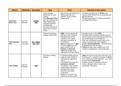
Alliance Signatories Date signed Aims Terms Response of other nations
• Useful strategic • Agreements consolidated the • Frustrating development for Britain, who
guarantees for each alliance politically and hoped to keep Mussolini as a counterbalance
country militarily- follow a similar against Germany
• Post Abyssinia Crisis, foreign policy • Threatening prospect for Fascist partnership
Italy was isolated from and expansionist plans
The Rome- Italy and October
liberal democracies
Berlin Axis Germany 1936
and feared German
remilitarisation
• Germany was keen to
secure their Southern
border
• Feared the growing • 1936- limit and oppose the • Greatest concern to the USSR
strength of the USSR activities of the Comintern • Intensified division between Western powers
• Recognised the similar and the Soviets which had been growing since
interests in their strong the remilitarisation of the Rhineland
ideological opposition to • Hitler was considered a lesser threat to the
Anti-Comintern Germany Nov. 1936 & Communism danger of communism which helped to
Pact and Japan Nov. 1937 • Italy joined the pact in 1937, appease British politicians - reinforces policy
as well as Spain and non- of appeasement with Germany
fascist powers such as • France’s position was unstable due to the
Finland and Denmark increase in popularity for Communist party
• Tokyo was added to the
alignment of the Axis Powers
• Formalise a military • Formalised military alliance • Japan did not join as its main focus was in the
alliance • Called the Pact of Steel to Far East and to complete its invasion of China
emphasise its aggressive and to resist any Soviet expansion - as a result
nature the pact seems Eurocentric
• Committed both powers to a • Could be viewed as directed at UK and
permanent contract- France, although neither country was
Italy and
Pact of Steel 1939 consultation in the event of mentioned in the terms
Germany
unfavourable international
developments- close
economic and military
cooperation
• Support in an event of an
attack from another power
• Useful strategic • Agreements consolidated the • Frustrating development for Britain, who
guarantees for each alliance politically and hoped to keep Mussolini as a counterbalance
country militarily- follow a similar against Germany
• Post Abyssinia Crisis, foreign policy • Threatening prospect for Fascist partnership
Italy was isolated from and expansionist plans
The Rome- Italy and October
liberal democracies
Berlin Axis Germany 1936
and feared German
remilitarisation
• Germany was keen to
secure their Southern
border
• Feared the growing • 1936- limit and oppose the • Greatest concern to the USSR
strength of the USSR activities of the Comintern • Intensified division between Western powers
• Recognised the similar and the Soviets which had been growing since
interests in their strong the remilitarisation of the Rhineland
ideological opposition to • Hitler was considered a lesser threat to the
Anti-Comintern Germany Nov. 1936 & Communism danger of communism which helped to
Pact and Japan Nov. 1937 • Italy joined the pact in 1937, appease British politicians - reinforces policy
as well as Spain and non- of appeasement with Germany
fascist powers such as • France’s position was unstable due to the
Finland and Denmark increase in popularity for Communist party
• Tokyo was added to the
alignment of the Axis Powers
• Formalise a military • Formalised military alliance • Japan did not join as its main focus was in the
alliance • Called the Pact of Steel to Far East and to complete its invasion of China
emphasise its aggressive and to resist any Soviet expansion - as a result
nature the pact seems Eurocentric
• Committed both powers to a • Could be viewed as directed at UK and
permanent contract- France, although neither country was
Italy and
Pact of Steel 1939 consultation in the event of mentioned in the terms
Germany
unfavourable international
developments- close
economic and military
cooperation
• Support in an event of an
attack from another power


