Cardiac ekg rhythms (Verified)
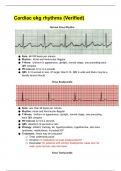
Cardiac ekg rhythms (Verified) Normal Sinus Rhythm ● Rate: 60-100 beats per minute ● Rhythm: Atrial and Ventricular Regular ● P Wave: Uniform in appearance, upright, normal shape, one preceding each QRS complex ● PR Interval: 0.12- 0.2 seconds ● QRS: 0.12 second or less. (If larger than 0.12- QRS is wide and there may be a bundle branch block) Sinus Bradycardia ● Rate: Less than 60 beats per minute ● Rhythm: Atrial and Ventricular Regular ● P Waves: Uniform in appearance, upright, normal shape, one preceding each QRS complex ● PR Interval: 0.12-0.2 seconds ● QRS: Usually 0.12 seconds or less ● Etiology: athletic training, MI, hypothyroidism, hypothermia, sick sinus syndrome, medications, increased ICP ● Treatment: *None may be indicated* ○ Treat underlying cause ○ Atropine #1 medication to treat bradycardia!!!!! ○ Pacemaker for patients with chronic bradycardia, takes over SA node; puts intrinsic rate into heart Sinus Tachycardia ● Rate: Usually 100-140 beats per minute ● Rhythm: Atrial and ventricular regular ● P Waves: Uniform in appearance, upright, normal shape, one preceding each QRS ● PR Interval: 0.12-0.2 second ● QRS: Usually 0.12 second or less ● Etiology: stress or fear, anemia, fever, hypoxia, shock, hyperthyroidism, drugs, heart failure, pain, hypoglycemia ● Treatment: ○ Treat underlying cause ○ β Blocker ○ Calcium Channel Blocker (Diltiazem aka Cardizem) ○ Valsalva Maneuvers – series of motions that stimulates nerve, running by the heart, which slows it down; ex: bearing down Sinus Arrhythmia ● Rate: Usually 60-100 beats per minute ● Rhythm: Atrial and ventricular occasionally have an irregular beat ● P Waves: Uniform in appearance, upright, normal shape, one preceding each QRS ● PR Interval: 0.12-0.2 second ● QRS: Usually 0.12 second or less ● Etiology: idiopathic (unknown cause), stress, electrolyte imbalance – first sign ● Treatment: likely no treatment unless symptomatic -- treat underlying condition! Premature Atrial Contractions (PACs) ● Occurs on top of another rhythm ● P Waves: Premature, differ from sinus P waves -- may be flattened, notched, pointed, biphasic, or lost in the preceding T wave ● QRS: Narrow (less than 0.12) ● Etiology: Myocardial ischemia, fatigue, COPD, atrial enlargement, digoxin toxicity, hypokalemia, hypomagnesemia, and excessive use of caffeine, tobacco or alcohol ○ Occasionally occur in healthy individuals. ● Treatment: Usually not necessary -- treat underlying cause Atrial Fibrillation ● Atrial Rate 350-600 ● If Ventricular Rate is elevated we call that “RVR” -- rapid ventricular rate ● Ventricular Rate Variable ● No discernable P waves** ● “Irregularly Irregular” ● Loss of atrial kick – blood becomes stagnant & clots ● Embolization risk - clot fires to brain (embolic stroke risk) ● Etiology: valve disease, CAD, cardiomyopathy, COPD, hyperthyroidism, atrial enlargement, alcohol use ● Treatment: ○ Rate Control for rapid ventricular response (RVR) ○ Anticoagulation ○ Chemical Cardioversion (amiodarone, tikosyn) ○ Ablation – procedure where part of heart causing afib is zapped (damage so source of afib can no longer fire) ○ Maze Procedure – noninvasive or during another cardiac surgery – laser on atria in maze design so atria cannot fire/twitch irregularly (fancy ablation) Atrial Flutter ● Rate: Atrial rate 250-350 bpm. Ventricular rate variable. ● Rhythm: Atrial regular, ventricular may be regular or irregular ● No discernable P waves ● “Sawtooth” waves ● Loss of atrial kick ● Risk of Atrial Fib, embolization ● Etiology & treatment same as afib!
Document information
- Uploaded on
- December 1, 2023
- Number of pages
- 11
- Written in
- 2023/2024
- Type
- Exam (elaborations)
- Contains
- Questions & answers