
BDO319 M2
Study Unit 2: Human Resource Information System (HRIS)
HRIS- Integrated system providing information that HR managers and line managers can use for among others,
decision making.
- An electronic system used to acquire, store, manipulate, analyse, retrieve and distribute information regarding an
organisation’s human resources
- research (tech) & problem solving; absenteeism, turnover
Advantages:
o Single space to access extensive HR information across departments functions and locations
o Timeous effective decisions
o Improved effectiveness and efficiency for HR admin related functions
o Changes HR role to a strategic role
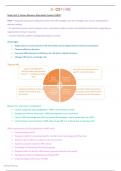
Types of HR:
support management in HR metric info and provision of
decision making and answers specific reports like equity
"what if" ... looking at available
skills Decision Managment
Support Information
Systems (DSS) System (MIS)
integrate all systems in the org. Enterprise automate routine transactions
Transactional
Resource
off-the-shelf products (e.g.) Processing like payroll, clock systems while
Planning (ERP)
System (TPS)
SAP, Oracle software reducing costs of transactions
Reasons for reluctance to implement:
Lack of support by top management- HRIS is low priority & costly
Satisfaction with the status quo- HRIS development is too much work
Lack of HRIS knowledge and skills by certain HR managers- needs preparation for HRIS
Lack of proper communication- HRIS makes huge diff or is a threat due to improper info
Skills requirements of HR professional in HRIS work:
Communications skills
Computer skills for understanding the interface btwn technology & HR function
Systems view of HR & its relation to its environment
Systems concepts related to HR context
Knowledge of technical performing language
Analytical skills to identify HRIS needs (systems and end-user needs)
Management skills in designing & justifying HRIS
Understanding of the future of HRIS
©MeganMeiring
, Applications of HRIS database modules:
➢ Terry Says That He HOPs To Lectures But Amy Prefers Walking
➢ Talent management module- identifies qualified replacements to fill managerial positions at all levels
➢ Skills inventory module- provides skills profile information for contract bids (experience, qualifications)
➢ Training & development module- providing training on required skills due to changes in work environments
➢ Human Resource planning module- enables survey analysis of job skills, self-assessment, career aspirations
and current job utilisation within the org
➢ HR metrics/ analytics & reports- identify aspects that may influence ee engagement
➢ Onboarding/ orientation module- provide onboarding documentation
➢ Performance management module- record keeping of performance and achievements
➢ Time & attendance module- keeping record of arrival and departure of ee
➢ Labour relations module- grievances, dismissals
➢ Basic ee module- ee profile, length of service
➢ Applicant tracking module- source of employment studies, agency tracking & fees
➢ Position control module- enables management to track and monitor authorised jobs
➢ Wage, benefits & salary administration module- pay grade structure, bonus and commission plans
Most common reasons HRIS fail:
Leadership- lacking, and change in management skills
Planning- lacking a comprehensive project plan
Change management- no strategies are in place to cultivate or grow a new culture
Communication- lacking comprehensive communication
Training- inadequate or poor-quality training
Selecting and implementing, maintaining and evaluating HRIS (12 steps):
1. Do a needs assessment- determine gap of what org is using, and needs
2. Compile a list of items essential for the HRIS- time savings, cost savings
3. Identify potential solutions & vendors, screen & arrange for demonstration & a needs assessment- provide a
list of essential items
4. Decide if the system will be bought from a vendor or developed in-house- rank the demonstrated solutions
5. Review proposals & cost frameworks for all vendors & for internal development- which system addresses the
need / is within the budget
6. Identify all the hardware, software & data needed- computers, scanners, licensing fees
7. Prepare a presentation for the decision-makers in the org- indicate how the solution will support the
attainment of the org goals
8. Implement the vendor/ self-development system- communicate to all ee and ‘launch’ the system
9. Train HR department & end-users- set up a help function
10. Obtain feedback from end-users- determine if the system meets requirements
11. Evaluate the system- determine if the system meets the needs
12. Update/ change the system- use the info obtained from the evaluation to provide feedback to vendors/
developers to make changes to the system to better align with the org goals.
©MeganMeiring
Study Unit 2: Human Resource Information System (HRIS)
HRIS- Integrated system providing information that HR managers and line managers can use for among others,
decision making.
- An electronic system used to acquire, store, manipulate, analyse, retrieve and distribute information regarding an
organisation’s human resources
- research (tech) & problem solving; absenteeism, turnover
Advantages:
o Single space to access extensive HR information across departments functions and locations
o Timeous effective decisions
o Improved effectiveness and efficiency for HR admin related functions
o Changes HR role to a strategic role
Types of HR:
support management in HR metric info and provision of
decision making and answers specific reports like equity
"what if" ... looking at available
skills Decision Managment
Support Information
Systems (DSS) System (MIS)
integrate all systems in the org. Enterprise automate routine transactions
Transactional
Resource
off-the-shelf products (e.g.) Processing like payroll, clock systems while
Planning (ERP)
System (TPS)
SAP, Oracle software reducing costs of transactions
Reasons for reluctance to implement:
Lack of support by top management- HRIS is low priority & costly
Satisfaction with the status quo- HRIS development is too much work
Lack of HRIS knowledge and skills by certain HR managers- needs preparation for HRIS
Lack of proper communication- HRIS makes huge diff or is a threat due to improper info
Skills requirements of HR professional in HRIS work:
Communications skills
Computer skills for understanding the interface btwn technology & HR function
Systems view of HR & its relation to its environment
Systems concepts related to HR context
Knowledge of technical performing language
Analytical skills to identify HRIS needs (systems and end-user needs)
Management skills in designing & justifying HRIS
Understanding of the future of HRIS
©MeganMeiring
, Applications of HRIS database modules:
➢ Terry Says That He HOPs To Lectures But Amy Prefers Walking
➢ Talent management module- identifies qualified replacements to fill managerial positions at all levels
➢ Skills inventory module- provides skills profile information for contract bids (experience, qualifications)
➢ Training & development module- providing training on required skills due to changes in work environments
➢ Human Resource planning module- enables survey analysis of job skills, self-assessment, career aspirations
and current job utilisation within the org
➢ HR metrics/ analytics & reports- identify aspects that may influence ee engagement
➢ Onboarding/ orientation module- provide onboarding documentation
➢ Performance management module- record keeping of performance and achievements
➢ Time & attendance module- keeping record of arrival and departure of ee
➢ Labour relations module- grievances, dismissals
➢ Basic ee module- ee profile, length of service
➢ Applicant tracking module- source of employment studies, agency tracking & fees
➢ Position control module- enables management to track and monitor authorised jobs
➢ Wage, benefits & salary administration module- pay grade structure, bonus and commission plans
Most common reasons HRIS fail:
Leadership- lacking, and change in management skills
Planning- lacking a comprehensive project plan
Change management- no strategies are in place to cultivate or grow a new culture
Communication- lacking comprehensive communication
Training- inadequate or poor-quality training
Selecting and implementing, maintaining and evaluating HRIS (12 steps):
1. Do a needs assessment- determine gap of what org is using, and needs
2. Compile a list of items essential for the HRIS- time savings, cost savings
3. Identify potential solutions & vendors, screen & arrange for demonstration & a needs assessment- provide a
list of essential items
4. Decide if the system will be bought from a vendor or developed in-house- rank the demonstrated solutions
5. Review proposals & cost frameworks for all vendors & for internal development- which system addresses the
need / is within the budget
6. Identify all the hardware, software & data needed- computers, scanners, licensing fees
7. Prepare a presentation for the decision-makers in the org- indicate how the solution will support the
attainment of the org goals
8. Implement the vendor/ self-development system- communicate to all ee and ‘launch’ the system
9. Train HR department & end-users- set up a help function
10. Obtain feedback from end-users- determine if the system meets requirements
11. Evaluate the system- determine if the system meets the needs
12. Update/ change the system- use the info obtained from the evaluation to provide feedback to vendors/
developers to make changes to the system to better align with the org goals.
©MeganMeiring


