
PRN 1032 Final Exam Study Guide Questions and Answers(A+ Solution guide)
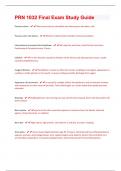
Pressure ulcers - Often occurs due to immobility and shearing can also play a role Pressure ulcer risk factors - Moisture, Malnutrition and Alter sensory perception Interventions to prevent skin breakdown - Skin kept dry and clean, Avoid friction and shear, Positioning of the patient every 2 hours Cellulitis - Is a skin disorder caused by infection of the dermis and subcutaneous tissue, usually caused by Staphylococcus. Fungal infections - Candidiasis is known to affect the mouth, esophagus and vagina, appearance is a yellow or white patches in the mouth. It causes itching and white discharge from vagina Squamous cell carcinoma -Is caused by sunlight, affects the epidermis, and can become invasive and metastasize to other areas of the body. Tumor that begins as a small nodule that rapidly becomes ulcerated. Sheering - Rubbing/friction, skin moving one way and the bone staying. Don't slide the patient, lift them instead Burn injuries - injuries to the skin caused by exposure to extreme heat, hot liquids, electrical agents, strong chemicals, or radiation Burn diet - High calorie, high protein, and vitamins C and Zinc to assist in healing Acne types - Acne rosacea begins between age 30- 50 years; characterized by erythema(redness), papules, pustules, and telangiectasias. Acne vulgaris begins early puberty; factors that contribute to it are hereditary disposition, increased androgen levels, and premenstrual hormonal fluctuationsAcne diet - Important to eat healthy-well balanced diet. May be caused by fatty/greasy foods Types of inmmunity - Active artificially acquired immunity occurs via immunization. E.g: Flu vaccinations Passive natural immunity occurs transmission of mother to baby. E.g: Mother to baby, Utero, Breast milk First line of defense - is intact skin against harmful environmental agents. Skin functions as a protective barrier for the underlying tissues, helping maintain integrity. Sebaceous glands excrete sweat, lactic acid, and fatty acids to limit microbial growth Second line of defense - is fever (slows the growth of pathogens), leukocytosis, phagocytosis, inflammation, and the action of interferon (biologic response modifier that affects cellular growth)
Document information
- Uploaded on
- November 5, 2023
- Number of pages
- 6
- Written in
- 2023/2024
- Type
- Exam (elaborations)
- Contains
- Questions & answers


