
Utmb Advanced Pathophysiology 5355 Exam 3 (2023) Graded A
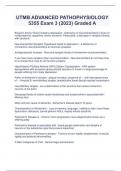
Biogenic Amine Theory linked to depression - Deficiency of neurotransmitters in brain of norepinephrine, dopamine, and/or serotonin. Particularly, a decrease in receptor binding with serotonin. Neurotransmitter Receptor Hypothesis linked to depression - A deficiency of monoamine neurotransmitters at neuronal synapses. Antidepressants increase - Neuronal synaptic levels of monoamine neurotransmitters. if you have more receptors than neurotransmitters - Neurotransmitters do not have time to re-charge thus, they do not function properly. Hypothalamic-Pituitary-Adrenal (HPA) System Dysregulation - HPA system dysregulation with excessive glucocorticoid secretion is found in a large percentage of people suffering from major depression. Patho of Alzheimer's includes - plaque formation, presence of --, with decreased levels of - - Amyloid B, neurofibrillary tangles, acetylcholine these disrupt impulse transmission neurofibrillary tangles - are a deformation of the structure that carries nutrients to neurons of the brain. Decreased levels of choline acetyl transferase and acetylcholine is associated with - Memory loss Most common cause of dementia - Alzheimer's disease fatal 5-10 years Characteristics of Alzheimer's - Loss of memory, language , inability to learn new things, dysfunction, delusions, cannot perform ADLs, majorly effects social life Parkinson's Disease is - Chronic motor progressive neuro-degenerative known as a shaking palsy Parkinson's disease is associated with - basal ganglia dysfunction and atrophy of neurons in the substantia nigra that produce dopamine; Characteristics of Parkinson's disease - Tremors at rest, rigidity, bradykinesia, muscular rigidity and postural abnormalities. 2 Main Categories of CVA - Hemorrhagic and Ischemic Hemorrhagic CVA - Blood produces inflammatory reaction, swelling, displaces brain tissue and increases ICP 2 types of hemorrhagic stroke - Intracerebral and subarachnoid Intracerebral Hemorrhage - Blood vessel leaks directly into brain tissue Subarachnoid hemorrhage - Bleeding into the subarachnoid space, caused by trauma, aneurysm rupture presents as "worst headache of life". surgical emergency Ischemic CVA - reduction in cerebral blood flow results in hypoxia and irreversible cell death with associated cerebral edema 3 types of ischemic CVA - thrombotic, embolic, hypercoagulable states. Thrombotic - caused by atherosclerosis blocking vessels. obstruction of blood vessel due to localized occlusive process Embolic - caused by blood clot, fat or air embolus traveling from distant site to brain Hypercoaguable state - conditions such as sickle cell disease, polycythemia causing blood clot to form and obstruct vessel Multiple sclerosis - chronic, inflammatory autoimmune demyelinating disease of the CNS. : patho includes CNS demyelination thought to be caused by an immune reaction Acetylcholine - excitatory or inhibitory, enables muscle action, learning, memory- involved in memory impairment in Alzheimer's disease Norepinephrine - Helps control alertness and arousal. Under supply can depress mood. Serotonin - inhibitory, involved with mood, hunger, sleep, and arousal- insufficient linked to depression, involved in migraine headaches, Prozac and antidepressant drugs raise levels Dopamine - excitatory, influences movement, learning, emotions, pleasure, decreased levels associated with tremors in parkinson's and depression, excess linked to schizophrenia GABA - major inhibitory, undersupply linked to anxiety, seizures, tremors and insomnia Glutamate - A major excitatory neurotransmitter; involved in memory, oversupply can overstimulate brain producing migraines or seizures (MSG)
Document information
- Uploaded on
- November 4, 2023
- Number of pages
- 12
- Written in
- 2023/2024
- Type
- Exam (elaborations)
- Contains
- Questions & answers


