

WGU C963 - Amendments Questions & Answers Graded A+
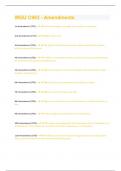
1st Amendment (1791) -Freedom of religion, assembly, press, petition, and speech 2nd Amendment (1791) - Right to bear arms 3rd Amendment (1791) - The right not to be forced to quarter soldiers during times of peace without consent of the owner 4th Amendment (1791) - Prohibits unreasonable searches or seizures and sets out requirements for search warrants based on probable cause. 5th Amendment (1791) - Right to due process, no self-incrimination, eminent domain, double jeopardy, and grand jury 6th Amendment (1791) - Right to trial by jury, a speedy trial, and right to a lawyer 7th Amendment (1791) - Right to a jury in civil cases over $20 8th Amendment (1791) - Right to no cruel and/or unusual punishments, no unfair bail, fines, or fees 9th Amendment (1791) - Protects rights not enumerated in the Constitution 10th Amendment (1791) - The powers not delegated to the United States by the Constitution, nor prohibited by it to the States, are reserved to the States respectively, or to the people. 11th Amendment (1795) - Prohibits citizens of one state or foreign country from suing another state, except with permission from that state's judicial system.12th Amendment (1804) - Electoral college must have two separate elections for the president and vice president.
Document information
- Uploaded on
- October 31, 2023
- Number of pages
- 3
- Written in
- 2023/2024
- Type
- Exam (elaborations)
- Contains
- Questions & answers


