Nur 2063 Patho Final Exam, Complete Solution
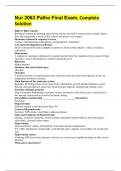
Nur 2063 Patho Final Exam, Complete Solution flight or fight response Biological reaction to alarming stressors that musters the body's resources (for example, blood flow and respiration) to resist or flee a threat and protect vital organs Hormones released in response to stress Cortisol, catecholamines (epinephrine, norepinephrine, dopamine) GAS (general adaptation syndrome) Selye's concept of the body's adaptive response to stress in three phases—alarm, resistance, exhaustion. Homeostasis A tendency to maintain a balanced or constant internal state; the regulation of any aspect of body chemistry, such as blood glucose, around a particular level Ribosome Makes proteins Hormone that raises blood sugar glucagon Glucagon A protein hormone secreted by pancreatic endocrine cells that raises blood glucose levels; an antagonistic hormone to insulin. Main function of the endocrine system Regulates all biological processes in the body. Metabolism, growth and development, sexual function and reproduction, heart rate, blood pressure, appetite, sleeping and waking cycles Function of plasma proteins Help to maintain fluid balance, transport various substances in the blood, play a crucial role in the immune system and are involved in blood clotting intracellular contains high __________________________ (electrolyte) Potassium Hyponatremia deficient sodium in the blood (less than 135) Causes of Hyponatremia Excessive H2O intake, renal failure, addisons disease, Signs and Symptoms of Hyponatremia lethargy, weakness, headache, muscle cramps, diminished tendon reflexes, poor skin turgor, tachycardia, increased urine output Hypovolemia Decreased blood volume. Fluid deficit of the intravascular compartment. S/S: AMS, hypotension, tachycardia, weak/thready pulse, oliguria, excess thirst, dry mouth and skin Hypovolemia causes Vomiting, DM, fever, heat exposure, exercise, no water access, significant injury to skin, excess diuretics What stores electrolytes? The Kidneys Contraindication a factor in the patient's condition that makes the use of a medication or specific treatment dangerous or ill advised Normal sodium range 135-145 mEq/L Fluid volume overload - Hypervolemia-excess fluid in intracellular fluid, interstitial, and intravascular spaces. - Risk factors: renal failure, heart failure, cirrhosis, excessive sodium intake, excessive administration of IV fluids, corticosteroids S/S of fluid volume overload rapid/bounding pulse, distended neck veins, HTN, cough, SOB, crackles, HA, restlessness, peripheral or pitting edema insensible water loss the loss of water not noticeable by a person, such as through evaporation from the skin and exhalation from the lungs during breathing Hypotonic solutions Intravascular solution that has a lower concentration of solutes than that found in the intravascular compartment. Hypertonic solutions intravascular solution that has a higher concentration of solutes than those in the intravascular compartment Isotonic solutions and intravascular solution that has concentrations of solutes equal to those in the intravascular solution Osmosis Diffusion of water through a selectively permeable membrane from area of low solute concentration to an area of high solute concentration Diffusion Movement of molecules from an area of higher concentration to an area of lower concentration. Normal blood pH 7.35-7.45 An increase in sodium and osmolality is associated with what? A deficiency in water acid-base balance Lungs (respiratory) excrete/expel carbon dioxide through expiration to prevent an increase in the partial pressure of carbon dioxide in the blood Kidneys (metabolic) excrete/eliminate hydrogen ions through urination and generate bicarb to maintain blood pH Manifestations of metabolic acidosis headache, confusion, drowsiness, increased respiratory rate and depth, decreased blood pressure, decreased cardiac output, dysrhythmias, shock; loss of appetite; vomiting Sepsis toxic inflammatory condition arising from the spread of microbes, especially bacteria or their toxins, from a focus of infection What causes warmth and redness during cellulitis infection?
Document information
- Uploaded on
- October 27, 2023
- Number of pages
- 18
- Written in
- 2023/2024
- Type
- Exam (elaborations)
- Contains
- Questions & answers