PART 3: IMPLEMENTING THE MARKETING MIX
CHAPTER 10: MANAGING CHANNELS & DISTRIBUTION
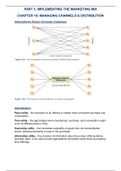
Intermediaries Reduce Exchange Complexity
Specialization
Place utility – the relocation of an offering to enable more convenient purchase and
consumption.
Time utility – the gap bridged when manufacture, purchase, and consumption might
occur at differing points in time.
Ownership utility – the immediate availability of goods from the intermediaries’
stocks, allowing ownership to pass to the purchaser.
Information utility – the provision of information about the product offering before
and after sales. It can also provide organizations information about those purchasing
their offerings.
, PART 3: IMPLEMENTING THE MARKETING MIX
CHAPTER 10: MANAGING CHANNELS & DISTRIBUTION
Types of Intermediary
• Agents or brokers – these act as principal intermediary between the seller of an
offering and buyers, bringing them together without taking ownership of the
offering.
• Merchants – undertakes the same actions as an agent, but takes ownership of a
product.
• Distributors or dealers – these distribute the product. They offer value through
services associated with selling inventory, credit, and aftersales service (often
used in B2B).
• Franchises – holds a contract to supply and market an offering to the
requirements or blueprint of the franchisor, tow owner of the original offering.
• Wholesalers – stocks goods before the next level of distribution, and takes both
legal title and psychical possession of the goods (they deal not with the end
customer, but with other intermediaries (retailers)).
• Retailers – these intermediaries sell directly to end customers and may purchase
direct from manufacturers or deal with wholesalers.
• Infomediaries – these Internet-based organizations and intermediaries aiming to
provide information to channel members, including end-users.
CHAPTER 10: MANAGING CHANNELS & DISTRIBUTION
Intermediaries Reduce Exchange Complexity
Specialization
Place utility – the relocation of an offering to enable more convenient purchase and
consumption.
Time utility – the gap bridged when manufacture, purchase, and consumption might
occur at differing points in time.
Ownership utility – the immediate availability of goods from the intermediaries’
stocks, allowing ownership to pass to the purchaser.
Information utility – the provision of information about the product offering before
and after sales. It can also provide organizations information about those purchasing
their offerings.
, PART 3: IMPLEMENTING THE MARKETING MIX
CHAPTER 10: MANAGING CHANNELS & DISTRIBUTION
Types of Intermediary
• Agents or brokers – these act as principal intermediary between the seller of an
offering and buyers, bringing them together without taking ownership of the
offering.
• Merchants – undertakes the same actions as an agent, but takes ownership of a
product.
• Distributors or dealers – these distribute the product. They offer value through
services associated with selling inventory, credit, and aftersales service (often
used in B2B).
• Franchises – holds a contract to supply and market an offering to the
requirements or blueprint of the franchisor, tow owner of the original offering.
• Wholesalers – stocks goods before the next level of distribution, and takes both
legal title and psychical possession of the goods (they deal not with the end
customer, but with other intermediaries (retailers)).
• Retailers – these intermediaries sell directly to end customers and may purchase
direct from manufacturers or deal with wholesalers.
• Infomediaries – these Internet-based organizations and intermediaries aiming to
provide information to channel members, including end-users.