FINAL VERSION OF DAVITA TEST QUESTIONS WITH CORRECT ANSWERS
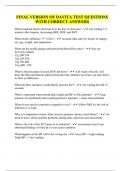
What treatment factors decrease K in the Kt/v to decrease? - not waiting 3-5 minutes after heparin, decreasing BFR, DFR, and BVP What factors influence "V" in Kt/v - accurate data entry by nurses in snappy, sex age, weight, and amputation What are the needle gauges and prescribed blood flow rates? - they are inversely related 17g 200-250 15g 250-350 15g 350-400 14 g 400 - 450 What is the procedure for post BUN lab draw? - if pt wants off early, still draw the labs and educate patient about the risks. Redraw next time a pt runs full tx to show pt difference What lab draw mistakes would falsely increase Kt/V - not waiting the full 15 seconds What is important when monitoring weight and BP in AKI patients? - keep patients wet (hydrated) and avoid hypotensive episodes = cause renal ischemia What do you need to consider in regards to cvcs? - follow P&P b/c the risk of infection is so high Why is it important to know what caused a patients chronic renal failure? - we need to know about possible problems during data collection and assessment What is the role of the PCT prior to tx initiation? - assessment of pt if any abnormal findings or if the pt is in an acute condition What happens in the BP cuff is the wrong size - loose BP-- high reading Tight BP -- low reading Why is it so bad to squeeze the BP cuff if its connected to the machine? - it can damage the internal BP mechanism Why is it so important that we document in the medical record? - it provides data for continuity and planning of care When do pre-treatment data collection and assessment take place? - collection: before tx Assessment: w/in 1 hr if pt is stable When is post-treatment data collection and assessment performed? - post treatment-- not before treatment or when they are disconnected What are the consequences of poor or incomplete documentation - can open attack on your care What are the six items needed in charting meds? - 1. Med/dosage 2. Date/time 3. Route 4. Reason (remember this!) 5. Pt response 6. Signature What are the 5 Ws to be used when completing an AOR? - who What When Where Why How What are the 4 consequences of sodium loading during dialysis? - 1. Increased thirst 2. Increased fluid intake 3. Increased intradialytic weight gain = htn 4. Increased UFR What is the purpose of UF profiling? - change the way fluid is remodeled during the tx and allows for vascular refilling What are the consequences of hypovolemia during tx? - attempting to remove a lot of fluid -- hypovolemia during tx -- loss of renal function, ischemia, and increased mortality rate What must the machine's conductivity and ph reading supposed to be? - machine and manual conductivity: w/in +/-0.4 Ph range: 6.9 - 7.6, measured to verify acid/base balance is in acceptable range At what temperature does hemolysis occur? - 42 degrees C What do we do in a power outage? - remove venous line from air detector, clamp, before starting hand crank and be diligent in watching for air in blood lines What causes a high venous pressure alarm? - kink in tubing, clotting in venous drip chamber, infiltration, venous stenosis What are the risks of doing things "your way" and not the P&P way? - it can lead to civil liabiliy What makes dialysis pts more susceptible to healthcare acquired infections? - prolonged access to pts blood, and immunocompramised Why are dialysis pts at an increased risk for acquiring hais at the facility? - contact transmission What is the most common transmission route for hais - contact transmission-- hands
Written for
- Institution
- Davita
- Course
- Davita
Document information
- Uploaded on
- October 10, 2023
- Number of pages
- 15
- Written in
- 2023/2024
- Type
- Exam (elaborations)
- Contains
- Questions & answers
Subjects
- davita test
-
final version of davita test questions

Also available in package deal