

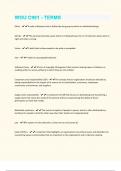
WGU C961 - TERMS | 202 Questions And Answers Already Graded A+
Ethics - A code of behavior that is defined by the group to which an individual belongs. Morals - The personal principles upon which an individual bases his or her decisions about what is right and what is wrong. Virtue - A habit that inclines people to do what is acceptable Vice - A habit of unacceptable behavior Software Piracy - A form of copyright infringement that involves making copies of software or enabling others to access software to which they are not entitled Corporate social responsibility (CSR) - The concept that an organization should act ethically by taking responsibility for the impact of its actions on its shareholders, consumers, employees, community, environment, and suppliers Supply chain sustainability - A component of CSR that focuses on developing and maintaining a supply chain that meets the needs of the present without compromising the ability of future generations to meet their needs. Bathsheba syndrome - The moral corruption of people in power, which is often facilitated by a tendency for people to look the other way when their leaders act inappropriately. Law - A system of rules that tells us what we can and cannot do Code of Ethics - A statement that highlights an organization's key ethical issues and identifies the overarching values and principles that are important to the organization and its decision-making.Corporate compliance officer - The corporate ethics officer. A senior-level manager who provides an organization with vision and leadership in the area of business conduct. Social Audit - A process whereby an organization reviews how well it is meeting its ethical and social responsibility goals and communicates its new goals for the upcoming year. Stakeholder - Someone who stands to gain or lose, depending on how a particular situation is resolved. Ethical Decision-Making Process - 1. Develop Problem Statement 2. Identify Alternatives 3. Choose Alternative 4. Implement the Decision 5. Evaluate the Results Right of privacy - "The right to be left alone—the most comprehensive of rights, and the right most valued by a free people.
Document information
- Uploaded on
- October 9, 2023
- Number of pages
- 22
- Written in
- 2023/2024
- Type
- Exam (elaborations)
- Contains
- Questions & answers


