
Tools for Energy and Material Analysis (GEO4-2326)
Lecture 1: E&M and the Sustainable Development Goals
Summary Article 1: Connecting the sustainable development goals by their energy inter-linkages
- McCollum, D., Echeverri, L. G., Busch, S., Pachauri, S., Parkinson, S., Rogelj, J., Krey, V., Minx, J. C., Nilsson,
M., Stevance, A., & Riahi, K. (2018).
> Global energy & material system
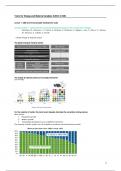
The global energy & material system
The energy & material systems are strongly interwoven
For the majority of metals: the most recent decades dominate the cumulative mining volume
Main drivers:
1. Population growth
2. Welfare growth
3. Technology development (use of different elements)
The majority of these metals are still available in products and infrastructure (stock)
1
,REE = Rare Earth Element
Growth om perspective 1: iron
• 4x more people than 100 years ago
o Today: >8 billion
• 6x more per capita iron consumption than 100 years ago because of welfare growth
o Today: ~260 kg/capita/year
Thus: 4 * 6 = 24 more iron production needed than 100 years ago
Growth om perspective 2: cement
• 1995: global cement production was 1.39 billion tons (~240 kg/capita)
• 2021: global cement production was 4.4 billion tons (~550 kg/capita)
Note that average values often tell only part of the story:
• 2021: China alone was responsible for 2.5 billion tons of cement production of which only a very small
share is exported
• This makes ~1780 kg per Chinese and, thus, ~280 kg per capita for the rest of the world
Growth om perspective 3: energy
• 8x more people & 31x more energy consumption compared to year 1800
Global primary energy consumption by source
Primary energy is
calculated based on the
substitution method which
takes account to the
inefficiencies in fossil fuel
production by converting
non-fossil energy into the
energy inputs required if
they had the same
conversion losses as fossil
fuels
What explains the growth of global energy use between 1990 and 2021?
1. Population increases from 3.3 to 7.9 billion
2. Welfare (GDP/capita) increased from 9.7 to 17.0 $2017/capita
3. Average annual energy intensity (energy/GDP) improvement 1.3%
Driving factors global primary energy consumption (TWh)
2
,Driving factors global primary energy consumption (TWh) > Niger
• Population growth is main driver
Driving factors global primary energy consumption (TWh) > USA
• Intensity improvement almost compensates for population & welfare growth
Driving factors global primary energy consumption (TWh) > China
• Welfare growth is main driver
3
,> Sustainable Development Goals
Goal 7: affordable and clean energy
Targets:
• By 2030, ensure universal access to affordable, reliable, and modern energy services [7.1]
• By 2030, increase substantially the share of renewable energy in the global energy mix [7.2]
• By 2030, double the global rate of improvement in energy efficiency, to 2.6% per year [7.3]
• By 2030, enhance international cooperation to facilitate access to clean energy research and technology
[…] and promote investment in energy infrastructure and clean energy technology
• By 2030, expand infrastructure and upgrade technology for supplying modern and sustainable energy
services for all in developing countries […]
➢ Question: How many people in the world (8 billion) do not have access to electricity?
o Answer: 675 million people – predominantly in sub-Saharan Africa – are living without access to
electricity, and hundreds of millions more only have access to very limited or unreliable electricity
➢ Question: Is target 7.1 only relevant for developing countries?
o Answer: Energy poverty & concerns about the energy transition being unjust are growing issues in
developed countries as well
Share of population with access to clean cooking systems (2020)
4
, ➢ Question: By 2030, increase substantially the share of renewable energy in the global energy mix [7.2]?
Your opinion: should traditional biomass* energy be included in the definition or not? (why/why not?)
➢ Question: For which final consumption category do you think the RES share was/is highest: electricity,
transport (passengers/freight) or useful heat?
➢ Question: How much do you think was the RES share in 2010 and how much did it increase globally
between 2010 and 2019?
Share of renewable sources in final energy consumption by end use, 2015 and 2020
Goal 12: responsible production and consumption
Targets:
• By 2030, achieve the sustainable management and efficient use of natural resources
• By 2030, halve per capita global food waste at the retail and consumer levels and reduce food losses along
production and supply chains, including post-harvest losses
• By 2030, substantially reduce waste generation through prevention, reduction, recycling and reuse
• Encourage companies, especially large and transnational companies, to adopt sustainable practices and to
integrate sustainability information into their reporting cycle
• Promote public procurement practices that are sustainable, in accordance with national policies and
priorities
• Rationalize inefficient fossil-fuel subsidies that encourage wasteful consumption by removing market
distortions, in accordance with national circumstances, including by restructuring taxation and phasing out
those harmful subsidies, where they exist, to reflect their environmental impacts, taking fully into account
the specific needs and conditions of developing countries and minimizing the possible adverse impacts on
their development in a manner that protects the poor and the affected communities
Other SDGs with energy and/or material relevance
• Goal 8: Improve progressively, through 2030, global resource efficiency in consumption and production
and endeavor to decouple economic growth from environmental degradation
• Goal 9: Resources efficiency industry
• Goal 11: By 2020, substantially increase the number of cities and human settlements adopting and
implementing integrated policies and plans towards inclusion, resource efficiency, mitigation, and
adaptation to climate change
• Goal 13: Reduce emissions from fossil energy
5
Lecture 1: E&M and the Sustainable Development Goals
Summary Article 1: Connecting the sustainable development goals by their energy inter-linkages
- McCollum, D., Echeverri, L. G., Busch, S., Pachauri, S., Parkinson, S., Rogelj, J., Krey, V., Minx, J. C., Nilsson,
M., Stevance, A., & Riahi, K. (2018).
> Global energy & material system
The global energy & material system
The energy & material systems are strongly interwoven
For the majority of metals: the most recent decades dominate the cumulative mining volume
Main drivers:
1. Population growth
2. Welfare growth
3. Technology development (use of different elements)
The majority of these metals are still available in products and infrastructure (stock)
1
,REE = Rare Earth Element
Growth om perspective 1: iron
• 4x more people than 100 years ago
o Today: >8 billion
• 6x more per capita iron consumption than 100 years ago because of welfare growth
o Today: ~260 kg/capita/year
Thus: 4 * 6 = 24 more iron production needed than 100 years ago
Growth om perspective 2: cement
• 1995: global cement production was 1.39 billion tons (~240 kg/capita)
• 2021: global cement production was 4.4 billion tons (~550 kg/capita)
Note that average values often tell only part of the story:
• 2021: China alone was responsible for 2.5 billion tons of cement production of which only a very small
share is exported
• This makes ~1780 kg per Chinese and, thus, ~280 kg per capita for the rest of the world
Growth om perspective 3: energy
• 8x more people & 31x more energy consumption compared to year 1800
Global primary energy consumption by source
Primary energy is
calculated based on the
substitution method which
takes account to the
inefficiencies in fossil fuel
production by converting
non-fossil energy into the
energy inputs required if
they had the same
conversion losses as fossil
fuels
What explains the growth of global energy use between 1990 and 2021?
1. Population increases from 3.3 to 7.9 billion
2. Welfare (GDP/capita) increased from 9.7 to 17.0 $2017/capita
3. Average annual energy intensity (energy/GDP) improvement 1.3%
Driving factors global primary energy consumption (TWh)
2
,Driving factors global primary energy consumption (TWh) > Niger
• Population growth is main driver
Driving factors global primary energy consumption (TWh) > USA
• Intensity improvement almost compensates for population & welfare growth
Driving factors global primary energy consumption (TWh) > China
• Welfare growth is main driver
3
,> Sustainable Development Goals
Goal 7: affordable and clean energy
Targets:
• By 2030, ensure universal access to affordable, reliable, and modern energy services [7.1]
• By 2030, increase substantially the share of renewable energy in the global energy mix [7.2]
• By 2030, double the global rate of improvement in energy efficiency, to 2.6% per year [7.3]
• By 2030, enhance international cooperation to facilitate access to clean energy research and technology
[…] and promote investment in energy infrastructure and clean energy technology
• By 2030, expand infrastructure and upgrade technology for supplying modern and sustainable energy
services for all in developing countries […]
➢ Question: How many people in the world (8 billion) do not have access to electricity?
o Answer: 675 million people – predominantly in sub-Saharan Africa – are living without access to
electricity, and hundreds of millions more only have access to very limited or unreliable electricity
➢ Question: Is target 7.1 only relevant for developing countries?
o Answer: Energy poverty & concerns about the energy transition being unjust are growing issues in
developed countries as well
Share of population with access to clean cooking systems (2020)
4
, ➢ Question: By 2030, increase substantially the share of renewable energy in the global energy mix [7.2]?
Your opinion: should traditional biomass* energy be included in the definition or not? (why/why not?)
➢ Question: For which final consumption category do you think the RES share was/is highest: electricity,
transport (passengers/freight) or useful heat?
➢ Question: How much do you think was the RES share in 2010 and how much did it increase globally
between 2010 and 2019?
Share of renewable sources in final energy consumption by end use, 2015 and 2020
Goal 12: responsible production and consumption
Targets:
• By 2030, achieve the sustainable management and efficient use of natural resources
• By 2030, halve per capita global food waste at the retail and consumer levels and reduce food losses along
production and supply chains, including post-harvest losses
• By 2030, substantially reduce waste generation through prevention, reduction, recycling and reuse
• Encourage companies, especially large and transnational companies, to adopt sustainable practices and to
integrate sustainability information into their reporting cycle
• Promote public procurement practices that are sustainable, in accordance with national policies and
priorities
• Rationalize inefficient fossil-fuel subsidies that encourage wasteful consumption by removing market
distortions, in accordance with national circumstances, including by restructuring taxation and phasing out
those harmful subsidies, where they exist, to reflect their environmental impacts, taking fully into account
the specific needs and conditions of developing countries and minimizing the possible adverse impacts on
their development in a manner that protects the poor and the affected communities
Other SDGs with energy and/or material relevance
• Goal 8: Improve progressively, through 2030, global resource efficiency in consumption and production
and endeavor to decouple economic growth from environmental degradation
• Goal 9: Resources efficiency industry
• Goal 11: By 2020, substantially increase the number of cities and human settlements adopting and
implementing integrated policies and plans towards inclusion, resource efficiency, mitigation, and
adaptation to climate change
• Goal 13: Reduce emissions from fossil energy
5


