
Antimicrobials Study Guide
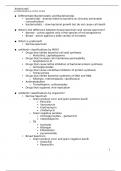
ANTIMICROBIALS STUDY GUIDE ▪ Differentiate Bacteriostatic and Bacterialcidal. • bactericidal – directly lethal to bacteria at clinically achievable concentrations • bacteriostatic – slow bacterial growth but do not cause cell death ▪ What is the difference between broad spectrum and narrow spectrum? • Narrow – active against only a few species of microorganisms • Broad – active against a wide variety of microbes ▪ Which is preferred? • Narrow-spectrum ▪ antibiotic classifications by MOA? • Drugs that inhibit bacterial cell wall synthesis o Penicillins, cephalosporins • Drugs that increase cell membrane permeability o Amphotericin B • Drugs that cause lethal inhibition of bacterial protein synthesis o Aminoglycosides • Drugs that cause nonlethal inhibition of protein synthesis o Tetracyclines • Drugs that inhibit bacterial synthesis of DNA and RNA o Rifampin, metronidazole, ciprofloxacin • Antimetabolites o Trimethoprim, sulfonamides • Drugs that suppress viral replication ▪ antibiotic classifications by organism? • Narrow Spectrum o Gram positive cocci and gram positive bacilli Penicillin Vancomycin Erythromycin clindamycin o Gram negative aerobes Aminoglycosides – gentamicin cephalosporins o TB Isoniazid Rifampin Ethambutol pyrazinamide • Broad Spectrum o Gram positive cocci and gram negative bacilli Ampicillin Piperacillin Tetracyclines Carbapenems Sulfonamides Fluoroquinolones - ciprofloxacin • Antivirals o HIV Reverse transcriptase inhibitors – zidovudine Protease inhibitors – ritonavir Fusion inhibitors – enfuvirtide Integrase inhibitors – raltegravir CCR5 antagonists - maraviroc o Influenza Adamantanes – amantadine Neuraminidase inhibitors - oseltamivir o Others Acyclovir Ribavirin Interferon alfa • Antifungals o Polyene antibiotics – amphotericin o Azoles – itraconazole o Echinocandins – caspofungin ▪ Bacteriostatic: ECSTaTiC • E rythromycin • C lindamycin • S ulfamethoxazole • T rimethoprim • a • T etracycline • i • C hloramphenicol ▪ Bacterialcidal: Very Finely Proficient At Cell Murder • V ancomycin • F luoroquinolones • P enicillin • A minoglycosides • C ephalosporins • M etronidazole ▪ What is empiric antibiotic use? • When the patient has a severe infection, we may have to initiate treatment before test results are available. • Under these conditions, drug selection must be based on clinical evaluation and knowledge of which microbes are most likely to cause infection at a particular site. • If necessary, a broad-spectrum agent can be used for initial treatment. • After the identity and drug sensitivity of the infecting organism have been determined, we can switch to a more selective antibiotic. • When conditions demand that we start therapy in the absence of laboratory data, it is essential that samples of exudates and body fluids be obtained for culture before initiation of treatment; if antibiotics are present at the time of sampling, they can suppress microbial growth in culture and can thereby confound identification. ▪ Therapeutic use? • The first rule of antimicrobial therapy is to match the drug with the bug. Hence, whenever possible, the infecting organism should be identified before starting treatment. • If treatment is begun in the absence of a definitive diagnosis, positive identification should be established as soon as possible so as to permit adjustment of the regimen to better conform with the drug sensitivity of the infecting organism. • The quickest, simplest, and most versatile technique for identifying microorganisms is microscopic examination of a Gram-stained preparation. • Samples for examination can be obtained from exudate, sputum, urine, blood, and other body fluids. The most useful samples are direct aspirates from the site of infection. • In some cases, only a small number of infecting organisms will be present. Under these conditions, positive identification may require that the microbes be grown out in culture. • As stressed previously, material for culture should be obtained before initiating treatment. the samples should not be exposed to low temperature, antiseptics, or oxygen. • A relatively new method, known as the polymerase chain reaction (PCR) test or nucleic acid amplification test, can detect very low titers of bacteria and viruses. • Testing is done by using an enzyme— either DNA polymerase or RNA polymerase— to generate thousands of copies of DNA or RNA unique to the infecting microbe. • As a result of this nucleic acid amplification, there is enough material for detection. • Microbes that we can identify with a PCR test include important bacterial pathogens (e.g., C. difficile, S. aureus, Mycobacterium tuberculosis, Neisseria gonorrhoeae, Chlamydia trachomatis, Helicobacter pylori) and important viral pathogens (e.g., HIV, influenza virus). • Compared with Gram staining, PCR tests are both more specific and more sensitive.
Document information
- Uploaded on
- September 27, 2023
- Number of pages
- 11
- Written in
- 2023/2024
- Type
- Exam (elaborations)
- Contains
- Questions & answers


