Biology Spec Led Revision
Chapter 17 - Excretion as an Example of Homeostatic Control
The Liver and Excretion
Excretion is the Removal of Waste Products from the Body
All chemical reactions that happen make up your METABOLISM
metabolism produces waste products, which are substances that are not needed by the cells i.e.
CO2 or nitrogenous waste
Many of these substances are TOXIC and would damage the body if they were allowed to
accumulate
EXCRETION is the REMOVAL of the waste products of metabolism from the body, STOPPING
them from accumulating and becoming TOXIC
Excreting waste products from the body MAINTAINS NORMAL METABOLISM. It also maintains
homeostasis by helping keep levels of certain substances in the blood roughly CONSTANT
Functions of the Liver
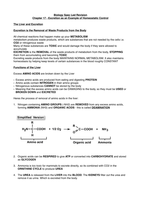
Excess AMINO ACIDS are broken down by the Liver
• Excess amino acids are produced from eating and digesting PROTEIN
• Amino acids contain NITROGEN in their amino groups
• Nitrogenous substances CANNOT be stored by the body
• Meaning that the excess amino acids can be DAMAGING to the body, so they must be USED or
BROKEN DOWN and EXCRETED
Heres the process of removal of amino acids in the liver:
1. Nitrogen containing AMINO GROUPS (-NH2) are REMOVED from any excess amino acids,
forming AMMONIA (NH3) and ORGANIC ACIDS - this is called DEAMINATION
2. Organic acids can be RESPIRED to give ATP or converted into CARBOHYDRATE and stored
as GLYCOGEN
3. Ammonia is too toxic for mammals to excrete directly, so its combined with CO2 in the
ORNITHINE CYCLE to produce UREA
4. The UREA is released from the LIVER into the BLOOD. The KIDNEYS filter out the urea and
remove it as urine. Which is excreted from the body.
Chapter 17 - Excretion as an Example of Homeostatic Control
The Liver and Excretion
Excretion is the Removal of Waste Products from the Body
All chemical reactions that happen make up your METABOLISM
metabolism produces waste products, which are substances that are not needed by the cells i.e.
CO2 or nitrogenous waste
Many of these substances are TOXIC and would damage the body if they were allowed to
accumulate
EXCRETION is the REMOVAL of the waste products of metabolism from the body, STOPPING
them from accumulating and becoming TOXIC
Excreting waste products from the body MAINTAINS NORMAL METABOLISM. It also maintains
homeostasis by helping keep levels of certain substances in the blood roughly CONSTANT
Functions of the Liver
Excess AMINO ACIDS are broken down by the Liver
• Excess amino acids are produced from eating and digesting PROTEIN
• Amino acids contain NITROGEN in their amino groups
• Nitrogenous substances CANNOT be stored by the body
• Meaning that the excess amino acids can be DAMAGING to the body, so they must be USED or
BROKEN DOWN and EXCRETED
Heres the process of removal of amino acids in the liver:
1. Nitrogen containing AMINO GROUPS (-NH2) are REMOVED from any excess amino acids,
forming AMMONIA (NH3) and ORGANIC ACIDS - this is called DEAMINATION
2. Organic acids can be RESPIRED to give ATP or converted into CARBOHYDRATE and stored
as GLYCOGEN
3. Ammonia is too toxic for mammals to excrete directly, so its combined with CO2 in the
ORNITHINE CYCLE to produce UREA
4. The UREA is released from the LIVER into the BLOOD. The KIDNEYS filter out the urea and
remove it as urine. Which is excreted from the body.