Internal Medicine Cases Questions And Answers With Complete Solutions
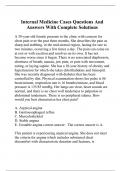
A 58-year-old female presents to the clinic with concern for chest pain over the past three months. She describes the pain as sharp and stabbing, in the mid-sternal region, lasting for one to two minutes, occurring a few times a day. The pain can come on at rest or with exertion and resolves on its own. It has not become worse since it began. There is no associated diaphoresis, shortness of breath, nausea, jaw pain, or pain with movement, eating, or laying supine. She has a 10-year history of obesity and hypertension for which she takes chlorthalidone and lisinopril. She was recently diagnosed with diabetes that has been controlled by diet. Physical examination shows her pulse is 86 beats/minute, respiration rate is 16 breaths/minute, and blood pressure is 135/85 mmHg. Her lungs are clear, heart sounds are normal, and there is no chest wall tenderness to palpation or abdominal tenderness. There is no peripheral edema. How would you best characterize her chest pain? A. Atypical angina B. Gastroesophageal reflux C. Musculoskeletal D. Stable angina E. Unstable angina correct answer: The correct answer is A. This patient is experiencing atypical angina. She does not meet the criteria for angina which includes substernal chest discomfort with characteristic duration and features, is exertional in nature and relieved with rest or nitroglycerin. This is considered atypical angina because the pain does not follow the classic pattern of angina; however, it is still possible that the pain is cardiac in origin, especially since atypical features are more common in women and patients with diabetes. Gastroesophageal reflux typically occurs after meals or while laying flat and is often described as having a burning quality. Musculoskeletal pain is typically worse with certain movements and associated with chest wall tenderness. Stable angina would meet the criteria and follow a predictable pattern with exertion. Unstable angina is characterized by chest pain at rest or with progressively less exertion. Angina with worsening features or new within the past four to six weeks is also considered unstable. A 42-year-old female presents to the emergency department with concern for mild chest pain lasting three to four minutes with vigorous exercise, three times over the past week. She has no past medical history and is not taking any medications or supplements. She has no family history of cardiac or pulmonary disorders. She follows a vegetarian diet, exercises regularly, and is training for a half-marathon. Physical examination shows her pulse is 66 beats/minute, respiration rate is 16 breaths/minute, and blood pressure is 110/70 mmHg. Her lungs are clear, heart sounds are normal, and there is no lower-extremity edema. Which of the following is the most likely laboratory study in the acute setting to assist with the diagnosis? A. Brain natriuretic peptide (BNP) B. Complete blood count (CBC) C. Hemoglobin A1c D. Low-density lipoprotein (LDL) E. Triglycerides correct answer: The correct answer is B. Although cardiac causes of chest pain should be considered, it is important to consider other sources of pain. Anemia may cause chest pain by decreasing oxygen carrying capacity. BNP should be ordered when congestive heart failure is suspected; however heart failure is unlikely in this case, given her clear lungs, lack of edema, and lack of risk factors. Hemoglobin A1c would be helpful for the diagnosis of insulin resistance and diabetes, which are significant risk factors for cardiac disease, but do not cause chest pain on their own. LDL and triglycerides would be helpful to characterize her cardiac risk, but would not help determine the source of her symptoms. A 66-year-old male presents to his primary care provider with concern for intermittent chest pain. He describes several episodes a week of pressure under his sternum that comes on with exertion, lasts for about 5 to 10 minutes and is improved with rest, over the last two weeks. He notes some shortness of breath with the pain, but denies any associated diaphoresis, nausea, or jaw pain. He has a history of hypertension and hyperlipidemia treated with lisinopril, simvastatin, and aspirin. He exercises at a gym for 30 minutes, two to three times per week. Physical examination shows his pulse is 78 beats/minute, respiratory rate is 16 breaths/minute, and blood pressure is 145/80 mmHg. His lungs are clear, heart sounds are normal, and there is no lower-extremity edema. His electrocardiogram (ECG) is normal. Which of the following is the most-appropriate next step in his workup? A. Cardiac catheterization B. Computed tomography (CT) scan C. Echocardiogram D. Pharmacologic stress test with imaging E. Treadmill stress test without imaging correct answer: The correct answer is A. The patient should proceed directly for a cardiac catheterization. His symptoms meet the criteria for angina (substerna
Written for
- Institution
- Aquifer
- Course
- Aquifer
Document information
- Uploaded on
- September 15, 2023
- Number of pages
- 208
- Written in
- 2023/2024
- Type
- Exam (elaborations)
- Contains
- Questions & answers
Subjects
-
internal medicine cases questions and answers with

Also available in package deal