

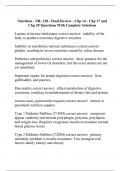
Nutrition - NR- 228 - Final Review - Chp 14 - Chp 17 and Chp 20`Questions With Complete Solutions
Lactase in lactose intolerance correct answer: inability of the body to produce necessary digestive enzymes Inability to metabolize nutrient substances correct answer: gliadin, resulting in severe reactions caused by celiac disease Prebiotics and probiotics correct answer: show promise for the management of lower GI disorders, but the exact strains are not yet identified. Important organs for proper digestion correct answer: liver, gallbladder, and pancrea Pancreatitis correct answer: affects production of digestive secretions, resulting in malabsorption of dietary fats and protein. serious cases, pancreatitis requires correct answer: enteral or parenteral nutrition support. Type 1 Diabetes Mellitus (T1DM) correct answer: symptoms appear suddenly and include polyphagia, polyuria, polydipsia, and weight loss. Requires exogenous insulin to maintain normal blood glucose levels. Type 2 Diabetes Mellitus (T2DM) correct answer: primary metabolic problem is insulin resistance. Two strongest risk factors family history and obesity Additional types of diabetes correct answer: Gestational diabetes mellitus (GDM) Blood Glucose Level Goals correct answer: Before meals: 70 to 130 mg/dL Two hours after meals: less than 180 mg/dL (expect a 30- to 50-point rise from pre-meal glucose) Bedtime: 90 to 150 mg/dL Attain and maintain optimal metabolic outcomes: blood glucose, lipid, and lipoprotein profiles; and blood pressure Diabetes management Carbohydrate correct answer: 15 g of every 1 to 2 hours 50 g of carbohydrate every 3 to 4 hours Less if blood glucose is greater than 240 mg/dL
Document information
- Uploaded on
- September 4, 2023
- Number of pages
- 11
- Written in
- 2023/2024
- Type
- Exam (elaborations)
- Contains
- Questions & answers


