

NURS 611 Advanced Pathophysiology EXAM
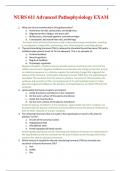
What are clinical manifestations of hypothyroidism? a. Intolerance to heat, tachycardia, and weight loss b. Oligomenorrhea, fatigue, and warm skin c. Restlessness, increased appetite, and metrorrhagia d. Constipation, decreased heat rate, and lethargy The lower levels of thyroid hormone result in decreased energy metabolism, resulting in constipation, bradycardia, and lethargy, thus eliminating the remaining options. 2. Thyroid-stimulating hormone (TSH) is released to stimulate thyroid hormone (TH) and is inhibited when plasma levels of TH are adequate. This is an example of: a. Positive feedback b. Neural regulation c. Negative feedback d. Physiologic regulation Negative feedback. Feedback systems provide precise monitoring and control of the cellular environment. Negative feedback occurs because the changing chemical, neural, or endocrine response to a stimulus negates the initiating change that triggered the release of the hormone. Thyrotropin-releasing hormone (TRH) from the hypothalamus stimulates TSH secretion from the anterior pituitary. Secretion of TSH stimulates the synthesis and secretion of THs. Increasing levels of T4 and triiodothyronine (T3) then generate negative feedback on the pituitary and hypothalamus to inhibit TRH and TSH synthesis. 3. Lipid-soluble hormone receptors are located: a. Inside the plasma membrane in the cytoplasm b. On the outer surface of the plasma membrane c. Inside the mitochondria d. On the inner surface of the plasma membrane Inside the plasma membrane in the cytoplasm. Lipid-soluble hormone receptors are located inside the plasma membrane and easily diffuse across the plasma membrane to bind to either cytosolic or nuclear receptors. 4. The releasing hormones that are made in the hypothalamus travel to the anterior pituitary via the: a. Vessels of the zona fasciculata b. Hypophyseal stalk c. Infundibular stem d. Portal hypophyseal blood vessels Portal hypophyseal blood vessels. Releasing and inhibitory hormones are synthesized in the hypothalamus and are secreted into the portal blood vessels through which they travel to the anterior pituitary hormones
Document information
- Uploaded on
- August 16, 2023
- Number of pages
- 31
- Written in
- 2023/2024
- Type
- Exam (elaborations)
- Contains
- Questions & answers


