Zuku Review NAVLE TEST PREP 100% guaranteed success.
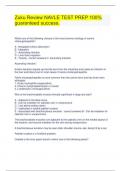
Zuku Review NAVLE TEST PREP 100% guaranteed success. Which one of the following choices is the most common etiology of canine cholangiohepatitis? A - Neoplastic biliary obstruction B - Idiopathic C - Ascending infection D - Liver fluke migration E - Toxicity - correct answers.C. Ascending infection Ascending infection: Enteric bacteria migrate up the bile duct from the intestines and create an infection in the liver and biliary tract in most cases of canine cholangiohepatitis. Feline cholangiohepatitis is more common than the canine form and has three main etiologies: 1. Acute neutrophilic (suppurative) 2. Chronic (lymphoplasmacytic or mixed) 3. Lymphocytic (nonsuppurative). Why is the brachioradialis muscle clinically significant in dogs and cats? A - Adjacent to the tibial nerve B - Can be mistaken for cephalic vein in venipuncture C - Lies above axillary artery D - Implicated in medial patellar luxation E - Associated with brachial plexus avulsion - correct answers.B - Can be mistaken for cephalic vein in venipuncture The brachioradialis muscles runs adjacent to the cephalic vein on the medial aspect of the forearm, and may be mistaken for the vein during venipuncture. A brachial plexus avulsion may be seen after shoulder trauma, esp. being hit by a car. Patellar luxation is a hindlimb problem. Oxalate is the toxic agent found in which one of the following plants? A - Hypericum perforatum (Klamathweed) B - Delphinium spp (Larkspur) C - Sarcobatus vermiculatus (Greasewood) D - Hordeum spp (Foxtail) E - Solanum spp (Nightshade) - correct answers.C. Sarcobatus vermiculatus (Greasewood) Oxalates are found in Sarcobatus vermiculatus (Greasewood). Greasewood toxicity is seen primarily in sheep, sometimes in cattle, usually when large amounts are consumed over a short period of time. Oxalates occur in plants as salts of calcium, sodium, and potassium. Calcium oxalate is insoluble and is lost through the GI tract. Sodium and potassium oxalates are soluble and either 1) bind to calcium in the rumen and lost through the GI tract, or 2) are absorbed and react with calcium in body fluids. Death is attributed to hypocalcemia and/or kidney failure caused by calcium oxalate crystals in the renal tubules. Signs of oxalate toxicity include: dullness, lowering of the head, loss of appetite, separation from the herd; followed by excessive salivation with frothing, progressive incoordination; and finally, coma, irregular breathing, and death. Oxalate containing plants include: Sarcobatus (greasewood), Oxalis (sorrel), Rumex (dock), Halogeton, Amaranthus (pigweed), and Chenopodium (lambsquarter.) Oxalates are also produced by molds (Aspergillus niger) in contaminated feeds. Delphinium spp.(Larkspur) contain alkaloids. Hypericum perforatum (Klamathweed) contain hypericin. Hordeum spp.(Foxtail) cause physical injury. Solanum spp.(Nightshade) contain alkaloids. The vet has asked you to prepare for a pyometra surgery on a 7-year-old intact female Schnauzer. What are you about to help remove from the dog? A - Gall bladder B - Kidney C - Uterus D - Mammary glands - correct answers.C. Uterus A pyometra is a pus-filled uterus and it almost always has to come out.
Document information
- Uploaded on
- August 13, 2023
- Number of pages
- 8
- Written in
- 2023/2024
- Type
- Exam (elaborations)
- Contains
- Questions & answers