

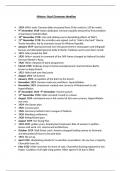
History: Nazi Germany timeline
1918- WW1 ends- German debts increased from 50 bn marks to 150 bn marks
9th November 1918- Kaiser abdicated, German republic declared by first president
of Germany Friedrich Ebert.
10th November 1918- riots and striking sue to devastating effects of WW1.
11th November 1918- the armistice was signed. Led to “stab in the back” theory.
Treaty Versailles- led to economic issues for Weimar Republic.
January 1919- Spartacists took over the government’s newspapers and telegraph
bureau and attempted general strike in Berlin- freikorps sent to put down revolt.
1919- hitler joined the DAP
1920- hitler= second in command of the DAP. Name changed to National Socialist
German Worker’s Party.
1920- Hitler released 25-point programme.
March 1920- freikorps troop is feared unemployment marched down Berlin,
known as Kapp Putsch.
1921- hitler took over Nazi party
August 1921- SA formed.
January 1923- occupation of the Ruhr by the french.
November 1923- German mark was worthless- hyperinflation.
November 1923- stresseman created new currency of Rentenmark to aid
hyperinflation.
8th November 1923- 9th November- Munich putsch
11th November 1923- Hitler arrested. Found in a closet.
August 1924- reichsbank was in full control of this new currency. Hyperinflation
was over.
1924- the Dawes plan.
1925- Locarno pact
1926- Germany invited to be in League of Nations.
1926- Bamberg conference.
1928- Kellog-Briand pact
August 1929- the Young Plan
1924-1929- golden years. Employment improved. Role of women in politics,
leisure and work. Art, cinema and architecture.
October 1929- Wall Street crash. America stopped lending money to Germany
and demanded all loans to be paid back.
1931- SD set up.
April 1932- Hindenburg stands for re-election as president. No one has a majority.
Chancellor bans SA.
May 1932- Hitler increases his share of vote. Chancellor Bruning replaced by Von
Papen. Coalition of all right-wing parties. Hitler agrees if SA ban is lifted.
1918- WW1 ends- German debts increased from 50 bn marks to 150 bn marks
9th November 1918- Kaiser abdicated, German republic declared by first president
of Germany Friedrich Ebert.
10th November 1918- riots and striking sue to devastating effects of WW1.
11th November 1918- the armistice was signed. Led to “stab in the back” theory.
Treaty Versailles- led to economic issues for Weimar Republic.
January 1919- Spartacists took over the government’s newspapers and telegraph
bureau and attempted general strike in Berlin- freikorps sent to put down revolt.
1919- hitler joined the DAP
1920- hitler= second in command of the DAP. Name changed to National Socialist
German Worker’s Party.
1920- Hitler released 25-point programme.
March 1920- freikorps troop is feared unemployment marched down Berlin,
known as Kapp Putsch.
1921- hitler took over Nazi party
August 1921- SA formed.
January 1923- occupation of the Ruhr by the french.
November 1923- German mark was worthless- hyperinflation.
November 1923- stresseman created new currency of Rentenmark to aid
hyperinflation.
8th November 1923- 9th November- Munich putsch
11th November 1923- Hitler arrested. Found in a closet.
August 1924- reichsbank was in full control of this new currency. Hyperinflation
was over.
1924- the Dawes plan.
1925- Locarno pact
1926- Germany invited to be in League of Nations.
1926- Bamberg conference.
1928- Kellog-Briand pact
August 1929- the Young Plan
1924-1929- golden years. Employment improved. Role of women in politics,
leisure and work. Art, cinema and architecture.
October 1929- Wall Street crash. America stopped lending money to Germany
and demanded all loans to be paid back.
1931- SD set up.
April 1932- Hindenburg stands for re-election as president. No one has a majority.
Chancellor bans SA.
May 1932- Hitler increases his share of vote. Chancellor Bruning replaced by Von
Papen. Coalition of all right-wing parties. Hitler agrees if SA ban is lifted.


