Vaccination
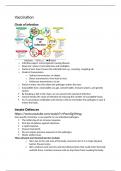
Chain of Infection
o Infectious agent: microorganism causing disease.
o Reservoir: where it normally lives and multiplies
o Portal of exit: how it leaves the infected host e.g., sneezing, coughing etc.
o Mode of transmission
o Indirect transmission: an object
o Direct transmission: from host to host
o Airbourne transmission: via air
o Portal of entry: the site where the pathogen enters the host.
o Susceptible host: vulnerability via age, overall health, immune system, and genetic
factors
By breaking a link in the chain, we can prevent the spread of infection.
Vaccine breaks the chain of infection by reducing the number of susceptible hosts.
So, it can produce antibodies and memory cells to remember the pathogen in case it
enters the body.
Innate Defences
https://www.youtube.com/watch?v=PzunOgYHeyg
Non-specific immunity: is not specific to one individual pathogen.
The initial step of an immune response.
First-line of defence against infections.
a rapid response.
Present from birth.
Do not require previous exposure to the pathogen.
Works within hours
These physical and chemical barriers include:
o Skin: due to the vast area of the body covered in skin it is a major physical
barrier. Prevent entry.
o Skin: produces and secretes anti-microbial proteins that could enter the body
and kills them. Contains immune cells to stop them from invading the body.
, o mucous membranes: lines the respiratory, GI and urogenital tracts. Produces
mucus to trap and expel pathogens.
o respiratory cilia: direction of movement to prevent the build-up of
microorganisms.
o Strong acids in the stomach: pH too low and kills microorganisms infected.
o lysosomes in tears, saliva and mucus: constant flushing and breaking down
bacteria cell walls.
o normal flora: the diverse community of microorganisms within the body. It
competes with the pathogen for space, nutrients and vitamins.
Inflammation
mast cells
constantly searching for specific objects in the body
when it finds a pathogen, it secrets histamine.
this causes blood cells to rush to the pathogen.
Leukocytes:
Have all access to the body except the brain and spinal cord.
Those that belong to the innate system=phagocytes
Most abundant cells
LOOK AT OVERVIEW OF IMMUNITY SUMMARY⭐️
Compliment system:
A cascade of enzymes acts on the surface of the microbe to kill it.
Look below antibodies for more information.
Adaptive immunity
The acquired ability to recognise and destroy a particular pathogen.
Specific immunity.
You develop it as you grow and the environment you are in, not from birth.
Previous exposure.
Can take days to form a response, but the secondary response will be much faster
(look below).
Components: B and T lymphocytes
Look at overview of Immunity summary ⭐️
Immunological Memory
Chain of Infection
o Infectious agent: microorganism causing disease.
o Reservoir: where it normally lives and multiplies
o Portal of exit: how it leaves the infected host e.g., sneezing, coughing etc.
o Mode of transmission
o Indirect transmission: an object
o Direct transmission: from host to host
o Airbourne transmission: via air
o Portal of entry: the site where the pathogen enters the host.
o Susceptible host: vulnerability via age, overall health, immune system, and genetic
factors
By breaking a link in the chain, we can prevent the spread of infection.
Vaccine breaks the chain of infection by reducing the number of susceptible hosts.
So, it can produce antibodies and memory cells to remember the pathogen in case it
enters the body.
Innate Defences
https://www.youtube.com/watch?v=PzunOgYHeyg
Non-specific immunity: is not specific to one individual pathogen.
The initial step of an immune response.
First-line of defence against infections.
a rapid response.
Present from birth.
Do not require previous exposure to the pathogen.
Works within hours
These physical and chemical barriers include:
o Skin: due to the vast area of the body covered in skin it is a major physical
barrier. Prevent entry.
o Skin: produces and secretes anti-microbial proteins that could enter the body
and kills them. Contains immune cells to stop them from invading the body.
, o mucous membranes: lines the respiratory, GI and urogenital tracts. Produces
mucus to trap and expel pathogens.
o respiratory cilia: direction of movement to prevent the build-up of
microorganisms.
o Strong acids in the stomach: pH too low and kills microorganisms infected.
o lysosomes in tears, saliva and mucus: constant flushing and breaking down
bacteria cell walls.
o normal flora: the diverse community of microorganisms within the body. It
competes with the pathogen for space, nutrients and vitamins.
Inflammation
mast cells
constantly searching for specific objects in the body
when it finds a pathogen, it secrets histamine.
this causes blood cells to rush to the pathogen.
Leukocytes:
Have all access to the body except the brain and spinal cord.
Those that belong to the innate system=phagocytes
Most abundant cells
LOOK AT OVERVIEW OF IMMUNITY SUMMARY⭐️
Compliment system:
A cascade of enzymes acts on the surface of the microbe to kill it.
Look below antibodies for more information.
Adaptive immunity
The acquired ability to recognise and destroy a particular pathogen.
Specific immunity.
You develop it as you grow and the environment you are in, not from birth.
Previous exposure.
Can take days to form a response, but the secondary response will be much faster
(look below).
Components: B and T lymphocytes
Look at overview of Immunity summary ⭐️
Immunological Memory