
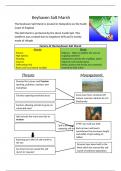
Keyhaven Salt Marsh
The Keyhaven Salt Marsh is located in Hampshire on the South
Coast of England
The Salt Marsh is protected by the Hurst Castle Spit. This
landform was created due to longshore drift and is mainly
made of shingle
Factors of the Keyhaven Salt Marsh
Abiotic Biotic
Erosion Eelgrass – helps to stabilise the area by
High Salinity trapping sediment
Flooding Halophytes colonise the mudflats, which
Tourism helps the salt marshes grow
Suffocating mud Herbs, grasses and shrubs are constantly
Rocks and inconsistent sunlight drained by tidal action
Threats Management
Demand for Leisure and Tourism
(parking, pollution, mariners and
trampling)
Tourists exploring restricted areas Areas have been cordoned off
(nature reserve) maintain its rich
biodiversity
Farmers allowing animals to graze on
vulnerable land
Spit retreats 6m every year due to
erosion
1990’s sea wall was built
Spit is damaged by severe storms,
Rockto
exposing salt marshes armour and beach
the sea
nourishment has increases height
and width of spit costing £5
million
Exposing up to 80m of salt marsh to
the sea
Groynes have been built to the
West which has starved the salt
Sea level rise has caused the salt
marsh of sediment deposition
marsh to ‘squeeze’
The Keyhaven Salt Marsh is located in Hampshire on the South
Coast of England
The Salt Marsh is protected by the Hurst Castle Spit. This
landform was created due to longshore drift and is mainly
made of shingle
Factors of the Keyhaven Salt Marsh
Abiotic Biotic
Erosion Eelgrass – helps to stabilise the area by
High Salinity trapping sediment
Flooding Halophytes colonise the mudflats, which
Tourism helps the salt marshes grow
Suffocating mud Herbs, grasses and shrubs are constantly
Rocks and inconsistent sunlight drained by tidal action
Threats Management
Demand for Leisure and Tourism
(parking, pollution, mariners and
trampling)
Tourists exploring restricted areas Areas have been cordoned off
(nature reserve) maintain its rich
biodiversity
Farmers allowing animals to graze on
vulnerable land
Spit retreats 6m every year due to
erosion
1990’s sea wall was built
Spit is damaged by severe storms,
Rockto
exposing salt marshes armour and beach
the sea
nourishment has increases height
and width of spit costing £5
million
Exposing up to 80m of salt marsh to
the sea
Groynes have been built to the
West which has starved the salt
Sea level rise has caused the salt
marsh of sediment deposition
marsh to ‘squeeze’


