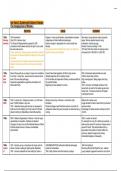
Key Topic 3, Society and Culture in Change:
The changing lives of Women -
POLITICAL SOCIAL ECONOMIC
1920s 19th Amendment. Flappers = more sexual freedom, demonstrated increased New labour saving devices made housework
Roaring Only 25% of women voted. independence. Broke traditional stereotypes. easier. Women steered towards caring
twenties The House of Representatives passed the 19th Fashion changed = appropriate for a more socially free professions. Gender pay gap.
amendment which allowed women the right to vote under lifestyle. Number of women working = 9.8%
the same rule as men. Young women did not benefit if they lived in the ‘bible belt’ 1910 and 1049, the number of working women
Poorer women from working classes and ethnic minorities where the actions are forbidden. increased from 7,640,000 to 13,007,000
did not have the financial freedom to take part in the social
revolution.
Young women from the middle class had more money and
freedom and many used this by drinking and smoking in
public.
1930s Eleanor Roosevelt set up camps to improve the conditions Overall, New Deal legislation did little to help women. 80% of Americans believed that wives and
GD+ for women - Camp Tera - ensured women received some Alphabet agencies did not employ women. mothers should stay at home.
New level of the new deal patronage. Aid for families with dependent children provides benefits for High unemployment, falling wages and rising
Deal Grassroots organisations supported unionisation and the poorest families. prices.
Democratic Party. Beginning of social welfare for women. 1933 - Economy Act forbade members of the
same family to work for the federal government.
Camp Tera - 36 camps across the US helped
unemployed women.
1940s 1940 = Lanham Act - childcare provision - by 1944 there Women’s land army of America - re-formed to help Millions did voluntary work.
WW2 were 130,000 children in day care. farmlands. Large demand for labour meant that more married
1941 = Selective training and services act -prepared to Worker shortages meant that black women could train for women worked.
draft men into the military and to train women to fill their professions where they were previously not welcomed to e.g Percentage of married women working rose from
places including in shipbuilding and aircraft assembly. nursing. 12-23%.
1950s NOW - National Organisation of Women - strike for equal 1950 - Lanham Act ended
opportunities in education, childcare and abortion. For example, for every $1 a white man wearned, a
Congress of Labour non and the National Alliance of Black white woman earned 61 cents and a black woman
feminists helped women to achieve considerable earned 50 cents. This demonstrates that to a
improvement. large extent, the position of women within the
economy, despite changes which clearly
illuminated disparity and inequality.
1960s 1961 - Kennedy set up a commission of enquiry into the SUBURBANISATION reinforced traditional stereotypes 1964 Civil rights act
Impact status of women, leading to higher gender disparities. (susie the homemaker). Kennedy enforced the Equal Pay act - national
of 1967 - Johnson extended his order calling for action to 1963 - Betty Friedan wrote the feminine mystique young radicals magazine became the voice of the
, suburba improve working conditions for women. contributing to a growth in activism economic movement.
n life 1968 - Voice of the Women’s liberation movement Minimum wage did not apply to women.
magazine.
1970s 1972 - Einstad vs Baird - gave unmarried women access
to contraception.
1973 - Roe vs Wade - right to abortion
1980s Overall 1917-80 women gained greater social freedom and Only 37% of women graduated but then could not
independence, however this did come with immense get access to traditional careers.
opposition. This is demonstrated through legislation and
political intervention [New Deal]. Some states refused to
ratify the Equal Rights Act (1982), preventing it from ever
forming. Still faced inequality at the end of the time period
despite the progress made.
The changing lives of Women -
POLITICAL SOCIAL ECONOMIC
1920s 19th Amendment. Flappers = more sexual freedom, demonstrated increased New labour saving devices made housework
Roaring Only 25% of women voted. independence. Broke traditional stereotypes. easier. Women steered towards caring
twenties The House of Representatives passed the 19th Fashion changed = appropriate for a more socially free professions. Gender pay gap.
amendment which allowed women the right to vote under lifestyle. Number of women working = 9.8%
the same rule as men. Young women did not benefit if they lived in the ‘bible belt’ 1910 and 1049, the number of working women
Poorer women from working classes and ethnic minorities where the actions are forbidden. increased from 7,640,000 to 13,007,000
did not have the financial freedom to take part in the social
revolution.
Young women from the middle class had more money and
freedom and many used this by drinking and smoking in
public.
1930s Eleanor Roosevelt set up camps to improve the conditions Overall, New Deal legislation did little to help women. 80% of Americans believed that wives and
GD+ for women - Camp Tera - ensured women received some Alphabet agencies did not employ women. mothers should stay at home.
New level of the new deal patronage. Aid for families with dependent children provides benefits for High unemployment, falling wages and rising
Deal Grassroots organisations supported unionisation and the poorest families. prices.
Democratic Party. Beginning of social welfare for women. 1933 - Economy Act forbade members of the
same family to work for the federal government.
Camp Tera - 36 camps across the US helped
unemployed women.
1940s 1940 = Lanham Act - childcare provision - by 1944 there Women’s land army of America - re-formed to help Millions did voluntary work.
WW2 were 130,000 children in day care. farmlands. Large demand for labour meant that more married
1941 = Selective training and services act -prepared to Worker shortages meant that black women could train for women worked.
draft men into the military and to train women to fill their professions where they were previously not welcomed to e.g Percentage of married women working rose from
places including in shipbuilding and aircraft assembly. nursing. 12-23%.
1950s NOW - National Organisation of Women - strike for equal 1950 - Lanham Act ended
opportunities in education, childcare and abortion. For example, for every $1 a white man wearned, a
Congress of Labour non and the National Alliance of Black white woman earned 61 cents and a black woman
feminists helped women to achieve considerable earned 50 cents. This demonstrates that to a
improvement. large extent, the position of women within the
economy, despite changes which clearly
illuminated disparity and inequality.
1960s 1961 - Kennedy set up a commission of enquiry into the SUBURBANISATION reinforced traditional stereotypes 1964 Civil rights act
Impact status of women, leading to higher gender disparities. (susie the homemaker). Kennedy enforced the Equal Pay act - national
of 1967 - Johnson extended his order calling for action to 1963 - Betty Friedan wrote the feminine mystique young radicals magazine became the voice of the
, suburba improve working conditions for women. contributing to a growth in activism economic movement.
n life 1968 - Voice of the Women’s liberation movement Minimum wage did not apply to women.
magazine.
1970s 1972 - Einstad vs Baird - gave unmarried women access
to contraception.
1973 - Roe vs Wade - right to abortion
1980s Overall 1917-80 women gained greater social freedom and Only 37% of women graduated but then could not
independence, however this did come with immense get access to traditional careers.
opposition. This is demonstrated through legislation and
political intervention [New Deal]. Some states refused to
ratify the Equal Rights Act (1982), preventing it from ever
forming. Still faced inequality at the end of the time period
despite the progress made.