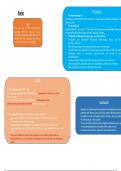
Raine Procedure:
• The experimental group
41 murderers pleading NGRI (39m/2f), mean age 31.3 years. Reasons included; schizophrenia, br
substance abuse
Aim • The control group
The aim was to show that murderers 41 people (39m/2f), mean age 31.7 years. None of this group were on medication. They were
pleading NGRI (‘not guilty for reasons their general health, medical history and had a psychiatric interview.
of insanity’) would show dysfunction in the • Matched to the offenders in terms of age, sex & schizophrenia.
areas of the brain associated with violence • Participants were screened for their general health, medical history and had
such as prefrontal cortex, amygdala. psychiatric interviews.
• None of the participants were taking medication prior to the brain scan.
• All participants were medication free for two weeks prior to the brain scan and consented t
• Participants worked on a continuous performance task (cpt) focusing on a pre
blurred numbers.
• Participants had 10 minutes trial of the cpt ensuring that they knew what to do.
• When injected with a radioactive tracer to be metabolised in active areas of the brain.
• After completing task, they had a PET scan of their brain.
Results
In the cortical areas NGRI’s had:
1.Lower glucose metabolism in the prefrontal cortex (responsible for self-control, remorse) than
the control group.
2.Lower glucose metabolism in the parietal areas, (responsible for verbal
ability and educational underachievement)than the control group. Conclusion
• Deficits in the functioning of the prefrontal cortex (impulsivity and los
problems with different areas of the limbic system (affecting emotiona
In the subcortical areas, the NGRI brain scans showed:
and ability to learn) could explain violent criminals as they are unable
• Lower glucose metabolism in the corpus callosum (passing information between
the consequences of their actions.
the hemispheres) than the control group.
• The asymmetrical functioning of the amygdala and hippocampus may
• Asymmetrical glucose metabolism in the amygdala (impulsivity and emotion) with
in misunderstanding of social situations which could also lead
lower activity observed in the left and higher activity in the right amygdala than the control
to inappropriate responses, aggression and violent behaviour.
group.
• There was no difference between the two groups in how well they did the task and
individual differences such as ethnicity and handedness were found not to be affecting the
results.
• The experimental group
41 murderers pleading NGRI (39m/2f), mean age 31.3 years. Reasons included; schizophrenia, br
substance abuse
Aim • The control group
The aim was to show that murderers 41 people (39m/2f), mean age 31.7 years. None of this group were on medication. They were
pleading NGRI (‘not guilty for reasons their general health, medical history and had a psychiatric interview.
of insanity’) would show dysfunction in the • Matched to the offenders in terms of age, sex & schizophrenia.
areas of the brain associated with violence • Participants were screened for their general health, medical history and had
such as prefrontal cortex, amygdala. psychiatric interviews.
• None of the participants were taking medication prior to the brain scan.
• All participants were medication free for two weeks prior to the brain scan and consented t
• Participants worked on a continuous performance task (cpt) focusing on a pre
blurred numbers.
• Participants had 10 minutes trial of the cpt ensuring that they knew what to do.
• When injected with a radioactive tracer to be metabolised in active areas of the brain.
• After completing task, they had a PET scan of their brain.
Results
In the cortical areas NGRI’s had:
1.Lower glucose metabolism in the prefrontal cortex (responsible for self-control, remorse) than
the control group.
2.Lower glucose metabolism in the parietal areas, (responsible for verbal
ability and educational underachievement)than the control group. Conclusion
• Deficits in the functioning of the prefrontal cortex (impulsivity and los
problems with different areas of the limbic system (affecting emotiona
In the subcortical areas, the NGRI brain scans showed:
and ability to learn) could explain violent criminals as they are unable
• Lower glucose metabolism in the corpus callosum (passing information between
the consequences of their actions.
the hemispheres) than the control group.
• The asymmetrical functioning of the amygdala and hippocampus may
• Asymmetrical glucose metabolism in the amygdala (impulsivity and emotion) with
in misunderstanding of social situations which could also lead
lower activity observed in the left and higher activity in the right amygdala than the control
to inappropriate responses, aggression and violent behaviour.
group.
• There was no difference between the two groups in how well they did the task and
individual differences such as ethnicity and handedness were found not to be affecting the
results.