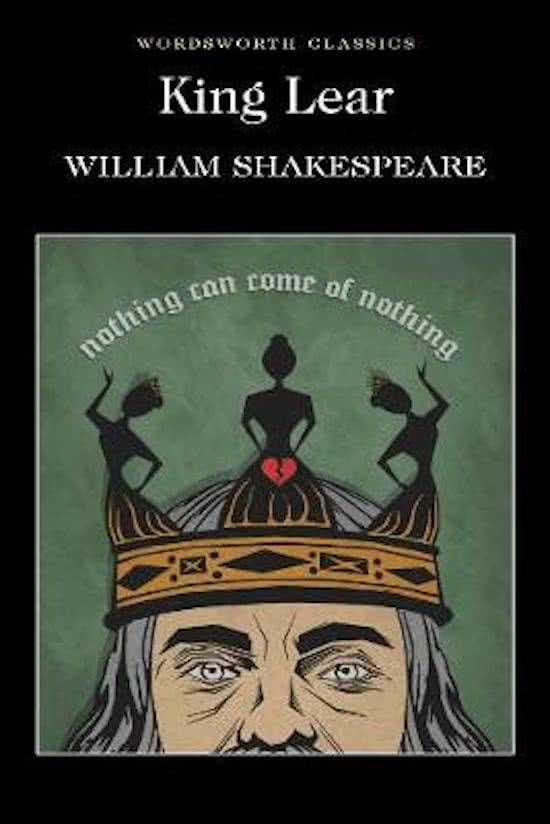
King Lear Essay Plans
● AO2: imagery, metaphor, allusions, structural features, motifs.
● Themes require discussion of character, characters require discussion of themes.
● Show an awareness of it being a pre-Christian play performed for a Christian audience → allows
Shakespeare greater exploration.
● Characters: what would the play lose if this character was removed? Vehic;e for ideas.
● Thesis statement: general patterns of theme/character. Ask why.
● Mention critical opinions at the beginning of the paragraph. Better to disagree with critics. Go
back to it throughout the essay if you can. Can include critical opinion.
● If arguing more than one side of an argument, mention it in the thesis statement.
● Importance of introduction.
● Each topic sentence should contribute to the thesis statement.
● Ask rhetorical questions.
● Conclusion: rephrase thesis statement, summarise topic sentences, don’t introduce new ideas.
● Engage with critics in book-end sentences.
THEMES
Loyalty:
● To parents
● To hierarchy: Gloucester?
● To self: evil triumvirate
Explore the ways in which Shakespeare presents the play’s opening in King Lear. You must relate
your discussion to relevant contextual factors and ideas from your critical reading.
Thesis:
Explore the ways in which Shakespeare presents nature in King Lear. You must relate your
discussion to relevant contextual factors and ideas from your critical reading.
Thesis:
Explore the ways in which Shakespeare presents blindness in King Lear. You must relate your
discussion to relevant contextual factors and ideas from your critical reading.
Thesis: In ‘King Lear’, Shakespeare presents blindness as a stimulus for the play’s tragedy and uses it to
demonstrate the importance of seeing oneself and the world clearly.
● Figuratively, blindness manifests itself in the characters of Lear and Gloucester, demonstrating
the dangers of folly in old age.
○ Lear’s blindness to Goneril and Regan’s falsity, to Cordelia’s love, and to his own
foolishness precipitates his downfall as a tragic hero in the opening scene. He
demonstrates an incapability of facing truth in the eye in banishing Cordelia and Kent.
Cordelia’s purity as a character comes from her inability to verbally express or exaggerate
her love for Lear, choosing to say ‘nothing’ instead. Yet Lear only sees the surface level of
this, and is quick to ‘disclaim all [his] paternal care’ and order Cordelia to ‘avoid my sight’.
He similarly orders Kent to get ‘out of my sight!’ upon exposing Lear’s ‘hideous rashness’
to himself, so Kent’s attempt to get Lear to ‘see better’ is futile in 1.1 is futile. His
short-sightedness is already apparent in his intent to ‘shake all cares and business from
our age’ with the ‘division of the kingdom’, and yet he still desires to ‘retain the name, and
all th’addition to a king’. In here lies his hamartia: to desire power without responsibility is
, self-centred, and goes against the grain of what is required of kingship in the Great Chain
of Being.
○ Gloucester serves as a dramatic parallel to Lear’s plot by exhibiting a similar oblivion to
Edmund’s deception and Edgar’s goodness. He immediately condemns Edgar as an
‘unnatural, detested, brutish villain’ → repetition emphasises his choleric nature, and
attributes everything to the ‘late eclipses in the sun and moon’, which Edmund mocks as
‘the excellent foppery of the world’. He juxtaposes Gloucester because he represents the
rising ‘younger strengths’ and believes in free will rather than ‘planetary influence’. A
Jacobean audience would have recognised Gloucester’s short-sightedness in attributing
happenings to superstition, which would have been considered pagan Roche argues that
‘King Lear’ depicts the plight of man before a Christian era, which is evident in the lack of
divine intervention against Cordelia’s death, for example. This may have been
Shakespeare’s conscious attempt to
○ Therefore, both Lear and Gloucester's follies create the blindfold that prevents them from
recognising the truth, which they only learn through suffering.
● In this way, instances of physical suffering act as a remedy for blindness and a means of gaining
insight in ‘King Lear’, demonstrating the extent of cruelty characters must endure to learn their
moral lessons.
○ Gloucester does not see Edmund’s true nature until he is physically blinded. Ironically, his
loss of physical sight precipitates his gain of moral insight, as he now sees ‘feelingly’
instead of literally. He consequently develops a greater compassion for those beneath him
in the social hierarchy by admitting ‘so distribution should undo excess and each man
have enough’, while earlier in the play he expressed a contempt for the poor asking Lear
of Edgar: ‘hath your grace no better company?’.
○ Lear’s experience in the storm in Act III acts in the same way as a physical blinding did to
Gloucester. As G. Wilson Knight convincingly argues, Lear’s purgatory is a purgatory of
the mind, and takes place during the storm. Shakespeare makes use of pathetic fallacy to
reflect Lear’s emotional turmoil in nature’s physical turmoil. Lear calls for
‘thought-executing fires’ and ‘oak-cleaving thunderbolts’, subjecting himself to nature’s
‘tyranny’ as its ‘slave’. Shakespeare furthers this ‘purgatory’ by creating a sense of
catharsis as Lear calls for ‘pent-up guilts’ to ‘rive your concealing continents’, as the
contrast between the constrictive description of ‘pent-up’ and the violence of the verb ‘rive’
emphasises this release. Throughout the duration of the storm, pangs of conscience are
evident in Lear’s admission ‘I have ta’en too little care of this’, and sudden compulsion to
‘expose thyself to what wretches feel’, developing a greater compassion for ‘poor naked
wretches’. Auden argues that this is part of what makes Lear a tragic character: he seeks
suffering as a means of redemption for his blindness, while Gloucester is more pathetic
because he avoids suffering.
○
○ Therefore, physical suffering offers both Lear and Gloucester remedies for their moral
blindness, but their difference in character is expressed through whether they seek or
avoid that suffering.
● An important role the motif of disguises plays in ‘King Lear’ is the emphasis it provides
○ Physical:
○ Verbal:
● As watchers of the world in ‘King Lear’, the mercilessness shown by divine forces in the play
exhibit a form of blindness to human events.
● Blindness of loyalty.
● AO2: imagery, metaphor, allusions, structural features, motifs.
● Themes require discussion of character, characters require discussion of themes.
● Show an awareness of it being a pre-Christian play performed for a Christian audience → allows
Shakespeare greater exploration.
● Characters: what would the play lose if this character was removed? Vehic;e for ideas.
● Thesis statement: general patterns of theme/character. Ask why.
● Mention critical opinions at the beginning of the paragraph. Better to disagree with critics. Go
back to it throughout the essay if you can. Can include critical opinion.
● If arguing more than one side of an argument, mention it in the thesis statement.
● Importance of introduction.
● Each topic sentence should contribute to the thesis statement.
● Ask rhetorical questions.
● Conclusion: rephrase thesis statement, summarise topic sentences, don’t introduce new ideas.
● Engage with critics in book-end sentences.
THEMES
Loyalty:
● To parents
● To hierarchy: Gloucester?
● To self: evil triumvirate
Explore the ways in which Shakespeare presents the play’s opening in King Lear. You must relate
your discussion to relevant contextual factors and ideas from your critical reading.
Thesis:
Explore the ways in which Shakespeare presents nature in King Lear. You must relate your
discussion to relevant contextual factors and ideas from your critical reading.
Thesis:
Explore the ways in which Shakespeare presents blindness in King Lear. You must relate your
discussion to relevant contextual factors and ideas from your critical reading.
Thesis: In ‘King Lear’, Shakespeare presents blindness as a stimulus for the play’s tragedy and uses it to
demonstrate the importance of seeing oneself and the world clearly.
● Figuratively, blindness manifests itself in the characters of Lear and Gloucester, demonstrating
the dangers of folly in old age.
○ Lear’s blindness to Goneril and Regan’s falsity, to Cordelia’s love, and to his own
foolishness precipitates his downfall as a tragic hero in the opening scene. He
demonstrates an incapability of facing truth in the eye in banishing Cordelia and Kent.
Cordelia’s purity as a character comes from her inability to verbally express or exaggerate
her love for Lear, choosing to say ‘nothing’ instead. Yet Lear only sees the surface level of
this, and is quick to ‘disclaim all [his] paternal care’ and order Cordelia to ‘avoid my sight’.
He similarly orders Kent to get ‘out of my sight!’ upon exposing Lear’s ‘hideous rashness’
to himself, so Kent’s attempt to get Lear to ‘see better’ is futile in 1.1 is futile. His
short-sightedness is already apparent in his intent to ‘shake all cares and business from
our age’ with the ‘division of the kingdom’, and yet he still desires to ‘retain the name, and
all th’addition to a king’. In here lies his hamartia: to desire power without responsibility is
, self-centred, and goes against the grain of what is required of kingship in the Great Chain
of Being.
○ Gloucester serves as a dramatic parallel to Lear’s plot by exhibiting a similar oblivion to
Edmund’s deception and Edgar’s goodness. He immediately condemns Edgar as an
‘unnatural, detested, brutish villain’ → repetition emphasises his choleric nature, and
attributes everything to the ‘late eclipses in the sun and moon’, which Edmund mocks as
‘the excellent foppery of the world’. He juxtaposes Gloucester because he represents the
rising ‘younger strengths’ and believes in free will rather than ‘planetary influence’. A
Jacobean audience would have recognised Gloucester’s short-sightedness in attributing
happenings to superstition, which would have been considered pagan Roche argues that
‘King Lear’ depicts the plight of man before a Christian era, which is evident in the lack of
divine intervention against Cordelia’s death, for example. This may have been
Shakespeare’s conscious attempt to
○ Therefore, both Lear and Gloucester's follies create the blindfold that prevents them from
recognising the truth, which they only learn through suffering.
● In this way, instances of physical suffering act as a remedy for blindness and a means of gaining
insight in ‘King Lear’, demonstrating the extent of cruelty characters must endure to learn their
moral lessons.
○ Gloucester does not see Edmund’s true nature until he is physically blinded. Ironically, his
loss of physical sight precipitates his gain of moral insight, as he now sees ‘feelingly’
instead of literally. He consequently develops a greater compassion for those beneath him
in the social hierarchy by admitting ‘so distribution should undo excess and each man
have enough’, while earlier in the play he expressed a contempt for the poor asking Lear
of Edgar: ‘hath your grace no better company?’.
○ Lear’s experience in the storm in Act III acts in the same way as a physical blinding did to
Gloucester. As G. Wilson Knight convincingly argues, Lear’s purgatory is a purgatory of
the mind, and takes place during the storm. Shakespeare makes use of pathetic fallacy to
reflect Lear’s emotional turmoil in nature’s physical turmoil. Lear calls for
‘thought-executing fires’ and ‘oak-cleaving thunderbolts’, subjecting himself to nature’s
‘tyranny’ as its ‘slave’. Shakespeare furthers this ‘purgatory’ by creating a sense of
catharsis as Lear calls for ‘pent-up guilts’ to ‘rive your concealing continents’, as the
contrast between the constrictive description of ‘pent-up’ and the violence of the verb ‘rive’
emphasises this release. Throughout the duration of the storm, pangs of conscience are
evident in Lear’s admission ‘I have ta’en too little care of this’, and sudden compulsion to
‘expose thyself to what wretches feel’, developing a greater compassion for ‘poor naked
wretches’. Auden argues that this is part of what makes Lear a tragic character: he seeks
suffering as a means of redemption for his blindness, while Gloucester is more pathetic
because he avoids suffering.
○
○ Therefore, physical suffering offers both Lear and Gloucester remedies for their moral
blindness, but their difference in character is expressed through whether they seek or
avoid that suffering.
● An important role the motif of disguises plays in ‘King Lear’ is the emphasis it provides
○ Physical:
○ Verbal:
● As watchers of the world in ‘King Lear’, the mercilessness shown by divine forces in the play
exhibit a form of blindness to human events.
● Blindness of loyalty.