

A LEVEL GERMAN
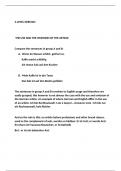
THE USE AND THE OMISSION OF THE ARTICLE
Compare the sentences in group A and B:
A. Wenn du Wasser erhitzt, gefriert es.
Kaffe macht schläfrig
Ich streue Salz auf den Kuchen
B. Mein Kaffe ist in der Tasse
Das Salz ist auf den Boden gefallen
The sentences in group A and B correlate to English usage and therefore are
easily grasped; this however is not always the case with the use and omission of
the German article. An example of where German and English differ in the use
of an article: Ich bin Rechtsanwalt; I am a lawyer….however note : Ich bin nur
ein Rechtsanwalt, kein Richter
And so the rule is this: no article before professions and other broad classes,
used as the complement of sein, werden or bleiben: Er ist Arzt; er wurde Arzt;
ihr Mann ist Franzose/Deutscher; er ist Katholik
But : er ist ein bekannter Arzt
, Bei Ausbruch des Ersten Weltkriegs
In endloser Kette (in an endless chain)
Nach kurze Pause
In Form und Inhalt (in form and content)
In Krieg und Frieden
Mit Rat und Tat (by word and deed)
Es geht um Leben und Tod
Der Unterschied zwischen Stolz und Hochmut (the difference between pride and
arrogance)
Er liebt Lesen und Kochen
Er ist Artz (but er ist ein bekanter Artz)
Er wurde Artz
Ihr Mann ist Franzose
Ihr Mann ist Deutscher
Das ist Geschmacksache (that is a matter of taste)
Es ist Mode
Das ist hier Sitte (that is the custom here)
Es ist Tatsache, dass… (it is a fact that)
folgendes Beispiel the following example)
bei Nacht
Ist er in Arbeit?
In Not sein
In Wahrheit
In Wirklichkeit
Er hat sich zu Tode gearbeitet
THE USE AND THE OMISSION OF THE ARTICLE
Compare the sentences in group A and B:
A. Wenn du Wasser erhitzt, gefriert es.
Kaffe macht schläfrig
Ich streue Salz auf den Kuchen
B. Mein Kaffe ist in der Tasse
Das Salz ist auf den Boden gefallen
The sentences in group A and B correlate to English usage and therefore are
easily grasped; this however is not always the case with the use and omission of
the German article. An example of where German and English differ in the use
of an article: Ich bin Rechtsanwalt; I am a lawyer….however note : Ich bin nur
ein Rechtsanwalt, kein Richter
And so the rule is this: no article before professions and other broad classes,
used as the complement of sein, werden or bleiben: Er ist Arzt; er wurde Arzt;
ihr Mann ist Franzose/Deutscher; er ist Katholik
But : er ist ein bekannter Arzt
, Bei Ausbruch des Ersten Weltkriegs
In endloser Kette (in an endless chain)
Nach kurze Pause
In Form und Inhalt (in form and content)
In Krieg und Frieden
Mit Rat und Tat (by word and deed)
Es geht um Leben und Tod
Der Unterschied zwischen Stolz und Hochmut (the difference between pride and
arrogance)
Er liebt Lesen und Kochen
Er ist Artz (but er ist ein bekanter Artz)
Er wurde Artz
Ihr Mann ist Franzose
Ihr Mann ist Deutscher
Das ist Geschmacksache (that is a matter of taste)
Es ist Mode
Das ist hier Sitte (that is the custom here)
Es ist Tatsache, dass… (it is a fact that)
folgendes Beispiel the following example)
bei Nacht
Ist er in Arbeit?
In Not sein
In Wahrheit
In Wirklichkeit
Er hat sich zu Tode gearbeitet


