APhA Immunization Self-Study Assessment Test 2023 Graded A+.
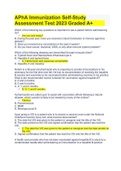
APhA Immunization Self-Study Assessment Test 2023 Graded A+. Which of the following key questions is important to ask a patient before administering IIV? Are you sick today? B. During the past year, have you received a blood transfusion or immune (gamma) globulin? C. Have you received any vaccinations in the past 4 weeks? D. Do you have cancer, leukemia, AIDS, or any other immune system problem? Which of the following diseases are transmitted through mosquito bites? A. Typhoid fever and Haemophilus influenzae type b. B. Hepatitis A and typhoid fever. C. Yellow fever and Japanese encephalitis. D. Hepatitis A and measles. Robert is a 48-year-old pharmacist who is preparing to provide immunizations in his pharmacy for the first time next fall. He has no documentation of receiving the hepatitis B vaccine and would like to be vaccinated before administering vaccines in his practice. What is the recommended routine schedule for vaccination against hepatitis B? A. 0 and 2 months. B. 0 and 6 months. C. 0, 1, and 2 months. D. 0, 1, and 6 months. If pharmacists are called upon to assist with vaccination efforts following a natural disaster, which vaccine is likely to be needed by many of the victims? Tetanus B. Pneumococcal C. MMR D. Meningococcal B Upon giving a VIS to a patient who is to receive a vaccine cover under the National Childhood Vaccine Injury Act, what must be documented? A. The date the VIS was given to the patient or caregiver and the title of the VIS. B. The date printed on the VIS and signed confirmation that the patient has read the VIS. C. The date the VIS was given to the patient or caregiver and the date printed on the VIS. D. Signed confirmation that the patient has read the VIS and the title of the VIS. A health care provider who has not been vaccinated against hepatitis B is stuck by a contaminated needle after administering an immunization to a hepatitis B-positive patient. In addition to hepatitis B vaccine, the health care provider also should receive hepatitis B Immunoglobulin (HBIG) as postexposure prophylaxis because the HBIG provides: A. Long-term protection B. Both short- and long-term protection C. A booster effect for the vaccine D. Prompt immunity Which of the following best describes an opportunity for pharmacists to use diagnosisbased screening to identify people at risk for vaccine-preventable diseases? Performing a medication review for a patient who has diabetes. B. Recommending vaccinations for a patient undergoing a splenectomy. C. Providing hospital discharge counseling to a patient. D. Providing vaccine information at a booth of a health fair. Herd immunity refers to which of the following situations? Vaccination of enough individuals in a community to protect those who cannot be vaccinated. B. Immunity that occurs following infection with wild-type virus. C. Vaccinating groups of individuals who are at high risk for disease from environmental microbes. D. Immunity from diseases that circulate in other species. Which of the following is a requirement of the Occupational Safety and Health Administration's (OSHA's) Bloodborne Pathogens Standard? A. All persons employed by the pharmacy must be offered hepatitis A and hepatitis B vaccines. B. Health care providers must use safety devices when administering injectable vaccines. C. All needles should be clipped or recapped before placing in the biohazard container. D. All employees of the pharmacy must attend an OSHA training course every 5 years. Which type of vaccine involves stimulation of B cells without the assistance of T helper cells? A. Live attenuated vaccines B. Conjugated vaccines C. Pure polysaccharide vaccines D. Recombinant vaccines Which disease is almost certain to cause death if infected patients do not receive postexposure prophylaxis? A. Hepatitis B. B. Measles. C. Meningococal disease. D. Rabies. The childhood/adolescent and adult immunization schedules are updated and published annually during which months? January or February B. April or May C. September or October D. November or December Alan is a 47-year-old man who has no documentation of a primary series of tetanuscontaining vaccine. Which of the following would be an appropriate primary series for Alan? A. DTaP today; Td in 4 weeks; Td 6 months after the second dose. B. Tdap today; Tdap in 4 weeks; Tdap 6 months after the second dose. C. DTaP today; DTaP in 4 weeks, DTaP 6 months after the second dose. D. Tdap today; Td in 4 weeks; Td 6 months after the second dose. Why was the live attenuated influenza vaccine (LAIV) removed from the ACIP's influenza vaccine recommendations? A. It was shown to cause influenza in children and adolescents. B. Low effectiveness of this vaccine was seen during the and 2015- 2016 influenza seasons. C. Serious adverse events were reported with LAIV. D. There was concern about vaccine supply issues. Aiden is a 6-month-old healthy boy with no known allergies. He has received vaccinations in the past with no reported adverse reactions. Aiden's father asks about having his son vaccinated against influenza. The most appropriate response would be to inform the father that Aiden: A. Is too young to be vaccinated against influenza B. Should receive 1 dose of IIV4 today followed by a second dose of IIV4 administered 4 weeks later C. Should receive 1 dose of LAIV today followed by a second dose of LAIV administered 4 weeks later D. Should receive 1 dose of IIV3 or IIV4 today followed by a second dose 1 year later Which of the following statements about establishing clinics for administering vaccines is true? A. Clinics can only be held within the pharmacy. B. Technicians can administer screening questionnaires and distribute VISs. C. In all states, student pharmacists can administer vaccines during a clinic under appropriate supervision. D. Clinics are better-suited to year-round vaccines than to influenza vaccines.
Written for
- Institution
- APhA Immunization
- Course
- APhA Immunization
Document information
- Uploaded on
- April 11, 2023
- Number of pages
- 14
- Written in
- 2022/2023
- Type
- Exam (elaborations)
- Contains
- Questions & answers
Subjects
-
apha immunization self study assessment test 2023 graded a
-
apha immunization self study assessment test 2023
-
apha immunization self study assessment
-
apha immunization assessment test 2023 graded a

Also available in package deal