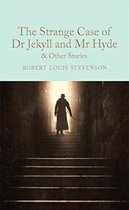
The Strange Case of Dr Jekyll and Mr Hyde (Recap)
Plot overview
1) Mr Enfield tells Mr Utterson about a young girl being violently trampled by an evil looking
man, Mr Hyde.
2) He later discovers that his friend, Dr Jekyll is Mr Hyde’s friend.
3) Utterson visits their mutual friend, Dr Lanyon to ask his opinion. Lanyon tells Utterson he no
longer speaks to Jekyll over scientific differences.
4) A year later, a maid witnesses Sir Danvers Carew, an MP, be beaten to death by Mr Hyde in
an unprovoked attack.
5) Lanyon gives Utterson a letter with instructions to not open it before Jekyll is dead, Lanyon
soon dies from shock soon after.
6) Poole visits Utterson and they decide that they will break down the door of Jekyll’s
laboratory. They do so and find Hyde’s body along with a letter written by Dr Jekyll to Mr
Utterson.
7) Lanyon’s letter says that Hyde came to his house and then drank a potion which caused him
to transform into Jekyll.
8) Jekyll’s letter contains his confession that he developed a drug which caused him to
transform into Hyde, his evil side. He then found himself less able to turn back into Jekyll and
later ran out of his original drug which he could not recreate. He knows that after writing the
letter he will not be able to turn back into Jekyll.
Characters
Mr Utterson – a respectable lawyer; symbolises honesty; acts as the moral compass of the novella.
He is the main protagonist, reliable narrator (written in third person) provides stable anchor point,
epitome of the Victorian gentleman. He is trustworthy, loyal, curious, candid.
Dr Jekyll – seemingly reputable doctor; symbolises repression as well as insatiable curiosity.
He is a member of the bourgeoisie, and, by extension, Hyde could also be considered a member. The
violent trampling of the girl could be Stevenson commenting on the bourgeoisie’s behaviour towards
the lower classes.
He is moral, honourable, inventive and erratic.
Mr Hyde – the violent alter ego of Jekyll. Physically repellent, he is violent, rude and symbolises
man’s basal instincts. Name is aptronym as he depicts elements of typical masculine behaviour that
was expected to be hidden. Violent murder can be seen to represent a violent uprising of the
proletariat. He is volatile, violent and animalistic.
Dr Lanyon – a well-respected member of the scientific community; symbolises reputability and acts
as a foil to Dr Jekyll.
Lanyon sticks to his morals and distances himself from Dr Jekyll after discovering his experiments
with Hyde. Demonstrates his dedication to reason and how much he values rationality and integrity.
Poole – Dr Jekyll’s lawyer and symbolises loyalty. He is loyal, uptight and short tempered.
Sir Danvers Carew – An MP and a member of high society – death symbolises Hyde’s disregard for
conventional authority. Solidifies reader’s opinion of Hyde as a formidable and destructive character.
Mr Enfield – Mr Utterson’s cousin, key to the theme of repression and silence.
Context
Religion:
- Text is filled with biblical and religious allusions.