Lecture 2. Problem, Need for change, Solution and
diagnose of the change context
WHAT to change (interrelated elements):
- Problem
- Need for change
- Solution
- Diagnosis of the change context
Problem
What to change:
- Diagnose the problem or face a challenge and see if there is room for improvement
- Steps:
o Identify intended (or future) output and performance
o Identify actual output and performance
o Identify gaps between intended and actual output and performance (and costs of
this gap)
o Develop solutions, possible directions for solutions, challenges, trade-offs
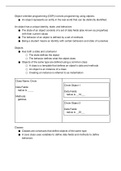
- What is the main problem? How to frame it
o Sdf
o Sdf
o Sdf
- What are the consequences?
o For whom?
o How does it influence which performance dimensions?
- Why is this happening?
- What are the (main) causes?
o Fishbone diagram
- Risks and opportunities?
Factors to include in your diagnoses (WHAT):
- Develop the understanding for the change and create awareness and legitimacy for it
o Seek out and make sense of external data
o Seek out and make sense of internal data
o Seek out and make sense of the perspectives of other stakeholders
o Seek out and express personal concerns and perspectives
Need for change
Barriers to recognize the need for change (examples):
- Too abstract
- Focus on different goals (short- and longterm)
- Hierarchy vs. autonomy
- Fear of negative impact on job
Other barriers:
, - Existing values and corporate culture
- Past successes reinforce existing practices
- Leadership practices may impede recognition of need for change (they do not see a problem)
- Embedded systems and processes can harden into unquestioned routines and habits
- Existing relationships can become restraints
What is the need for change?
- Who experiences the need for change and in what way and degree?
- Whose perspectives were included?
How to create awareness and legitimacy for a change?
- What kind of data are shared?
- To whom was the message communicated?
- By whom was it communicated?
- How was the message communicated?
- What are data that support the need for change?
Creating awareness:
1. Make the organization aware of the crisis or create a crisis
2. Identify a transformational vision
3. Transformational leadership
4. Identify common/shared goals and achieve them
5. Information and education
Solution
Examples:
- Training, sensegiving, adaptation, pressure
- International (cross-functional) teamwork
- Sequence of lean methods
- Common protocols
Change context
External:
- Define the unit of analysis
- Define it’s external context
- Analyse change conditions of external context
- Broad view: PESTEL
- Narrow view
Internal:
- Scope
o Incremental or radical
o Who defines the problem
o Degree of change required
, o Does the solution raise new problems?
- Capability
o Capabilities on
Individual level
Managerial level
Organizational level
Knowledge, skills (technical, project management, problem solving,
communication)
- Readiness for change
o Individual readiness
Cognitive component of change readiness (beliefs and thoughts)
Affective component of change readiness (positive feelings, emotions)
o Group/organizational readiness
Develop collective beliefs
Emotional contagion: individuals compare and tune their emotions
o Readiness for change is closely related to resistance to change (chapter 7)
- Power
o Dimensions of power
Resource power: access to valued resources in organizations (rewards,
sanctions, charisma, expertise)
Process power: the control of formal decision-making arenas and agendas
Meaning power Meaning power: the ability to define the meaning of things
Stakeholder analysis: motives, power base, alliances, goals, issues of all
crucial stakeholders.
- Capacity
o Time available (time pressure)
o Money: investments, training, meetings
o Information processing
- Preservation
o What does the company wants to maintain protect, keep the same?
o Examples:
Ways of working
Cultural aspects
Employees with particular skills, characteristics, competencies
Mix of employees
Maintain the collaboration with specific suppliers, clients, …
diagnose of the change context
WHAT to change (interrelated elements):
- Problem
- Need for change
- Solution
- Diagnosis of the change context
Problem
What to change:
- Diagnose the problem or face a challenge and see if there is room for improvement
- Steps:
o Identify intended (or future) output and performance
o Identify actual output and performance
o Identify gaps between intended and actual output and performance (and costs of
this gap)
o Develop solutions, possible directions for solutions, challenges, trade-offs
- What is the main problem? How to frame it
o Sdf
o Sdf
o Sdf
- What are the consequences?
o For whom?
o How does it influence which performance dimensions?
- Why is this happening?
- What are the (main) causes?
o Fishbone diagram
- Risks and opportunities?
Factors to include in your diagnoses (WHAT):
- Develop the understanding for the change and create awareness and legitimacy for it
o Seek out and make sense of external data
o Seek out and make sense of internal data
o Seek out and make sense of the perspectives of other stakeholders
o Seek out and express personal concerns and perspectives
Need for change
Barriers to recognize the need for change (examples):
- Too abstract
- Focus on different goals (short- and longterm)
- Hierarchy vs. autonomy
- Fear of negative impact on job
Other barriers:
, - Existing values and corporate culture
- Past successes reinforce existing practices
- Leadership practices may impede recognition of need for change (they do not see a problem)
- Embedded systems and processes can harden into unquestioned routines and habits
- Existing relationships can become restraints
What is the need for change?
- Who experiences the need for change and in what way and degree?
- Whose perspectives were included?
How to create awareness and legitimacy for a change?
- What kind of data are shared?
- To whom was the message communicated?
- By whom was it communicated?
- How was the message communicated?
- What are data that support the need for change?
Creating awareness:
1. Make the organization aware of the crisis or create a crisis
2. Identify a transformational vision
3. Transformational leadership
4. Identify common/shared goals and achieve them
5. Information and education
Solution
Examples:
- Training, sensegiving, adaptation, pressure
- International (cross-functional) teamwork
- Sequence of lean methods
- Common protocols
Change context
External:
- Define the unit of analysis
- Define it’s external context
- Analyse change conditions of external context
- Broad view: PESTEL
- Narrow view
Internal:
- Scope
o Incremental or radical
o Who defines the problem
o Degree of change required
, o Does the solution raise new problems?
- Capability
o Capabilities on
Individual level
Managerial level
Organizational level
Knowledge, skills (technical, project management, problem solving,
communication)
- Readiness for change
o Individual readiness
Cognitive component of change readiness (beliefs and thoughts)
Affective component of change readiness (positive feelings, emotions)
o Group/organizational readiness
Develop collective beliefs
Emotional contagion: individuals compare and tune their emotions
o Readiness for change is closely related to resistance to change (chapter 7)
- Power
o Dimensions of power
Resource power: access to valued resources in organizations (rewards,
sanctions, charisma, expertise)
Process power: the control of formal decision-making arenas and agendas
Meaning power Meaning power: the ability to define the meaning of things
Stakeholder analysis: motives, power base, alliances, goals, issues of all
crucial stakeholders.
- Capacity
o Time available (time pressure)
o Money: investments, training, meetings
o Information processing
- Preservation
o What does the company wants to maintain protect, keep the same?
o Examples:
Ways of working
Cultural aspects
Employees with particular skills, characteristics, competencies
Mix of employees
Maintain the collaboration with specific suppliers, clients, …