Performance Management
Articles 2022/2023
MD 2022/2023 UvA Performance Management 1
, Inhoudsopgave
Week 1: Performance & Performance Management (3 articles) ................................................................................................ 3
§1.1 Article 1: Caprini J., Parker, S., & Griffin M., (2017). – A look back and a leap forward: A review and synthesis of the
individual work performance literature ..........................................................................................................................................3
§1.2 Article 2: Cascio, W.F. (2006). – The economic impact of employee behaviors on organizational performance. ............6
§1.3 Article 3: Lievens. F., Schapers, P., & Amp; Herde, C.N. (2020). – Performance Management – Que Vadis? ..................8
Week 2: Performance Management and Feedback and Feedforward (5 articles)....................................................................... 9
§2.1 Article 1: Kluger, A.N. & Nir, D. (2010). - The Feedforward Interview. .............................................................................9
§2.2 Article 2: Budworth, M.H., Latham, G.P., & Manroop, L. (2015). – Looking forward to performance improvement: A
field test of the feedforward interview for performance management .......................................................................................11
§2.3 Article 3: Speer, A.B. (2018). – Quantifying with words: An investigation of the validity of narrative-derived
performance scores ......................................................................................................................................................................13
§2.4 Article 4: Silva, V.V.M., & Ribeiro, J.L.D., (2020). – A discussion on using quantitative or qualitative data for
assessment of individual competencies........................................................................................................................................15
§2.5 Article 5: Moon, S.H., Scullen, S.E., & Latham, G.P. (2016). – Precarious Curve Ahead: The effects of forced
distribution rating systems on job performance...........................................................................................................................16
Week 3: Case Presentation (0 articles) .................................................................................................................................... 19
§3.1 No articles due presentations.........................................................................................................................................19
Week 4: Performance Management: intended and Unintended Effects (4 articles) ................................................................. 20
§4.1 Article 1: Pritchard, R.D., Harrell, M.M., DiazGranados, D., & Guzman, M.J. (2008). – The productivity measurement
and enhancement system: A Meta-Analysis.................................................................................................................................20
§4.2 Article 2: Salas, E., Tannenbaum, S.J., Kraiger, K., & Smith-Jentsch, K.A. (2012). – The science of training and
development in organizations: What matters in practice. ...........................................................................................................22
§4.3 Article 3: Smith-Jentsch, K.A. (2020). – Making Smart Investment in Training: The Devel is in the Details ...................24
§4.4 Article 4: Keith, N. (2018). – Undesirable effects of goal setting on perceived fairness, commitment and unethical
behavior........................................................................................................................................................................................26
Week 5: Performance Management & Reward (4 articles) ...................................................................................................... 28
§5.1 Article 1: Park, S., & Sturman, M.C. (2016). – Evaluating form and functionality of pay-for-performance plans: The
relative incentive and sorting effects of merit pay, bonuses and long-term incentives ...............................................................28
§5.2 Article 2: Englmaier, F., Grimm, S., Schidler, D., & Schudy, S. (2018). – The effect of incentives in non-routine
analytical teams tasks-evidence from a field experiment. ...........................................................................................................30
§5.3 Article 3: Kim, J.H., Gerhart, B., & Fang, M. (2022). – Do financial incentives help or harm performance in interesting
tasks? 31
§5.4 Article 4: Baeten, X. (2014). – Shaping the future research agenda for compensation and benefits management: Some
thoughts based on a stakeholder inquiry. ....................................................................................................................................32
Week 6: Integration & Case Competition (2 articles) ............................................................................................................... 34
§6.1 Article 1: Arguinis, H., Gottfredons, R.K., & Joo, H. (2013). - Avoiding a “me” versus “we” dilemma: Using
performance management to turn teams into a source of competitive advantage ....................................................................34
§6.2 Article 2: Kremer, H., Villamore, I., & Arguinis, H., (2019). – Innovation Leadership: Best-Practice Recommendations
for promoting Employee Creativity, voice, and knowledge sharing. ............................................................................................35
MD 2022/2023 UvA Performance Management 2
, Week 1: Performance & Performance Management (3 articles)
§1.1 Article 1: Caprini J., Parker, S., & Griffin M., (2017). – A look back and a leap forward: A
review and synthesis of the individual work performance literature
Research on individual work performance clusters:
1. Management cluster
2. Personnel selection perspective cluster
3. Motivation cluster
4. Good citizen cluster
5. Job attitudes cluster
Positive Work Role Behavior Model 3 Levels of performance:
1. Proficiency = individual behaviors that can be formalized and anticipated in advance ○
a. Able to fulfill requirements (well trained)
2. Adaptive performance = behaviors in which individuals cope with, respond to, and/ or support changes
a. How flexibly people can adapt to unexpected situations and still perform well
3. Proactive performance = individual agentic and self-starting, change-oriented, and future focused behavior
a. Ability to take initiative and perform
3 levels of interdependence:
1. Individual task behavior
2. Team-member behaviors
3. Organization member behaviors
Outcomes of individual performance:
1. Absenteeism
2. Effectiveness
3. Efficiency
4. Productivity
5. Quality
6. Turnover
MD 2022/2023 UvA Performance Management 3
, EXTRA
Work performance = individual behavior that generates value for the organization.
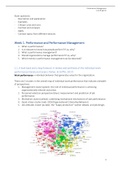
There are 5 clusters in the overall map of individual work performance that indicate a breadth of perspectives:
1. Management cluster (green): the role of individual performance in achieving organizationally relevant
outcomes.
2. Personnel selection perspective (blue): measurement and prediction of job performance.
3. Motivation cluster (yellow): underlying motivational mechanisms of task performance.
4. Good citizen cluster (red): OCB (Organizational Citizenship Behavior).
5. Job attitudes cluster (purple): the “happy productive” worker debate, and job design.
4 scientific maps that each represent a 10-year period, about the emergence of performance research:
1. “Understanding the core” (1972 – 1982).
2. “Flowering of dimensions” (1983 – 1993) → new concepts.
3. “Scattering in the wind” (1994 – 2004) → scattering concepts (some terms in the map have little connection
to task performance or one another).
4. “New concepts take root” (2005 – 2015) → continuing rapid growth of the field.
Understanding the Core:
Vroom’s (1964) expectancy theory = performance is a function of ability and motivation.
Goal setting theory (Locke, 1968) = how setting goals facilitates task performance.
Flowering of dimensions:
OCB = behavior that cannot be prescribed or required in advance for a given job → lubricate the social machinery of
the organization but do not directly inhere in the usual notion of task performance.
§ OCB-O: behaviors that benefit the organization, e.g. compliance.
§ OCB-I: behaviors directed at specific individuals, e.g. helping.
POB = Prosocial Organizational Behavior = behaviors targeted toward an individual, group, or organization with the
intention of improving the target’s welfare.
OCB and POB overlap: both are types of prosocial behavior.
Contextual performance = behaviors that do not support the technical core itself as much as they support the
organizational, social, and psychological environment in which the technical core must function → encompasses
both OCB and POB constructs.
Scattering in the wind:
Role-based model of performance = incorporates role theory and identity theory → 5 distinct employee roles: job,
organization, team, innovator, and career roles.
Hierarchical taxonomy of individual performance = 3 distinct dimensions: task performance, citizenship
performance, and adaptive performance.
New concepts take root:
Great eight competency framework = how work is accomplished as opposed to just the outcomes of behavior.
Model of positive work role behaviors (Griffin et al., 2007) = specifies 9 performance dimensions derived from the
combination of 2 overarching dimensions: forms of role behavior (related to uncertainty; proficiency, adaptivity,
proactivity) and levels of contribution (related to interdependence).
The individual work performance literature has largely developed, but lack a comprehensive theory to bridge topic
areas → little understanding how various performance constructs relate to one another → goal of this article to
bring various networks together.
The Griffin et al. (2007) integrative performance model: to analyze how various performance constructs fit
together→classifies work behaviors into proficient, adaptive, and proactive forms of performance; each from being
MD 2022/2023 UvA Performance Management 4
Articles 2022/2023
MD 2022/2023 UvA Performance Management 1
, Inhoudsopgave
Week 1: Performance & Performance Management (3 articles) ................................................................................................ 3
§1.1 Article 1: Caprini J., Parker, S., & Griffin M., (2017). – A look back and a leap forward: A review and synthesis of the
individual work performance literature ..........................................................................................................................................3
§1.2 Article 2: Cascio, W.F. (2006). – The economic impact of employee behaviors on organizational performance. ............6
§1.3 Article 3: Lievens. F., Schapers, P., & Amp; Herde, C.N. (2020). – Performance Management – Que Vadis? ..................8
Week 2: Performance Management and Feedback and Feedforward (5 articles)....................................................................... 9
§2.1 Article 1: Kluger, A.N. & Nir, D. (2010). - The Feedforward Interview. .............................................................................9
§2.2 Article 2: Budworth, M.H., Latham, G.P., & Manroop, L. (2015). – Looking forward to performance improvement: A
field test of the feedforward interview for performance management .......................................................................................11
§2.3 Article 3: Speer, A.B. (2018). – Quantifying with words: An investigation of the validity of narrative-derived
performance scores ......................................................................................................................................................................13
§2.4 Article 4: Silva, V.V.M., & Ribeiro, J.L.D., (2020). – A discussion on using quantitative or qualitative data for
assessment of individual competencies........................................................................................................................................15
§2.5 Article 5: Moon, S.H., Scullen, S.E., & Latham, G.P. (2016). – Precarious Curve Ahead: The effects of forced
distribution rating systems on job performance...........................................................................................................................16
Week 3: Case Presentation (0 articles) .................................................................................................................................... 19
§3.1 No articles due presentations.........................................................................................................................................19
Week 4: Performance Management: intended and Unintended Effects (4 articles) ................................................................. 20
§4.1 Article 1: Pritchard, R.D., Harrell, M.M., DiazGranados, D., & Guzman, M.J. (2008). – The productivity measurement
and enhancement system: A Meta-Analysis.................................................................................................................................20
§4.2 Article 2: Salas, E., Tannenbaum, S.J., Kraiger, K., & Smith-Jentsch, K.A. (2012). – The science of training and
development in organizations: What matters in practice. ...........................................................................................................22
§4.3 Article 3: Smith-Jentsch, K.A. (2020). – Making Smart Investment in Training: The Devel is in the Details ...................24
§4.4 Article 4: Keith, N. (2018). – Undesirable effects of goal setting on perceived fairness, commitment and unethical
behavior........................................................................................................................................................................................26
Week 5: Performance Management & Reward (4 articles) ...................................................................................................... 28
§5.1 Article 1: Park, S., & Sturman, M.C. (2016). – Evaluating form and functionality of pay-for-performance plans: The
relative incentive and sorting effects of merit pay, bonuses and long-term incentives ...............................................................28
§5.2 Article 2: Englmaier, F., Grimm, S., Schidler, D., & Schudy, S. (2018). – The effect of incentives in non-routine
analytical teams tasks-evidence from a field experiment. ...........................................................................................................30
§5.3 Article 3: Kim, J.H., Gerhart, B., & Fang, M. (2022). – Do financial incentives help or harm performance in interesting
tasks? 31
§5.4 Article 4: Baeten, X. (2014). – Shaping the future research agenda for compensation and benefits management: Some
thoughts based on a stakeholder inquiry. ....................................................................................................................................32
Week 6: Integration & Case Competition (2 articles) ............................................................................................................... 34
§6.1 Article 1: Arguinis, H., Gottfredons, R.K., & Joo, H. (2013). - Avoiding a “me” versus “we” dilemma: Using
performance management to turn teams into a source of competitive advantage ....................................................................34
§6.2 Article 2: Kremer, H., Villamore, I., & Arguinis, H., (2019). – Innovation Leadership: Best-Practice Recommendations
for promoting Employee Creativity, voice, and knowledge sharing. ............................................................................................35
MD 2022/2023 UvA Performance Management 2
, Week 1: Performance & Performance Management (3 articles)
§1.1 Article 1: Caprini J., Parker, S., & Griffin M., (2017). – A look back and a leap forward: A
review and synthesis of the individual work performance literature
Research on individual work performance clusters:
1. Management cluster
2. Personnel selection perspective cluster
3. Motivation cluster
4. Good citizen cluster
5. Job attitudes cluster
Positive Work Role Behavior Model 3 Levels of performance:
1. Proficiency = individual behaviors that can be formalized and anticipated in advance ○
a. Able to fulfill requirements (well trained)
2. Adaptive performance = behaviors in which individuals cope with, respond to, and/ or support changes
a. How flexibly people can adapt to unexpected situations and still perform well
3. Proactive performance = individual agentic and self-starting, change-oriented, and future focused behavior
a. Ability to take initiative and perform
3 levels of interdependence:
1. Individual task behavior
2. Team-member behaviors
3. Organization member behaviors
Outcomes of individual performance:
1. Absenteeism
2. Effectiveness
3. Efficiency
4. Productivity
5. Quality
6. Turnover
MD 2022/2023 UvA Performance Management 3
, EXTRA
Work performance = individual behavior that generates value for the organization.
There are 5 clusters in the overall map of individual work performance that indicate a breadth of perspectives:
1. Management cluster (green): the role of individual performance in achieving organizationally relevant
outcomes.
2. Personnel selection perspective (blue): measurement and prediction of job performance.
3. Motivation cluster (yellow): underlying motivational mechanisms of task performance.
4. Good citizen cluster (red): OCB (Organizational Citizenship Behavior).
5. Job attitudes cluster (purple): the “happy productive” worker debate, and job design.
4 scientific maps that each represent a 10-year period, about the emergence of performance research:
1. “Understanding the core” (1972 – 1982).
2. “Flowering of dimensions” (1983 – 1993) → new concepts.
3. “Scattering in the wind” (1994 – 2004) → scattering concepts (some terms in the map have little connection
to task performance or one another).
4. “New concepts take root” (2005 – 2015) → continuing rapid growth of the field.
Understanding the Core:
Vroom’s (1964) expectancy theory = performance is a function of ability and motivation.
Goal setting theory (Locke, 1968) = how setting goals facilitates task performance.
Flowering of dimensions:
OCB = behavior that cannot be prescribed or required in advance for a given job → lubricate the social machinery of
the organization but do not directly inhere in the usual notion of task performance.
§ OCB-O: behaviors that benefit the organization, e.g. compliance.
§ OCB-I: behaviors directed at specific individuals, e.g. helping.
POB = Prosocial Organizational Behavior = behaviors targeted toward an individual, group, or organization with the
intention of improving the target’s welfare.
OCB and POB overlap: both are types of prosocial behavior.
Contextual performance = behaviors that do not support the technical core itself as much as they support the
organizational, social, and psychological environment in which the technical core must function → encompasses
both OCB and POB constructs.
Scattering in the wind:
Role-based model of performance = incorporates role theory and identity theory → 5 distinct employee roles: job,
organization, team, innovator, and career roles.
Hierarchical taxonomy of individual performance = 3 distinct dimensions: task performance, citizenship
performance, and adaptive performance.
New concepts take root:
Great eight competency framework = how work is accomplished as opposed to just the outcomes of behavior.
Model of positive work role behaviors (Griffin et al., 2007) = specifies 9 performance dimensions derived from the
combination of 2 overarching dimensions: forms of role behavior (related to uncertainty; proficiency, adaptivity,
proactivity) and levels of contribution (related to interdependence).
The individual work performance literature has largely developed, but lack a comprehensive theory to bridge topic
areas → little understanding how various performance constructs relate to one another → goal of this article to
bring various networks together.
The Griffin et al. (2007) integrative performance model: to analyze how various performance constructs fit
together→classifies work behaviors into proficient, adaptive, and proactive forms of performance; each from being
MD 2022/2023 UvA Performance Management 4