Rasmussen College NUR 2790 PN2 E2 study concept
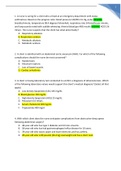
1. A nurse is caring for a client who arrived at an emergency department with status asthmaticus. Based on the progress note: blood pressure 140/90 mm Hg, pulse MISSING breaths/minute, temperature 98.4 degrees Fahrenheit, respiratory rate 34 breaths per minute, and lung sounds noted with audible wheezing. Arterial blood gas ABG results MISSING HCO3 26 mEq/L. The nurse suspects that the client has what abnormality? A. Respiratory alkalosis B. Respiratory acidosis C. Metabolic alkalosis D. Metabolic acidosis 2. A client is admitted with an abdominal aortic aneurysm (AAA). For which of the following complications should the nurse be most concerned? A. Hypotension. B. Aneurysm rupture. C. Loss of bowel sounds. D. Cardiac arrhythmia 3. A client is having laboratory test conducted to confirm a diagnosis of atherosclerosis. Which of the following laboratory values would support this client’s medical diagnosis? (Select all that apply) A. Low density lipoprotein (LDL) 145 mg/dL. B. Blood glucose 150 mg/dL. C. High-density lipoprotein (HDL) 25 mg/dL. D. Potassium 6.0 mEq/L. E. Serum cholesterol 300 mg/dL. F. Triglycerides 400 mg/d 4. With which client does the nurse anticipate complications from obstructive sleep apnea following abdominal surgery? A. 48-year-old who has type 1 diabetes and chronic sinusitis. B. 58-year-old who has had gastroesophageal reflux disease for 10 years. C. 78-year-old who wears upper and lower dentures and has asthma. D. 28-year-old who is 80 pounds (36.4 kg) overweight and has a short neck 5. The healthcare provider has just prescribed warfarin sodium for a client with a deep vein thrombosis (DVT). The nurse knows that this client is still receiving intravenous heparin, what is the nurses best action? A. Hold the dose of warfarin sodium. B. Discontinue the heparin drip completely before warfarin sodium administration. C. Turn off the heparin drip for 1 hour before administration of the warfarin sodium. D. Administer the medication as prescribed 6. A nurse working with clients with sickle cell disease (SCD) teaches about self-management to prevent exacerbation and sickle cell crisis. A claim communicates the need for additional MISSING which of the following statements? A. “I will avoid extreme stress.” B. “I will drink adequate fluids to avoid dehydration” C. “I will avoid high altitudes.” D. “I will avoid exercise” 7. A nurse assessing a client in preparation for receiving a blood transfusion. Pre-transfusion vitals are temperature 92.2°F, heart rate 82 beats/min, respirations 18 breaths/minute, blood pressure MISSING mm Hg, oxygen saturation 96% on room air. Fifteen minutes after starting the transfusion the nurse measures the following vital signs which of the following is the highest priority for action? A. Oxygen saturation 94% on room air B. Blood pressure 112/80 mm Hg C. Temperature 100.6°F. D. Heart rate 92 beats/minute 8. Which laboratory test will be most useful to the nurse in determining whether a client admitted with acute shortness of breath has heart failure? A. Serum creatinine kinase (CK). B. Arterial blood gases (ABGs). C. Cholesterol. D. B-type natriuretic peptide (BNP) 9. A nurse is completing discharge planning for a client who has bacterial endocarditis. The client will need to receive 12 weeks of antibiotic therapy. Which of the following venous access device should the nurse identify as appropriate for the client? A. Arteriovenous fistula B. Peripherally inserted central catheter (PICC) C. Short peripheral catheter D. Midline catheter 10. The nurse is assigned to a client who just arrived at the emergency room after a motor vehicle accident and has multiple rib fractures. Knowing the client could potentially have a pneumothorax, what are the signs and symptoms the nurse would correlate with this condition? A. Paresthesia. B. Bilateral clear lung sounds. C. Respiratory distress. D. Bradypnea 11. The nurse is reviewing the medical record for a client with hypertension. Which of the following medications may be used in the management of hypertension? (Select all that apply) A. Enalapril. B. Bupropion. C. Spironolactone. D. Hydralazine. E. Diphenhydramine F. Atenolol 12. A client who underwent a lobectomy and has a water seal chest drainage system appears to have an increased work of breathing and at a faster rate than 1 hour ago. The client’s pulse rate is a MISSING increase. The nurse should do which of the following? A. Check the tubing to ensure that the client is not lying on it or kinking it B. Increase the suction. C. Lower the drainage system 2 to 3 feet below the level of the clients chest. D. Ensure that the chest tube has two clamps on it to prevent air leaks 13. A nurse is assessing a client who has chronic venous insufficiency. Which of the following findings should the nurse expect? A. Dependent rubor. B. Edema. C. Thick, deformed toenails. D. Hair loss 14. The nurse is assessing a 48-year-old client with a history of smoking during routine clinic visit. The client who exercises regularly, reports having pain in the calf during exercise that disappears at rest. Which finding requires further evaluation? A. Blood pressure one 134/82 mm Hg. B. Ankle-brachial index of 0.65. C. Heart rate 60 beats/minute. D. Oxygen saturation of 94% on room air 15. Of the following client assignments made by the charge nurse, which would be questioned? A. The LPN with five years of experience caring for a client with venous leg ulcers and awaiting nursing home placement B. The LPN with 20 years of experience caring for a diabetic client complaining of a headache and with a blood pressure of 210/150 mm Hg. C. The RN with 10 years of experience caring for a client with a history of pulmonary embolism and receiving heparin therapy. D. The RN with eight years of experience caring for a client with peripheral vascular disease and total cholesterol of 390 mg/dL 16. Which assessment finding for a client receiving furosemide 40 mg twice daily to treat stage 2 hypertension is most important to report to the healthcare provider? A. Blood glucose level of 180 mg/dL. B. Early morning blood pressure reading of 164/90 mm Hg C. Orthostatic systolic blood pressure decreased of 6 mm Hg. D. Blood potassium level of 3.3 mEq/L 17. The post anesthesia care nurse is caring for a client who just had a mitral valve replacement surgery. The clients arterial blood gases are as follows: pH 7.22; HCO3 21 mEq/L; PCO2 65 mm Hg; and PO2 58 mm Hg. Which is the priority action by the nurse? A. Check in the clients oxygen saturation level. B. Increasing the clients oxygen flow rate. C. Documenting the findings as respiratory acidosis in the clients chart and notifying the physician. D. Assessing the clients airway 18. A client with an acute exacerbation of chronic obstructive pulmonary disease (COPD) is admitted to the hospital. How can the nurse best position the client to improve gas exchange? A. Resting in bed with the head elevated 45 to 60 degrees. B. Sitting up at the bedside or in a chair and leaning slightly forward. C. In the Trendelenburg position with several pillows behind the head. D. Resting in bed in semi-Fowler’s position with the knees flexed 19. When a client with hypertension who has a new prescription for atenolol returns to the health clinic after two weeks for a follow up visit, the blood pressure is unchanged from the previous visit. Which action should the nurse take first? A. Teach the client about the reasons for a possible change in drug therapy. B. Question the client about whether the medication is actually been taken. C. Provide information about the use of multiple drugs to treat hypertension. D. Remind the client that lifestyle changes also are essential in blood pressure control 20. Client is experiencing an acute asthmatic attack. The client is noted to have respirations of 40 breaths/min, pulse 132 beats/min, oxygen saturation 86% on room air, and lung sounds with wheezing. Which findings indicate achievement of the desired outcome of treatment with levalbuterol? A. Wheezing in audible with diminished breath sounds. B. Inspiratory cycle twice as long as the expiratory cycle. C. Decreased peak expiration low (PEF) rate. D. Pulse 96 beats/minute and oxygen saturation of 92% on room air 21. A client receiving a heparin infusion is demonstrating signs of acute bleeding. Which of the following should the nurse anticipate the provider to prescribe for this client? A. Vitamin K. B. Aspirin. C. Protamine sulfate. D. Naloxone 22. MISSING A. Ethnicity. B. Stress. C. Age. D. Gender. E. Amount of fat and salt in the diet. F. Level of physical activity 23. A client undergoes a purified protein derivative (PPD) test. When should the test be read? A. 24 to 48 hours after the test. B. Immediately after the test. C. 48 to 72 hours after the test. D. Any time after 72 hours 24. A client is receiving an IV infusion of heparin sodium at 1,200 units/hour. The drug concentration is heparin sodium 25,000 units/500 ML. What is the rate (in mL/hr) the nurse must infuse the medication at? (Round the answer to the nearest whole number. Do not use a trailing zero) 24 25. A client is undergoing diagnostic testing for infective endocarditis. Which of the following laboratory test would be most useful in diagnosis? A. Blood cultures. B. Reticulocyte count. C. Basic metabolic panel. D. Prothrombin time 26. The nurse is assessing a client diagnosed with an abdominal aortic aneurysm (AAA). Which of the following sounds that the nurse likely auscultates during the assessment? A. Crackles. B. Hyperactive bowel sounds. C. Clear around. D. Bruit 27. A nurse is assessing a client who is taking lisinopril to treat hypertension. Which finding is the highest priority to report? A. Red man syndrome. B. Dry cough. C. Swelling of the tongue. D. Rash 28. A client with chronic bronchitis who has a new prescription for a fluticasone and salmeterol combination inhaler asks the nurse the purpose for using the two drugs. Which of the best response by the nurse? A. One drug decreases inflammation, and the other is a bronchodilator. B. Advair is a combination of long-acting and slow-acting bronchodilators. C. The two drugs work together to block the effects of histamine on the bronchioles. D. The combination of two drugs works more quickly in an acute asthma attack 29. The parents of a child diagnosed with cystic fibrosis asked the nurse how their child developed the disease. Which of the following should the nurse explain to these parents? A. Cystic fibrosis is a disease that has an extra chromosome. B. Cystic fibrosis is an X-linked disorder. C. Cystic fibrosis is passed on by one defective gene from one parent. D. Cystic fibrosis is passed on by a defective gene from both parents 30. A nurse evaluates the following arterial blood gas and vital sign results for a client with chronic obstructive pulmonary disease (COPD): Arterial Blood Gas Results pH= 7.32 PaCO2= 62 mm Hg PaO2= 46 mm Hg HCO3= 28 mEq/L Vital Signs Respiratory rate= 12 breaths/min Blood pressure= 145/65 mm Hg Heart rate= 110 beats/min Oxygen saturation= 76% on room air Which action should the nruse take first? A. Teach the client diaphragmatic breathing techniques. B. Initiate oxygenation therapy to increase oxygen saturation to 92%. C. Administer a short-acting beta 2 agonist inhaler. D. Document the findings as it’s expected for a client with COPD 31. The nurse suspects a client is experiencing an exacerbation of chronic obstructive pulmonary disease (COPD) when which of the following is assessed? (Select all that apply) A. Peripheral edema. B. Jugular vein distention. C. High blood pressure. D. Sputum production. E. Dyspnea on exertion. F. Cough 32. Order for dobutamine to infuse at 5 mcg/kg/min. The client weighs 198 lb. The pharmacy supplied a bag of dobutamine 250mg/250mL. What is the rate (in mL/hr) the nurse must infuse the medication at? (Record the answer to the nearest whole number. Do not use a trail in zero) 27 33. Which of the following with the nurse most likely assess in a client diagnosed with right- sided heart failure? A. Oliguria. B. Cough with frothy blood-tinged sputum. C. Syncope. D. Distended neck veins 34. The nurse is preparing a teaching plan for a client who is being discharged after being admitted for atherosclerosis. The client has been taking Simba Staten 40 mg for the last two years. The lab results for the client’s lipid panel results are total cholesterol 195 mg/dL; triglycerides 106 mg/dL; and high-density lipoprotein (HDL) 69 mg/dL. Which action should the nurse take? A. Instruct the client to lower the saturated fat in their diet. B. Tell the client that the cholesterol levels are within normal limits. C. Ask if the client is taking the simvastatin regularly. D. Review the chart for lab reports of hemoglobin and hematocrit 35. The provider to order the normal saline with 20 mEq of KCl to infuse at 125 mL/hour. The first liter bag was hung at 1200. What time does the nurse anticipate needing to hang the second bag of IV fluids? (Record answer in military time) 2000 36. A nurse is assessing a mail client who has a diagnosis of acute arterial occlusion. Which of the following findings should the nurse expect to find on the affected extremity? (Select all that apply) A. Pain. B. Paresthesia. C. Petechiae. D. Pallor. E. Paralysis. F. Pulselessness 37. A client who has a history of pulmonary valve stenosis test the healthcare provider, “I don’t have a lot of energy anymore, and both of my feet get swollen in the late afternoon.” Which of these problems does the healthcare provider and conclude is the likely cause of these clinical findings? A. Peripheral arterial disease. B. Acute pericarditis. C. Right side heart failure. D. Deep vein thrombosis 38. Which of the following statements should the nurse teach a client who is receiving warfarin sodium? A. International normalized ratio (INR) is used to assess its effectiveness. B. Partial thromboplastin time values determine the dosage of warfarin sodium. C. Protamine sulfate is used to reverse the effects of warfarin sodium. D. Warfarin sodium will facilitate clotting of the blood 39. A nurse is caring for a client who has heart failure and is taking digoxin daily. The client refused breakfast and is complaining of nausea and weakness. Which of the following actions should be a priority for the nurse to take? A. Administer the order PRN antiemetic. B. Request a dietitian consult. C. Check the clients vital signs and heart rhythm. D. Suggested client rest adequately before eating meals 40. A nurse cares for a client who had a chest tube placed 6 hours ago and refuses to take deep breaths because of the pain. Which action should the nurse take? A. Administer pain medication and encourage the client to take deep breaths. B. Encourage the client to take shallow breaths to help the pain. C. Auscultate the clients anterior and posterior lung fields. D. MISSING 41. The nurse is notifying the healthcare provider via telephone of a change in the condition of a client diagnosed with an exacerbation of asthma. Arrange the nursing statements in order as they would be communicated using the SBAR method. 1. Mr. Smith was admitted yesterday with an exacerbation of asthma. He typically controls his asthma with oral medication and inhaler’s at home. He has ordered albuterol treatment twice daily. Oxygen is prescribed at 2L nasal cannula. 2. I am notifying you because Bob Smith has become increasingly short of breath with audible wheezing this afternoon. 3. I recommend that we increased his oxygen dose and prescribe an extra albuterol treatment. 4. Hello. My name is nurse Jones from unit D. 5. Respirations are now 32 breaths/minute. The pulse oximeter is 89% on 2 L nasal cannula. Lungs reveal wheezing in all lung fields. Slight nasal flaring as noted. A. 4,2,1,5,3 B. 4,5,1,2,3 C. 4,5,2,1,3 D. MISSING 42. The nurse is caring for a group of clients on a pulmonary unit. The nurse can delegate which test to unlicensed assistive personnel (UAP)? A. Monitoring a client for adverse affects of oxygen therapy. B. Making adjustments to flow rates based on client responses. C. Assisting a client with adjusting his or her nasal cannula. D. Assessing a client for the best method of oxygen delivery 43. When teaching a client about propranolol hydrochloride, what information should the nurse include in the education for the client? A. Is a potential arterial and venous vasodilator that reduces peripheral vascular resistance and lowers blood pressure. B. Is an angiotensin-converting enzyme inhibitor that reduces blood pressure by blocking the conversion of angiotensin I to angiotensin II C. Increases norepinephrine secretion and thus decreases blood pressure and heart rate D. MISSING 44. A client is diagnosed with acute peripheral arterial occlusion. The nurse should prepare to provide which of the following interventions for this client? A. Administer heparin as prescribed. B. Apply sequential compression devices (SCDs). C. Assist with ambulation. D. Place on a fluid restriction 45. Which of the following conditions is most commonly responsible for right heart failure? A. Murmur. B. Left heart failure. C. Aortic stenosis. D. MISSING 46. A nurse reviews the labs for a newly admitted heart failure client and notes serum potassium (k+) level of 5.6 mEq/L. Upon reviewing the clients medication’s, the nurse realizes which of the following medication most likely contributed to this electrolyte in balance? A. Spironolactone. B. Hydrochlorothiazide. C. Furosemide. D. Bumetanide 47. A nurse is assessing a client who has right ventricular heart failure. Which of the following findings should the nurse expect? A. Dry, hacking cough. B. Dizziness. C. Crackles in the lungs. D. Hepatomegaly 48. The nurse is assessing a client for risk in the development of varicose veins. Which of the following findings would increase the clients risk? A. Prolonged standing. B. Engages in golf three times a week. C. Eat several servings of fruits and vegetables each day. D. Normal weight 49. MISSING failure. Which of the following disorders should the nurse suspect? A. Pulmonary edema. B. Bacterial endocarditis. C. Pulmonary hypertension. D. Pneumothorax 50. A client with bacterial pneumonia becomes increasingly restless and confused. Temperature is 100°F, and pulse, blood pressure, and respirations are increased since the last assessment 6 hours ago. Which action should the nurse take first? A. Initiate NPO status. B. Administer a mild sedative. C. Assessed oxygen saturation. D. Administer a nonsteroidal anti-inflammatory drug (NSAID)
Document information
- Uploaded on
- March 18, 2023
- Number of pages
- 19
- Written in
- 2022/2023
- Type
- Exam (elaborations)
- Contains
- Questions & answers