

Homeostatic mechanisms used by the human body
Homeostasis
Homeostasis means standstill, which is the body’s ability to maintain the internal environment constant.
This happens in order to keep us heathy and alive. Nutrients that we get from food and oxygen from the
environment must be used by all organs and waste must exit. The conditions inside the body are never
constant but they have a certain so that the body can function properly.
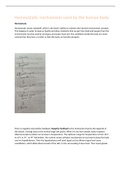
There is negative and positive feedback. Negative feedback is the mechanism that do the opposite of
the stimuli, it brings back to the normal stage (set point). When it is too hot outside, body receptors
(thermoreceptors) detect an increase in temperature. The optimum range for temperature is from 36˚C
to 37˚C or 97 ˚ to 99˚ Fahrenheit. The control centre activates mechanisms to loss heat to keep the body
cool via hypothalamus. Then the hypothalamus will send signal out by efferent signal and cause
vasodilation, which dilate blood vessels of the skin, to the surrounding it loses heat. Then sweat glands
, active to release sweat, sweat is the evaporation of water from the skin in order to cool the body down
as well. The effector in this case is the skin. When the internal environment of the body drops to normal,
the hypothalamus heat loss centre shuts off because the body does not need to lose any more heat.
Positive feedback is the mechanism that intensify or amplifies the stimulus. When a mom is giving birth
the child’s head is pushing its way through the cervix (neck of the uterus), by stretching. This stimulus
needs to be picked up by stretch receptors and it sends this signal by afferent signal to the control
centre, the brain. The hypothalamus evaluates the situation because it gets a signal that the cervix is
stretching, looks like something wants to come out and decide to contract the uterus in order to help
push the baby through. To contract the uterus oxytocin hormone needs to be released from the
posterior pituitary gland through efferent signal. The oxytocin floating in the bloodstream goes to the
effector being the uterus and makes the uterus to shrink and pushes the baby, the baby’s head will
continue stretching the cervix amplifying the initial stimulus which continue the same steps until the
baby is completely out.
Homeostasis
Homeostasis means standstill, which is the body’s ability to maintain the internal environment constant.
This happens in order to keep us heathy and alive. Nutrients that we get from food and oxygen from the
environment must be used by all organs and waste must exit. The conditions inside the body are never
constant but they have a certain so that the body can function properly.
There is negative and positive feedback. Negative feedback is the mechanism that do the opposite of
the stimuli, it brings back to the normal stage (set point). When it is too hot outside, body receptors
(thermoreceptors) detect an increase in temperature. The optimum range for temperature is from 36˚C
to 37˚C or 97 ˚ to 99˚ Fahrenheit. The control centre activates mechanisms to loss heat to keep the body
cool via hypothalamus. Then the hypothalamus will send signal out by efferent signal and cause
vasodilation, which dilate blood vessels of the skin, to the surrounding it loses heat. Then sweat glands
, active to release sweat, sweat is the evaporation of water from the skin in order to cool the body down
as well. The effector in this case is the skin. When the internal environment of the body drops to normal,
the hypothalamus heat loss centre shuts off because the body does not need to lose any more heat.
Positive feedback is the mechanism that intensify or amplifies the stimulus. When a mom is giving birth
the child’s head is pushing its way through the cervix (neck of the uterus), by stretching. This stimulus
needs to be picked up by stretch receptors and it sends this signal by afferent signal to the control
centre, the brain. The hypothalamus evaluates the situation because it gets a signal that the cervix is
stretching, looks like something wants to come out and decide to contract the uterus in order to help
push the baby through. To contract the uterus oxytocin hormone needs to be released from the
posterior pituitary gland through efferent signal. The oxytocin floating in the bloodstream goes to the
effector being the uterus and makes the uterus to shrink and pushes the baby, the baby’s head will
continue stretching the cervix amplifying the initial stimulus which continue the same steps until the
baby is completely out.


