WEEK 2 Ahistory of globalisation and international
Content:
trade
• Globalisation as a contested concept
20 September 2022 15:00
• The historical development of globalisation
• Key globalisation debates today
Notes
CONTESTED CONCEPT: DIFFERENT VIEWPOINTS
HISTORY OF GLOBALISATION AND INTERNATIONAL TRADE
Contested concept
Over the last two centuries trade has grown remarkably, completely
transforming the global economy.
Today ¼ of global production is exported
Global trade has had important distributional consequences, it has
generated gains, but also some significant inequalities
Example:
If we look at the UK as an example, the extent of importing and exporting
is huge in both goods (more importing) and services (more exporting)
The UK generally has a trade deficit with the rest of the world, which
means it imports more from other countries than it exports to them (it
recently had the first monthly surplus since 2011)
Manufacturing prime of UK is gone!
Globalisation refers to the increasingly interconnected
nature of economic, political and social life around the
globe
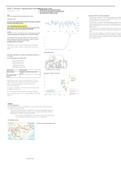
Value of global exports
Dimensions of globalisation, looks different depending on what part you
are studying.
Interconnected dimensions: (Steger, 2013)
•Economic dimension
•Political dimension
•Cultural dimension
•Ecological dimension
•Ideological dimension
Donald Trump Bernie Sanders
Reject globalism Globalized is maintained elites and fail
people GLOBALIZATION OVER 5 CENTURIES
Embraces patriotism
doctrine
Globalisation refers to the increasingly interconnected
nature of economic, political and social life around the
globe – with huge implications for the conduct of
international business
It involves a complex set of social processes with a range
of different dimensions
It is a contested concept, viewed in a range of different
ways, including criticism from a range of different political
positions
LECTURE 2
3 periods of globalisation
•Pre-globalisation phase: until 1800 there was a long period of persistently low
but stable international trade
•First phase of globalisation: during the 19th century technological advances
triggered significant growth in world trade (until WW1) (IMPERIAL POWER,
WHO WOULD CONTROL GLOBAL CONTROL)
▪ Second phase of globalisation: after WW2 international trade began
to re-establish itself and then grow at an incredible rate
PRE-Globalisation phase
Ancient empires international trade routes
LECTURES Page 1
Content:
trade
• Globalisation as a contested concept
20 September 2022 15:00
• The historical development of globalisation
• Key globalisation debates today
Notes
CONTESTED CONCEPT: DIFFERENT VIEWPOINTS
HISTORY OF GLOBALISATION AND INTERNATIONAL TRADE
Contested concept
Over the last two centuries trade has grown remarkably, completely
transforming the global economy.
Today ¼ of global production is exported
Global trade has had important distributional consequences, it has
generated gains, but also some significant inequalities
Example:
If we look at the UK as an example, the extent of importing and exporting
is huge in both goods (more importing) and services (more exporting)
The UK generally has a trade deficit with the rest of the world, which
means it imports more from other countries than it exports to them (it
recently had the first monthly surplus since 2011)
Manufacturing prime of UK is gone!
Globalisation refers to the increasingly interconnected
nature of economic, political and social life around the
globe
Value of global exports
Dimensions of globalisation, looks different depending on what part you
are studying.
Interconnected dimensions: (Steger, 2013)
•Economic dimension
•Political dimension
•Cultural dimension
•Ecological dimension
•Ideological dimension
Donald Trump Bernie Sanders
Reject globalism Globalized is maintained elites and fail
people GLOBALIZATION OVER 5 CENTURIES
Embraces patriotism
doctrine
Globalisation refers to the increasingly interconnected
nature of economic, political and social life around the
globe – with huge implications for the conduct of
international business
It involves a complex set of social processes with a range
of different dimensions
It is a contested concept, viewed in a range of different
ways, including criticism from a range of different political
positions
LECTURE 2
3 periods of globalisation
•Pre-globalisation phase: until 1800 there was a long period of persistently low
but stable international trade
•First phase of globalisation: during the 19th century technological advances
triggered significant growth in world trade (until WW1) (IMPERIAL POWER,
WHO WOULD CONTROL GLOBAL CONTROL)
▪ Second phase of globalisation: after WW2 international trade began
to re-establish itself and then grow at an incredible rate
PRE-Globalisation phase
Ancient empires international trade routes
LECTURES Page 1