
Genetics and genetic engineering
Explain how the process of cell division in eukaryotic cells contributes to genetic variation
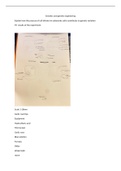
P3 results of the experiment
Scale 1-18mm
Garlic root tips
Equipment
Hydrochloric acid
Microscope
Garlic root
Blue solution
Forceps
Slides
Water bath
razon
, Method
Cut the root tip of the garlic using the razor 1.5 cm and place the root tip on a glass slid with 4-5 drop
of HCL
Add two or three drops of toluidine blue stain to the root tip and wait 1 minute to allow the stain to
penetrate the tissue
And the place the coverslip over the root and press hard on it using a tissue so you can clean all the
excess
Then place the garlic root slide under the microscope and start by using the smallest magnification
and start to adjust the magnification you can already see the cell dividing
Then start to see in under a higher magnification
Use the same method on the lily anther for meiosis
M3: discuss the behaviour of the chromosomes during the cell cycle stages of mitoses and meiosis.
Stages of cell cycle What happens in the cell
Mitoses This stage is the stage where the cell starts to
divide, and the duplicated chromosomes start
to divide equally between two identical
genetical cells
Interphase Is the stage where the cell is resting neither
dividing nor preparing to divide is just waiting
to receive a specific function for example
growth so the cell can be after ready to this
specific function
G1 In this stage the cell change shape it gets bigger
in size so it can start to make protein and
organelles needed for the function of DNA
synthesis. in this stage transcription happens
to make RNA and the RNA and the protein are
synthesized as well.
S phase This is the stage where the DNA start to
replicate So that there is enough DNA to divide
into daughter cells, the genetic content of a cell
is doubled before it undergoes mitosis or
meiosis.
G2 phase In this stage the cell starts to growth and get
start to be ready for mitosis by stimulating the
proteins that will be involved in this stage.
Explain how the process of cell division in eukaryotic cells contributes to genetic variation
P3 results of the experiment
Scale 1-18mm
Garlic root tips
Equipment
Hydrochloric acid
Microscope
Garlic root
Blue solution
Forceps
Slides
Water bath
razon
, Method
Cut the root tip of the garlic using the razor 1.5 cm and place the root tip on a glass slid with 4-5 drop
of HCL
Add two or three drops of toluidine blue stain to the root tip and wait 1 minute to allow the stain to
penetrate the tissue
And the place the coverslip over the root and press hard on it using a tissue so you can clean all the
excess
Then place the garlic root slide under the microscope and start by using the smallest magnification
and start to adjust the magnification you can already see the cell dividing
Then start to see in under a higher magnification
Use the same method on the lily anther for meiosis
M3: discuss the behaviour of the chromosomes during the cell cycle stages of mitoses and meiosis.
Stages of cell cycle What happens in the cell
Mitoses This stage is the stage where the cell starts to
divide, and the duplicated chromosomes start
to divide equally between two identical
genetical cells
Interphase Is the stage where the cell is resting neither
dividing nor preparing to divide is just waiting
to receive a specific function for example
growth so the cell can be after ready to this
specific function
G1 In this stage the cell change shape it gets bigger
in size so it can start to make protein and
organelles needed for the function of DNA
synthesis. in this stage transcription happens
to make RNA and the RNA and the protein are
synthesized as well.
S phase This is the stage where the DNA start to
replicate So that there is enough DNA to divide
into daughter cells, the genetic content of a cell
is doubled before it undergoes mitosis or
meiosis.
G2 phase In this stage the cell starts to growth and get
start to be ready for mitosis by stimulating the
proteins that will be involved in this stage.


