BCOR 1015 Midterm1 Exam 2023
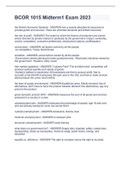
the World's Economic Systems - ANSWER-how a society allocates its resources to provide goods and services. There are unlimited demands and limited resources. the role of profit - ANSWER-The extent to which the factors of production are owned and/or directed by private interest or publically by the government. Impact: ownership, control, competition, consumer preferences, employment options, profit/taxation communism - ANSWER--all factors owned by all the people. -no competition, *Cuba, North Korea socialism - ANSWER--some factors owned by all the people -Government central planning for basic goods/services. -Most basic industries owned by the government. *Sweden, India, Isreal. free market capitalism - ANSWER--"Laissez Faire" The invisible hand- competition will produce optimal quantity and variety of goods. -Society's welfare is maximized. All businesses are free to pursure profit, free to succeed or fail (80,000 businesses fail each year in the US), and free to make choices about product mix, price, and hire/fire. the laws of supply and demand - ANSWER-Equilibrium price. Elastic demand: lots of alternatives, don't have to have the product Inelastic demand: few alternatives, pay any price for the product. gross domestic product GPD - ANSWER-measures the sum of all goods and services produced in a country in a year. unemployment rate - ANSWER-measures the percentage of people, age 16 and over, who are actively looking for work, but cannot find it cyclical unemployment - ANSWER-recessions, booms, bust frictional unemployment - ANSWER-in between jobs structural unemployment - ANSWER-need training what does our government do? - ANSWER-Supply jobs, regulate, safety, create laws, tax/spending, break up monopolies, minimum wage, public works, energy, and education equality vs. efficiency - ANSWER-The right to compete versus the right to succeed. public goods - ANSWER-Examples are public parks, street lights, clean air, lighthouses, police/fire protection, health facilities, and defence. These are underproduced in a free market. stakeholders - ANSWER-Someone who cares about what a company does. Anyone who stands to hain or lose. Consumers, employees, stockholders, community, suppliers, etc... voice - ANSWER-quitting, social media, media understanding ethics - ANSWER-Businesses don't make decisions; people do. law vs ethics - ANSWER-Ethics: internal motivation, often ambiguous Law: external motivation, limited scope, may be unethical *ATM Top Five Exports - ANSWER-UK, Canada, China, Mexico, and Japan. Top 5 Imports - ANSWER-China, Canada, Mexico, Japan, and Germany why do nations trade - ANSWER-No Nation can produce all it wants and needs, at least not in a cost-effective manner. competitive advantage - ANSWER-something a firm can produce best at a lower cost Pros to global trade and protectionism - ANSWER-closer to atomistic economy. produces jobs. potential customers. FDI (Foreign Direct Investment) - ANSWER-Buys or builds assets ina foreign country. Opens an office. trade offs when firms are going global - ANSWER-control, risk, investment, profit economic barriers - ANSWER-level of economic development. currency exchange rates. legal barriers - ANSWER-Government involvement, laws, social and cultural barriers - ANSWER-Understanding challenges among cultures. Accents, body language, roles, time, religion, etc... forms of business ownership - ANSWER-Sole proprietorship, partnerships, C Corporation, S Corporation, and Limited Liability Company (LLC). Sole Proprietorship - ANSWER-Owned by one individual for profit. Ex. butcher, nanny, baby sitter, Mary Kay Advantages: Single Taxation, ease and cost of formation, control, secrecy, distribution of profits, and easy to close. Disadvantages: Unlimited liability, limited funds, limited skills, limited ability to attract talent, and lack of permance/security. Partnerships - ANSWER--Association of two or more persons who operate as co-workers. -Advantages: Single taxation, ease of organization, availbility of captial, combined knowledge and skill, decision making, and regulatory controls. --Disadvantages: Unlimited liability, distribution/sharing of profits, limited funds, decision making, life of partnerships, and challenge to friendships. C Corporation (Conventional or classic C) - ANSWER-legal entity. Assets/liabilities are separate from owners. Advantages: Limited liability, transfer of ownership, perpetuated life, access to source and funds, and expanding potential. Disadvantages: Double taxation, disclosure of information, Employee and owner separation, and government regulation. S Corporation - ANSWER-Domestic enterprise, US shareholder, 100 shareholders, and one class of stock. Limited Liability Company (LLC) - ANSWER-Limitations. Limited life. No stock. Filing. factors of production - ANSWER-the resources we have to produce goods and services. Land Labor Capital Entrepreneurship Knowledge what is ethical behavior - ANSWER--competing fairly and honestly -communicating truthfully -not causing harm to others factors that influence ethical behavior - ANSWER-cultural differences knowledge organizational behavior CSR is ultimately based on...? - ANSWER-your values your view of the ideal society your view of the role of business in society strategic CSR - ANSWER-social contributions that are directly aligned with companies overall business strategy philantropy - ANSWER-donation of money, time, goods or services to charity code of ethics - ANSWER-written statement of businesses principles that guide decisions whistle blowing - ANSWER-telling on company or employee ethical decision making process - ANSWER-1. define dilemma 2. alternatives for dilemma 3. determine 'right' choice 4. analyze choice 5. communicate choice 6. reflect ethics - ANSWER-beliefs about what is right and wrong in actions that affect others difference between CSR and ESR - ANSWER-CSR- benefits society ESR- benefits business Difference is motive what is the case for businesses doing CSR - ANSWER--right thing to do -benifits reputation -equality at cost of efficiency what is the case against CSR - ANSWER--profit above all else -money should flow through shareholders then they can decide Forms of international business activity - ANSWER--importing/exporting -licenesing -franchinsing -strategic alliance/ joint venture -foreign direct investment equality vs. efficiency - ANSWER-equality--we all have equal share of the resources of the country efficiency--how much can we produce from these factors communism - ANSWER--government plans everything -no economic classes -no competition triple bottom line - ANSWER-people+planet+economy=sustainable society environmental burden - ANSWER-the population and affluence divided by consumption and technology planned system - ANSWER-government largely control the resources and limits freedom of choice free market systems - ANSWER-individuals and companies are free to decide what products to produce, how to produce them and how to sell them and who to sell too international trade barriers - ANSWER-social/cultural--ex. language, family roles, time legal/political--ex property, laws regulated monopolies - ANSWER-when one firm can best serve society ex-subways governments role in free market system - ANSWER-1. protecting stakeholders of business 2. fostering competition raging innovation and economic development lizing and stimulating economy natural resources - ANSWER-things that are useful in their natural state ex. land, forest, minerals nationalizing - ANSWER-governments takeover of selected companies or industries human resources - ANSWER-people and their individual abilities economic system - ANSWER-how society assigns its resources to provide goods and services stakeholders - ANSWER-consumers employees shareholders surrounding community suppliers environment with capitalism companies are free too.....? - ANSWER-succeed or fail sustainable development - ANSWER-operating business in a way that minimizes pollution and doesn't use as much resources so future generations will have vital resources economic globalization - ANSWER-increasing integration and interdependence of national economics around the world absolute advantage - ANSWER-rare occurrence when one country has a dominate source of an item resources used to produce goods and services - ANSWER-land-natural resources labor-workers capital-building, equipment entrepreneurship knowledge what is an economic system - ANSWER-how society uses its resources to provide goods and services free market system - ANSWER-An economic system in which, decisions about what to produce and in what quantities, are decided by the market's buyers and sellers planned system - ANSWER-An economic system in which the government controls most of the factors of production and regulates their allocation socialism - ANSWER-some factors owned by all the people -More equal use of resources -Government/central planning for basic goods/services -Most basic industries owned by the government -Sweden, India, Israel capitalism - ANSWER--factors are privately held and used to make profit -Competition -Freedom difference between the world economic systems - ANSWER--The extent to which the factors of production are owned and/or directed, controlled by private interests or publicly by the government -Efficiency vs. Equality social costs= - ANSWER-private costs + externalities recession - ANSWER-A period during which national income, employment, and production all fall; defined as at least six months of decline in the GDP business cycles - ANSWER-Fluctuations in the rate of growth that an economy experiences over a period of several years monetary policy - ANSWER-Government policy and actions taken by the Federal Reserve Board to regulate the nation's money supply fiscal policy - ANSWER-Strategy for the use of government revenue collection and spending, to influence the business cycle
Document information
- Uploaded on
- February 1, 2023
- Number of pages
- 12
- Written in
- 2022/2023
- Type
- Exam (elaborations)
- Contains
- Questions & answers