

Text, Important, Lecture quotes
200 points 25 mc, 10 short answer questions, 3 essay questions
1. Blood all functions of blood p. 662
a. The blood has 3 functions
i. Transportation
1. Transports oxygen from lungs to cells of the body and carbon dioxide form the body to
the lungs. It also carries nutrients, gases, waste and hormones.
ii. Regulation:
1. Circulating blood helps maintain homeostasis of all body fluids.
a. Blood’s ph buffer system
b. Body temperature regulation
c. Blood osmotic pressure influences the water content of cells.
iii. Protection:
1. Blood can clot
2. White blood cells protects against disease by phagocytosis
3. Other proteins help protect the body from disease.
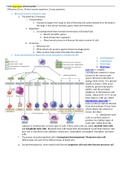
2. Know mesenchymal to blood cells, know derevatives of blood cells 665
a. Hematopoiesis
b. Leukopoeisis
c. Know steps
d. Red bone
marrow is a highly
vascularized connective tissue
located in the microscopic
spaces between trabeculae of
spongy bone tissue. It is present
chiefly in bones of the axial
skeleton, pectoral and pelvic
girdles, and the proximal
epiphyses of the humerus and
femur. About 0.05–0.1% of red
bone marrow cells are called
pluripotent stem cells or
hemocytoblasts and are derived
from mesenchyme (tissue from
which almost all connective
tissues develop).
e. pluripotent stem
cells in red bone marrow
produce two further types of
stem cells, which have the
capacity to develop into several types of cells. These stem cells are called myeloid stem cells
and lymphoid stem cells. Myeloid stem cells begin their development in red bone marrow and
give rise to red blood cells, platelets, monocytes, neutrophils, eosinophils, basophils, and mast
cells.
f. The process of producing blood cells is hemopoiesis (hematopoiesis). Pluripotent stem cells
differentiate into each of the different types of blood cells.
g. During hematopoiesis, some myeloid cells become progenitor cells and other become precursor cell.
,Text, Important, Lecture quotes
i. Progenitor cells are no longer capable of reproducing themselves and are committed to
giving rise to more specific elements of blood. (aka CFU)
ii. precursor cells, also known as blasts. Over several cell divisions they develop into the
actual formed elements of blood.
h. Several hormones called hemopoietic growth factors regulate the differentiation and
proliferation of particular progenitor cells. Erythropoietin (EPO) increases the number of red
blood cell precursors.
i. Thrombopoietin (TPO) is a hormone produced by the liver that stimulates the formation of
platelets from megakaryocytes. Several different cytokines regulate development of different
blood cell types.
j. Cytokines (SĪ-tō-kīns) are small glycoproteins that are typically produced by cells such as red
bone marrow cells, leukocytes, macrophages, fibroblasts, and endothelial cells.
i. Cytokines stimulate proliferation of progenitor cells in red bone marrow and regulate the
activities of cells involved in nonspecific defenses (such as phagocytes) and immune
responses (such as B cells and T cells).
ii. Two important families of cytokines that stimulate white blood cell formation are colony-
stimulating factors (CSFs) and interleukins
3. Know all blood cells 668
a. Rbc, wbc, platelets, etc. 671
b. General RBC Anatomy
i. RBCs lack a nucleus and other organelles and can neither reproduce nor carry on
extensive metabolic activities.
ii. Red blood cells (erythrocytes) contain the protein hemoglobin that is used to carry oxygen to
all cells and to carry 23% of total carbon dioxide to the lungs.
iii. Each hemoglobin molecule contains an iron ion which allows each molecule to bind four oxygen
molecules.
iv. Red blood cells have no nucleus or other organelles and are biconcave discs. The lack of a
nucleus and the shape allow the cells to efficiently carry oxygen.
v. Hemoglobin is also involved in regulating blood flow and blood pressure via the release of nitric
oxide which causes vasodilation that improves blood flow and enhances oxygen delivery.
vi. Red blood cells also contain carbonic anhydrase which catalyzes the conversion of carbon
dioxide and water to carbonic acid. This compound transports about 70% oc carbon dioxide in
the plasma. It is also a buffer.
, Text, Important, Lecture quotes
vii. Each RBC contains about 280 million hemoglobin molecules.
viii.
ix. Red blood cells live for only about 120 days. Dead cells are removed from the circulation by the
spleen and liver.
x. Breakdown products from the cells are recycled and reused.
xi. Production of RBC
1. Erythropoiesis, the production of RBCs, starts in the red bone marrow with a
precursor cell called a proerythroblast
2. The proerythroblast divides several times, producing cells that begin to synthesize
hemoglobin. Ultimately, a cell near the end of the development sequence ejects its
nucleus and becomes a reticulocyte
3. Reticulocytes develop into mature red blood cells within 1 to 2 days after their
release from red bone marrow.
xii. Hemostasis of RBC count
200 points 25 mc, 10 short answer questions, 3 essay questions
1. Blood all functions of blood p. 662
a. The blood has 3 functions
i. Transportation
1. Transports oxygen from lungs to cells of the body and carbon dioxide form the body to
the lungs. It also carries nutrients, gases, waste and hormones.
ii. Regulation:
1. Circulating blood helps maintain homeostasis of all body fluids.
a. Blood’s ph buffer system
b. Body temperature regulation
c. Blood osmotic pressure influences the water content of cells.
iii. Protection:
1. Blood can clot
2. White blood cells protects against disease by phagocytosis
3. Other proteins help protect the body from disease.
2. Know mesenchymal to blood cells, know derevatives of blood cells 665
a. Hematopoiesis
b. Leukopoeisis
c. Know steps
d. Red bone
marrow is a highly
vascularized connective tissue
located in the microscopic
spaces between trabeculae of
spongy bone tissue. It is present
chiefly in bones of the axial
skeleton, pectoral and pelvic
girdles, and the proximal
epiphyses of the humerus and
femur. About 0.05–0.1% of red
bone marrow cells are called
pluripotent stem cells or
hemocytoblasts and are derived
from mesenchyme (tissue from
which almost all connective
tissues develop).
e. pluripotent stem
cells in red bone marrow
produce two further types of
stem cells, which have the
capacity to develop into several types of cells. These stem cells are called myeloid stem cells
and lymphoid stem cells. Myeloid stem cells begin their development in red bone marrow and
give rise to red blood cells, platelets, monocytes, neutrophils, eosinophils, basophils, and mast
cells.
f. The process of producing blood cells is hemopoiesis (hematopoiesis). Pluripotent stem cells
differentiate into each of the different types of blood cells.
g. During hematopoiesis, some myeloid cells become progenitor cells and other become precursor cell.
,Text, Important, Lecture quotes
i. Progenitor cells are no longer capable of reproducing themselves and are committed to
giving rise to more specific elements of blood. (aka CFU)
ii. precursor cells, also known as blasts. Over several cell divisions they develop into the
actual formed elements of blood.
h. Several hormones called hemopoietic growth factors regulate the differentiation and
proliferation of particular progenitor cells. Erythropoietin (EPO) increases the number of red
blood cell precursors.
i. Thrombopoietin (TPO) is a hormone produced by the liver that stimulates the formation of
platelets from megakaryocytes. Several different cytokines regulate development of different
blood cell types.
j. Cytokines (SĪ-tō-kīns) are small glycoproteins that are typically produced by cells such as red
bone marrow cells, leukocytes, macrophages, fibroblasts, and endothelial cells.
i. Cytokines stimulate proliferation of progenitor cells in red bone marrow and regulate the
activities of cells involved in nonspecific defenses (such as phagocytes) and immune
responses (such as B cells and T cells).
ii. Two important families of cytokines that stimulate white blood cell formation are colony-
stimulating factors (CSFs) and interleukins
3. Know all blood cells 668
a. Rbc, wbc, platelets, etc. 671
b. General RBC Anatomy
i. RBCs lack a nucleus and other organelles and can neither reproduce nor carry on
extensive metabolic activities.
ii. Red blood cells (erythrocytes) contain the protein hemoglobin that is used to carry oxygen to
all cells and to carry 23% of total carbon dioxide to the lungs.
iii. Each hemoglobin molecule contains an iron ion which allows each molecule to bind four oxygen
molecules.
iv. Red blood cells have no nucleus or other organelles and are biconcave discs. The lack of a
nucleus and the shape allow the cells to efficiently carry oxygen.
v. Hemoglobin is also involved in regulating blood flow and blood pressure via the release of nitric
oxide which causes vasodilation that improves blood flow and enhances oxygen delivery.
vi. Red blood cells also contain carbonic anhydrase which catalyzes the conversion of carbon
dioxide and water to carbonic acid. This compound transports about 70% oc carbon dioxide in
the plasma. It is also a buffer.
, Text, Important, Lecture quotes
vii. Each RBC contains about 280 million hemoglobin molecules.
viii.
ix. Red blood cells live for only about 120 days. Dead cells are removed from the circulation by the
spleen and liver.
x. Breakdown products from the cells are recycled and reused.
xi. Production of RBC
1. Erythropoiesis, the production of RBCs, starts in the red bone marrow with a
precursor cell called a proerythroblast
2. The proerythroblast divides several times, producing cells that begin to synthesize
hemoglobin. Ultimately, a cell near the end of the development sequence ejects its
nucleus and becomes a reticulocyte
3. Reticulocytes develop into mature red blood cells within 1 to 2 days after their
release from red bone marrow.
xii. Hemostasis of RBC count


