Summary NUR 3805 pt2 syllabus SUPPLEMENTARY MATERIALS
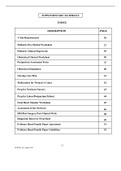
NUR 3805 pt2 syllabus SUPPLEMENTARY MATERIALS 25 NUR3805_Pt2_Spring 2020 SUPPLEMENTARY MATERIALS INDEX DESCRIPTION PAGE V Sim Requirements 26 Pediatric Pre-Clinical Worksheet 27 Pediatric Clinical Paperwork 29 Obstetrical Clinical Worksheet 36 Postpartum Assessment Form 37 Obstetrical Simulation 40 Nursing Care Plan 41 Medications for Women’s Center 42 Prep for Newborn Nursery 43 Prep for Labor/Postpartum Patient 44 Fetal Heart Monitor Worksheet 45 Assessment of the Newborn 46 SDS/Post-Surgery Post-Clinical Work 48 Diagnostic Recovery Prep Sheet 49 Evidence Based Family Paper Agreement 51 Evidence Based Family Paper Guidelines 5226 NUR3805_Pt2_Spring 2020 VSim requirements: You will need to take the pretest (not graded, but your grade will be reduced if not completed), complete each simulation with a proficiency level of 85%, then take the post-test for a grade. The first attempt for your post-quiz score will be used for your grade – so take your time and do well! If you have any xxx High risk for patient harm in your case summary, you will need to complete an incident report. OB VSim due the class period before Test 1 Maternity Case 2: Brenda Patton (Rupture of membranes) Maternity Case 3: Amelia Sung (Labor induction due to gestational diabetes) Maternity Case 4: Carla Hernandez (Umbilical cord prolapse) Peds VSim due the class period before Test 2 Pediatric Case 2: Sabina Vasquez (Asthma and pneumonia) Pediatric Case 3: Eva Madison (Gastroenteritis) OB VSim due the class before Test 3. Maternity Case 5: Fatime Sanogo (Moderate postpartum hemorrhage) Maternity Case 1: Olivia Jones (Severe preeclampsia) Peds VSim due the class period before Test 4 Pediatric Case 1: Jackson Weber (Generalized tonic-clinic seizures) Pediatric Case 4: Brittany Long (Acute pain syndrome) Pediatric Case 5: Charlie Snow (Anaphylaxis)27 NUR3805_Pt2_Spring 2020 ARKANSAS TECH UNIVERSITY Department of Nursing NUR 3805 – Practicum in Nursing II Pediatric Pre-Clinical Worksheet 1. Read and review material from Chapters 32, 35 and 36. 2. Attach to your upload the current immunization recommendations for children birth through 6 years. CDC is good website for this information. 3. Create vital sign references for normal temperature (rectal vs axillary), heart rate, respiratory rate and blood pressure in children for the following age groups: Newborn, 2years, 2-6 years, 6-10 years, and 10+ years. 4. Review how to take a temperature with oral, rectal, and axillary thermometers. 5. List and describe Erikson’s psychosocial stages through adolescence. 6. Define the role of play therapy. Give appropriate examples of play for the hospitalized child for each of the age groups: (Infant, Toddler, Pre-school & School-age) 7. Pain Scales: Print off a copy of following pain scales – FLACC, FACES, COMFORT and 0-10. 8. Explain why the following labs are done for patients in an ICU setting. Include how they are drawn and a short definition. RSV, flu, MRSA, electrolytes, Blood gasses (ABG, VBG, and CBG), blood cultures, bronchial alveolar lavage and CBC. MEDICATIONS FOR PEDIATRIC ROTATION The following list includes some commonly prescribed pediatric medications. The student is required to prepare a completed medication sheet before their first day of pediatric practicum and maintain throughout the clinical rotation. Include the various routes to be given – pick one for your dosages. Most common reason(s) medicine is given in pediatrics. Most common side effects. List any important implications for this medicine. Acetaminophen Albuterol Ampicillin Ativan Ibuprofen Gentamycin Methadone Morphine28 NUR3805_Pt2_Spring 2020 Prelone Syrup/Prednisone Tabs Pulmicort Rocephin Singulair Solu-Medrol Tobramycin Vancomycin Xopenex Zantac Zithromax/Azithromycin Important Pediatric Measurement Conversions: 5ml = 1 teaspoon 3 tsp = 1 tablespoon 15 ml = 1 tablespoon 30 ml = 1 ounce 1 kg = 2.2 pounds 2.5 cm = 1 inch 1 mcg = 0.001mg 1mL = 1cc 1 gram = 1ml Pediatric Dosage Calculation EXAMPLE: Amoxil 40mg/kg/day divided TID The patient weighs 15 kg. This drug comes in the concentration of 250mg/5ml. How many mg per dose? How many ml’s per dose? 40 mg x 15 kg = 600 mg per day 600 mg ÷ 3 = 200 mg per dose 200 mg ÷ 250 mg = 0.8 mg 0.8 mg x 5 ml = 4 ml per dose29 NUR3805_Pt2_Spring 2020 Student Name:_______________________ Clinical Unit__________________________ ARKANSAS TECH UNIVERSITY Department of Nursing NUR 3805 – Practicum in Nursing II Pediatric Clinical Paperwork Patient Initials: __________ Age: ___________ Allergy & Reactions: _________________________________ □NKA Medical Diagnose(s) for this hospitalization: ______________________________________________________ Chronic Illness: ________________________________________________________□ N/A Event(s) that brought patient to the hospital: Significant Birth History IF 2 years of age:30 NUR3805_Pt2_Spring 2020 WEIGHT KG % Growth Chart HEAD CIRCUMFERENCE 2yo % Growth Chart HEIGHT/LENGTH % Growth Chart NUTRITION WHAT TYPE OF NUTRITION OR DIET IS THE PATIENT RECEIVING? BE SPECIFIC – FEEDING SCHEDULE, TYPE OF FORMULA, ROUTE, RATE… IF NOT RECEIVING FEEDS WHAT OTHER NUTRITION IS THE PATIENT RECEIVING? FAMILY Who cares for the child? And who is at the bedside? Who else lives with this family? ____________________________________________________________________ Do you observe any abnormal family interaction? □YES □NO EXPLAIN: ____________________________________________________________31 NUR3805_Pt2_Spring 2020 INTAKE & OUTPUT 24 Hour Fluid Requirement: SHOW YOUR MATH: 100ml FIRST 10kg 50ml NEXT 10kg 20ml REMAINDER OF WT kg □ N/A if 70kg What is the hourly and shift fluid requirement? What was your patient’s total shift intake? ______________________ml Was the intake adequate? □ YES □ NO Rationale: If inadequate Type of IV Fluid: __________________@ ____________ hour □ N/A if not IV fluids. Why is the patient receiving IV fluids? □No IV □Saline Lock 24 Hour Output Requirement & Shift Total (1ml/kg/hour) □ N/A if 30ml/hour Was the output adequate? □ YES □ NO Rationale: If inadequate32 NUR3805_Pt2_Spring 2020 VITAL SIGNS VITAL SIGNS MORNING AFTERNOON INTERPRET NURSING INTERVENTIONS Temperature NORMAL HIGH LOW Pulse NORMAL HIGH LOW Respiration NORMAL HIGH LOW Blood Pressure NORMAL HIGH LOW Oxygen Saturation NORMAL HIGH LOW PAIN CIRCLE Pain Scale Utilized: 0-10 FLACC FACES COMFORT OTHER: ____________ Pain Score: _____________________ Interventions______________________________________________________________□N/A Effectiveness: ____________________________________________________________ □N/A33 NUR3805_Pt2_Spring 2020 LAB & DIAGNOSTIC TESTING IDENTIFY THE LAB OR DIAGNOSTIC TEST WHY WAS IT ORDERED? IDENTIFY ABNORMAL RESULTS & CAUSE NURSING INTERVENTIONS34 NUR3805_Pt2_Spring 2020 MEDICATIONS Weight: ____________kg BRAND & GENERIC NAME & DRUG DOSE DOSAGE + ROUTE WHY IS DRUG PRESCRIBED RECOMMENDED DOSAGE WEIGHT BASED (MG/KG) DOSAGE CALCULATION (SHOW YOUR MATH) SAFE Y OR N MAJOR SIDE EFFECTS BRAND GENERIC CLASS BRAND GENERIC CLASS BRAND GENERIC CLASS35 NUR3805_Pt2_Spring 2020 CRITICAL THINKING 1. During your first interaction with the child/family, what did you notice (odors/smell, general appearance, location and position of child, family & visitor interaction, equipment in room)? What were your initial thoughts about the child and family? What emotions did you feel? What came to mind? 2. What things are connected to or inserted in your patient? Make a list of all dressings, tubes, lines, monitors, and equipment that are being utilized for patient care. For each item, list separately and explain: (If in ICU setting, address central lines, chest tubes and feeding tubes only) a. Purpose of item? b. How would you know the item is accomplishing its’ intended result? c. What about the item or patient should be reported to the instructor and staff, why, & how soon? 3. What significant interventions did you and/or your nurse implement for your patient/family? Please consider any teaching or discharge planning. 4. Were the interventions effective? Explain. What other interventions could have been implemented? 5. In your opinion, what did you do well today? What do you need to improve upon? How could your clinical day be improved? If you could do this day over, what would you do differently?36 NUR3805_Pt2_Spring 2020 ARKANSAS TECH UNIVERSITY Department of Nursing NUR 3805 – Practicum in Nursing II Obstetrical Clinical Worksheet 1. You will be assigned to all three areas usually on different clinical days (L &D, Nursery, & postpartum) during your rotation. 2. Please complete the following prep work before your OB rotation starts a. Prep for Newborn Nursery b. Prep for Labor/Postpartum Patient c. Normal/Abnormal Column of Newborn Assessment d. EFM Worksheet *areas Bring ALL of your prep work with you to EVERY clinical day. 3. You will complete a. One Nursing Care Plan during your rotation (NO PAIN or INFECTION). b. Newborn Assessment Findings Column c. Postpartum Assessment (preferably for postpartum patient, but may be on labor/delivery patient) d. Complete EFM worksheet 4. Please also bring your gestational age assessment sheet provided in class to clinical. 5. Be prepared to answer questions related to your prep work as well as your suggested medication list. 6. You will have 2 quizzes and 2 articles due during this rotation. 7. Please turn in your completed prep and post clinical paperwork online.37 NUR3805_Pt2_Spring 2020 POSTPARTUM ASSESSMENT Student Name:_________________________________________ IDENTIFYING DATA Date:______________________ Pt initials: _______ Age: _______ Race: ______________________ Allergies:________________________________________________________________ Occupation: _______________________________ Medical Diagnosis:____________ Delivery Type:_________ Gravida: ________________Para: _________________ Abortions: _________________ Term: ______________ Preterm: _______________Living: _______________________ Complications (maternal/fetal): ______________________________________________ Prepregnancy wt: ___________________ Pregnancy wt: ________________ Height: ________________ ASSESSMENT General Appearance: ______________________________________________________ Skin/Hair: _______________________________________________________________ Respirations: Rate_____________ Breath Sounds and effort: __________________________________________________ Smoker: Y/N Pk/day: ____________________ No. of years __________________ Hx of Drug Use: Y/N Current Drug Use: Y/N Positive drug screen for:______________ Temperature ___________ B/P: ___________________ Pulse: ________________________ Regular/Irregular Heart Sounds: _______________________ Peripheral Pulses (1-4+): Radial:________________ Dorsalis pedis: __________________ Edema(grade/location):__________________________________________________________ Skin turgor: ____________________ Mucous membranes: _____________________ Nausea/Vomiting: __________________ Prescribed diet: _________________________ Food restrictions: ________________________ Current IV solution and rate: ___________________________ 24 hour I and O (if ordered/has IV/ or PIH): Input______________ Output____________ Meal %: _______________ Last bowel movement: __________________________38 NUR3805_Pt2_Spring 2020 Bowel sounds: ______________ Hemorrhoids: Y/N Difficulty voiding: Y/N Bladder palpable: Y/N Foley catheter: Y/N Estimated Blood Loss: __________ PAIN/COMFORT Location: ________________Quality: ________________Duration: ________________ Precipitating factors: ___________ Guarding: __________ Facial Grimace: __________ Pain Scale: No Pain 0 1 2 3 4 5 6 7 8 9 10 Worst Pain Imaginable NEUROSENSORY Hearing Aid: _______________ Glasses: _________________Contacts: _____________ Headaches: Location: ___________________ Frequency: ________________________ Seizures: _______________________ Reflexes: ________________________________ Epigastric pain:___________________________ Lab: Hgb&Hct: Pre Delivery_____________ Post Delivery: _______________ WBC_____________ Platelets_____________ Blood Type: ____________ If mother Blood type O or Rh-: Baby’s Blood Type ___________Coombs: ________________ HIV: _______________ Hep. B: _____________ Group B Strep: ________________ Rubella Titer: ______________ VDRL/Syphilis: _________________________ Urinalysis if ordered:________________________________________________ Feeding: Breast or Bottle Feeding If breastfeeding, complete the following – poor, fair, well Bra: ____________________Nipples (shape, condition): __________________________ Latching on: ___________________________Any referral to Lactation specialist________________ UTERUS Fundus: Consistency:____________ Height:_________Position:___________________ Lochia: Color:______________ Amount:_________________ Clots:____________ Episiotomy/Lacerations: Type_______________ Swelling________________________ Redness/or drainage: _________________________________39 NUR3805_Pt2_Spring 2020 Surgical incision: Appearance:_________________________ Type: ____________________ Dressing: ____________________ MENSTRUAL HISTORY Frequency: ____________________ Duration: __________________ Amount: _______________________________LMP: ___________________________ Pap smear: ________________________Contraceptive Plan: ______________________ Pregnancy planned (Y/N) Marital Status: _______________________ Living With: _________________________ Financial Concerns: _________________________ Extended family/other support: ______________________________________________ Religion: _______________________ Cultural Factors: __________________________ Report stress factors: ______________________________________________________ Verbal/nonverbal communication with family/significant other: _____________________________________________________________________________________ Hx of Postpartum Depression: Y/N Patient Demeanor:__________________________________ Bonding behavior (including father): _______________________________________________________ MEDICATIONS (List all routine and prn meds given) Drug name/mg How prescribed Purpose ______________________________________________________________________________________ ______________________________________________________________________________________ ______________________________________________________________________________________ ______________________________________________________________________________________ ___ TEACHING/LEARNING Educational background (mother/father): ______________________________________ Previous childbirth experience: ______________________________________________ In Hospital/Discharge Teaching(by you or your nurse) ______________________________________________________________________________________ ______________________________________________________________________________________ ____________________________________________40 NUR3805_Pt2_Spring 2020 Obstetrical Simulation Simulation 1 Pre-Simulation 1. Watch Postpartum Assessment YouTube videos and Gestation Assessment Videos on Blackboard under NUR 3805 2. Review Postpartum BUBBLE He sheet provided in class Simulation 2 Complete V-Sim Scenario 2 and 3 (Brenda Patton and Amelia Sung) Simulation 3 Complete V-Sim Scenario 1, 4 and 5 (Olivia Jones, Carla Hernandez, and Fatime Sanogo)41 NUR3805_Pt2_Spring 2020 NURSING CARE PLAN DATE NURSING DIAGNOSIS PLAN (Outcome) IMPLEMENTATION RATIONALE EVALUATION42 NUR3805_Pt2_Spring 2020 The student is expected to maintain a drug card, or mark in drug book, on each of the medications ordered for their assigned client. It is the responsibility of the student to know and understand the drugs. The following lists are some of the common drugs used. The above medications with an asterisk (*) should be reviewed in detail. Expect to administer and verbalize drug information to instructor. You will be giving these medications more frequently. DRUGS Nursery Meds Post-partam/Labor & Delivery Meds Post-partam/Labor & Delivery Meds * Aquamephyton/Phytonadione (Vit K) Alka-Seltzer Gold * MMR * Erythromycin ointment * Anaprox DS/Anaprox (Naproxen) Morphine * Hep B Benadryl (Diphenhydramine) * Penicillin G Narcan (Naloxone) Ancef (Cefazolin) Docusate Sodium Brethine (Terbutaline) * Phenergan * Calcium Gluconate *Pitocin(Oxytocin) Misoprostol (Metaclopramide) * Reglan Methergine (Methylergonovine) * Rhogam Hemabate (Carboprost Tromethamine) Stadol *Ephedrine Hydrocodone Dulcolax (Bisacodyl) Oxycodone FESO4 Xylocaine Procardia Nifedipine Zofran Labetalol *TDAP *Magnesium Sulfate Dilaudid Dinoprostone *Fentanyl Bupivacaine43 NUR3805_Pt2_Spring 2020 PREP FORM FOR NEWBORN NURSERY Be prepared to answer questions, verbally or by quiz, during the clinical day. 1. Discuss the risk for heat loss in the newborn and what nursing interventions are used to prevent them. 2. Discuss the pathophysiology in terms a parent would understand. Also discuss the different types(physiologic and pathologic)/causes of jaundice and treatment. Discuss warning signs of jaundice and risks. 3. Discuss elimination patterns of the newborn (voiding and stooling). Also discuss the difference in stooling between breast vs. bottle feeding. 4. Complete the clinical significance for the assessment of the newborn including normals and abnormals. (PRIOR TO CLINICAL) 5. Describe the process of assigning APGARS at birth including the five criteria of assessment. 6. Summarize the indication and use of Vitamin K, Hepatitis B, and Erythromycin. (Including site of administration and proper equipment) (Discuss why the infant needs vitamin K and Erythromycin) 7. Discuss CCHD(Critical Congenital Heart Disease), how to screen for it, and findings in the newborn. 8. Discuss hypoglycemia criteria and treatment in the newborn. 9. Discuss feeding methods and timing in the newborn. (breast, bottle, gavage) 10. Discuss common skin conditions found in the newborn.44 NUR3805_Pt2_Spring 2020 LABOR/POSTPARTUM PATIENT The information should be written on additional pages. 1. Discuss a postpartum assessment for a vaginal and a cesarean section patient (including fundus, lochia, bladder…) 2. Complete asterisk* areas on Electronic Fetal Monitoring(EFM) Worksheet. Be ready to discuss early, variable, and later decelerations in clinical. 3. List normals in the following statistics: Blood pressure: Temp: Pulse: Hemoglobin: Fetal heart rate: Hematocrit: Respirations: Platelets: 4. Be able to define terms: Presentation, position, dilation, station, effacement, contraction, duration, frequency , intensity and variability. 5. Discuss the different types of anesthesia (spinal, epidural, general) and analgesia (IV narcotics) during labor and possible effects to mother and/or baby. 6. Discuss breast care for the lactating and non-lactating mother. 7. Discuss pitocin for induction vs. use during the recovery period. Discuss Magnesium Sulfate for the pre-eclamptic pt vs. the preterm patient. Discuss assessment and risk factors for both pitocin (oxytocin) and magnesium sulfate. Identify the antidote for magnesium sulfate toxicity 8. Discuss the risks for pre-term labor, the current means for identifying patients at risk, and the identification and protocols for group B strep. 9. Discuss the use of MMR and TDAP vaccines in the Prenatal or Postpartum period. Also discuss the indications, dosing, and administration of Rhogam. (Discuss appropriate sites and needle size and length.) 10. Discuss the care of the episiotomy site, including comfort measures. Be prepared to answer questions, verbally or by quiz, during the clinical day.45 NUR3805_Pt2_Spring 2020 Patient Initials: Date 1. Fetal Heart Rate - Beats per minute? Check one of the following: Indicate criteria for all. _____Tachycardia *Criteria: _____Average *Criteria: _____Bradycardia *Criteria: 2. What is the baseline variability? What is the significance of reading? * _____Absent variability: 0 to 2 bpm. _____Minimal variability: 3 to 5 bpm. _____Average/Moderate: 6 to 25 bpm. _____Marked: greater than 25 bpm. 3. Are there any periodic changes in the FHR? _____Accelerations _____Early deceleration -- Usual cause : * _____Late deceleration -- Usual cause: * _____Variable Deceleration -- Usual cause: * 4. Looking at uterine contractions, determine the following: USE ADDITIONAL PAGES _________Frequency: Define term: * _________Duration: Define: * 5. * Nursing interventions utilized for all 3 types of decelerations. Pre-Clincal! USE ADDITIONAL PAGES 6. Summarize the significance of your patient’s strip. Post-Clinical! USE ADDITIONAL PAGES * Please complete the above noted areas prior to clinicals WORKSHEET Electronic Fetal Monitoring (EFM)46 NUR3805_Pt2_Spring 2020 Patient's INITIALS: DATE: IDENTIFICATION PLACEMENT: DELIVERY DATE: EDC: APGAR: (1 m) (5 m) METHOD OF DELIVERY: Est. Gest. Age: FINDING(Avoid the word normal) CLINICAL SIGNIFICANCE * Weight Length Posture Head Circumference Chest Circumference Temperature Resp:Rate, Quality & Effort Heart-rate murmurs Sucking, rooting, palate * Discuss normals and abnormals. Have this column prepared prior to nursery day. ASSESSMENT OF THE NEWBORN47 NUR3805_Pt2_Spring 2020 ITEM FINDING CLINICAL SIGNIFICANCE * Eyes/Ears Moro Skin: Color Birthmarks Lanugo Head Fortanelles Size/Shape Pulses (Brachial/Femoral) Umbilicus Genitals Plantar creases Reflexes: Grasp Plantar Babinski NEWBORN ASSESSMENT (continued)48 NUR3805_Pt2_Spring 2020 SDS/Post-Surgery Prep Work (Pre-Clinical) 1. Prepare a drug list for: a. Alka Seltzer Gold b. Zantac c. Versed syrup d. Valium e. Zofran f. Reglan g. Atropine h. Phenergan i. Lovenox j. Hydromorphone k. Morphine *Include action, major side effects, and reason given to surgical patients. List references used. 2. Review how to place peripheral IVs and foley catheters. 3. Review informed consent. 4. Review pre-operative checklist. 5. Review postoperative complications, including pneumonia, paralytic ileus, surgical incision dehiscence and evisceration. SDS/Post-Surgery Post-Clinical Work Must be turned in Monday (by 0830) after last clinical day in SDS 1. Include discharge teaching for four patients. a. Must have rationales that are referenced. b. Briefly discuss patient history, procedure performed, and instructions for self-care at home. 2. Prepare a pre and postoperative teaching plan for a child undergoing a tonsillectomy. All interventions must have a referenced rationale. Information can be found in Brunner & Suddarth, London & Ladewig, and on-line. You must use APA format for listing sources and references. 3. Calculate the preoperative medication for a child weighing 22 lbs. a. PAM 0.5 mL per kilogram i. Available premixed in 10 mL syringe b. Atropine 0.01 mg per kilogram i. Available in 0.4 mg/mL vial 4. Include a reflective journal for each day in clinical.49 NUR3805_Pt2_Spring 2020 Diagnostic Recovery Paperwork (Pre-clinical) 1. Prior to your first day in Diagnostic Recovery (DR), prepare a written drug list for: a. Versed (midazolam) g. Decadron / Hexadrol (dexamethasone) b. Fentanyl (sublimaze) h. Benadryl (diphenhydramine) c. Demerol (meperidine) i. Narcan (naloxone) d. Robinul (glycopyrrolate) j. Romazicon (flumazenil) e. Valium (diazepam) k. Aspirin (acetylsalicylic acid) f. Plavix (clopidogrel) You must include information on the route/dosage, reason for use/indications, action, major side effects, contraindications, and nursing implications. Bring this information with you to clinicals. If you have not completed this information, you may be sent home from clinicals! 2. Review how to place a peripheral IV and a foley catheter. You will start several IVs and may be required to place a foley in DR. Be prepared to answer questions prior to being allowed to perform these procedures. 3. Look up the Aldrete (or modified Aldrete) score. Explain its use and its purpose. Post DR Paperwork 1. Complete the following teaching plans. Turn completed plans in on Monday (by 0830) after last clinical day in DR: a. Prepare a pre- and post-procedure teaching plan for a patient undergoing a colonoscopy. b. Prepare a pre- and post-procedure plan for a patient undergoing a cardiac catheterization for shortness of breath, chest pain, and abnormal ECG. 2. Discuss the steps involved in the administration of packed red blood cells (PRBC). Include this information in your written paperwork to be turned in with your teaching plans on the Monday morning after your last clinical day in DR: a. Explain what labs should be drawn prior to administration of PRBCs. b. Most patients who are going to receive blood products are also given diphenhydramine and/or dexamethasone IV prior to administration. Please give a brief explanation as to why these drugs are given.50 NUR3805_Pt2_Spring 2020 c. Describe signs and symptoms of a transfusion reaction and what you as a nurse would need to do if this were to happen to your patient. What is the absolute most important thing to do if a reaction is suspected? 3. Cardiac cath patients have the following labs drawn prior to their procedure: CBC, BMP (basic metabolic panel), lipids, PT/PTT with INR. Give a brief explanation of what you think the healthcare team is looking for in these labs and why this information is important. Also, why is it important to do an ECG prior to a cardiac cath? Include this information with the teaching plans and transfusion information listed above. 4. During clinicals, explore how to write an RN note for recovery following a GI procedure (these are done on paper, not on the computer, at St. Mary’s). Write a brief note that would be appropriate when discharging a patient from DR following a procedure. *You must submit a journal for each day in DR. These are reflective and should include a description of your experiences in DR. Include information about things you learned and did, what went well, and what things you would like to have done differently.51 NUR3805_Pt2_Spring 2020 ARKANSAS TECH UNIVERSITY Department of Nursing Evidence Based Family Paper Agreement NOTE: Agreement due to Assigned Faculty member on or before assigned date. You May Not Use a Family Member or Another Nursing Student’s Family. Name of Student___________________________________Assigned Faculty Member_________________________ Name of Male Head of Household___________________________________________________________________ Name of Female Head of Household_________________________________________________________________ Street Address________________________________________________________Apt. No.___________________ City, State, Zip Code______________________________________________________________________________ Telephone Numbers___________________________________Best Time to Call______________________________ In the table below, list the names of all persons living in this household, their ages, and relationship to the Head(s) of the household. If additional space is needed, use the back of this form. Name of Each Individual Living in Household Age Relationship to Head(s) of Household Head(s) of Household, please read the following statement and sign below: I/We agree to allow the Arkansas Tech University Nursing Student named above to visit us in our home for the purpose of meeting his/her educational objectives in the Nursing Program at Arkansas Tech University. We understand that the student will be interviewing us and may carry out teaching programs and/or other nursing actions provided that we give consent. We understand that the information we provide the student will be kept confidential and will be handled in a professional manner. We understand that we may refuse any teaching or other nursing care at any time. We understand that the student will be visiting us in our home from four to six times over the period of the next several weeks. We understand that this agreement will be terminated the last scheduled visit, or when requested, whichever comes first. I/We agree to the above statement_________________________________________Date____________ _________________________________________Date____________ I agree to the above statement_____________________________________(Student)Date____________52 NUR3805_Pt2_Spring 2020 ARKANSAS TECH UNIVERSITY NUR 3805 Practicum in Nursing II Evidence Based Family Paper Objective: 1. Utilize the nursing process to plan and deliver care to individuals and families. 2. Practice the role of caregiver, communicator, collaborator and teacher in the delivery of holistic care to a family unit. 3. Utilize current evidence based literature to assist families in making positive lifestyle changes. Selecting a Family: Seek help from family, friends, church and/or community members to locate a suitable family. The selected family needs to include either children and/or a pregnant family member. Family members, friends, or classmates’ families may not be used. Number of Visits: The student will visit the family from 4 to 6 times in person. Written Requirements: The student will submit a written comprehensive professional paper of between 5 and 8 pages (not including title and reference pages). Current APA guidelines must be followed. Process: After selecting a family to use for the paper, the student should: Contact the family to schedule the initial visit and obtain a signed “Family Paper Agreement Contract.” The “Family Visit Log” should be initiated on the first visit and updated after each visit throughout the project. Initiate the “Family Assessment” to determine the needs of the family. Complete the assessment and submit the assessment guide by the due date. Your assessment will determine your planning and intervention for each subsequent visit. Identify THREE priority needs for the family from your completed family assessment. These are not nursing diagnoses. Utilize journal articles and reputable internet sources (government guidelines, etc.) to gather evidence-based educational materials to address the family’s priority needs. You will utilize these materials during each planned family visit. Teaching must be based on evidence (evidence based practice). You may use your textbook only for introductory support. Evaluate the effectiveness of the intervention for each priority need (three required). Terminate the relationship on the last visit and ensure that the family has appropriate referrals in place. Complete your family paper by submitting an electronic copy online within the Blackboard practicum course, a paper copy to your instructor along with a grade sheet and copy of teaching materials provided to family.53 NUR3805_Pt2_Spring 2020 Arkansas Tech University Department of Nursing Evidence Based Family Paper - Level II Student: _________________________________________ Grade: ____________________________ Instructor: ________________________________________ Evaluation: (Total Possible Points - 100%) POINTS Introduction and Conclusion (5%) Describe family type, purpose and organization of paper. No abstract is necessary. ___ points Family Visit Log (10%) Detailed description of each visit & plan for future visits (see form) ___ points Family Assessment Guide (20%) Completed assessment form. Student will make revisions based on instructor comments. ___ points Family summary and identification of three priority needs (15%) Summarize family assessment and identify three priority needs with supportive evidence. ___ points Intervention using evidence-based practice and education (25%) Identify interventions for each need utilizing evidence based-practice and education reference materials appropriately in the document and provide a copy of all teaching materials - Must use reputable sources. ___ points Evaluation and Adaptations (20%) What worked, what didn’t, any adaptations made, and why. ___ points APA Format, Grammar and Spelling (5%) ___ points Total ___ points54 NUR3805_Pt2_Spring 2020 FAMILY VISIT LOG (Make copies- will be longer than one page) Visit# and Date Detailed summary of visit: What was the purpose of this visit? Did you use any teaching materials? What did/didn’t you accomplish (evaluation)? Any adaptation necessary? Detailed plan and date for future visit(s)
Document information
- Uploaded on
- October 28, 2022
- Number of pages
- 30
- Written in
- 2022/2023
- Type
- Summary