Gastroenterology
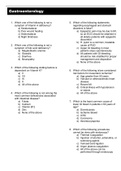
1. Which one of the following is not a 5. Which of the following statements
symptom of Vitamin A deficiency? regarding esophageal and stomach
a) Keratomalacia disorders is false?
b) Poor wound healing a) Epigastric pain may be due to MI,
c) Osteomalacia so an ECG should be obtained in
d) Night blindness all elderly patients with epigastric
discomfort
b) H. pylori is a common, treatable
2. Which one of the following is not a cause of PUD
symptom of folic acid deficiency? c) Upper GI bleeding in most
a) Megaloblastic anemia patients stops spontaneously
b) Glossitis d) All patients with GI bleeding
c) Diarrhea should be risk stratified for proper
d) Neuropathy management and disposition
e) None of the above
3. Which of the following clotting factors is
dependent on Vitamin K? 6. Which of the following is/are considered
a) II risk factors for mesenteric ischemia?
b) VII a) Age greater than 50 years
c) IX b) Valvular or atherosclerotic heart
d) X disease
e) All of the above c) Recent MI
d) Critical illness with hypotension
or sepsis
4. Which of the following is not among the e) All of the above
most common deficiencies associated
with intestinal disease?
a) Folate 7. Which is the least common cause of
b) Calcium lower GI bleed in patients ≥ 60 years of
c) Vitamin B12 age?
d) Zinc a) Diverticulosis
e) None of the above b) Ischemic Bowel
c) AVM
d) Carcinoma
e) thrombocytopenia
8. Which of the following procedures
cannot be done with endoscopy?
a) Thermal Coagulation
b) Injection of alcohol, adrenaline, or
sclerosing agents
c) Variceal band ligation
d) Argon plasma coagulation
e) All of the above can be
performed through endoscopy
, 9. Which of the following provisions may 13. What is the most common benign tumor
be necessary when transfusing blood or of esophagus?
blood products? a) Fibroma
a) IV Calcium Gluconate b) Lipoma
b) Platelets c) Leiomyoma
c) FFP d) None of the above
d) All of the above
14. What is the treatment of choice for
10. When UGI bleed is caused by PUD, esophageal infection with herpes virus?
which of the following correlates best a) Ganciclovir
with rebleeding b) Acyclovir
a) More than one ulcer at c) Ketoconazole
endoscopy d) Fluconazole
b) Nonbleeding visible vessel
c) Adherent clots
d) Spurting bleeding at time of 15. Which of the following tests are helpful
endoscopy in evaluating RLQ pain?
e) Pigmented spot at endoscopy a) WBC count > 10000
b) Urinalysis
11. What is the most common pathogenesis c) B-HCG
of reflux? d) Abdominal CT
a) Hiatus hernia e) All of the above
b) Decreased lower esophageal
sphincter pressure
c) Increased intra-abdominal 16. What is the most specific clue in the
pressure diagnosis of acute appendicitis?
d) Delayed gastric emptying a) Pain over McBurney’s point
e) Transient lower esophageal b) Leukocytosis
sphincter relaxations c) RLQ pain
d) Anorexia
12. Which of the following statements is
wrong about Barrett’s esophagus? 17. What is the most common cause of non-
a) It is a metaplastic process erosive gastritis?
resulting in replacement of a) Lymphocytic gastritis
squamous epithelium with b) Atrophic gastritis
columnar epithelium c) Celiac Sprue
b) Tobacco and alcohol abuse are d) H. pylori
risk factors for the development
of Barrett’s esophagus
c) Adenocarcinoma may arise in 18. What should be suspected when a
Barrett’s esophagus gastric ulcer is refractory to appropriate
d) Highest incidence of Barrett’s medical management?
esophagus is among Blacks. a) Gastric cancer
e) None of the above b) Surreptitious NSAID use
c) Persistent H. pylori infection
d) Acid hypersecretory state
e) All of the above
1. Which one of the following is not a 5. Which of the following statements
symptom of Vitamin A deficiency? regarding esophageal and stomach
a) Keratomalacia disorders is false?
b) Poor wound healing a) Epigastric pain may be due to MI,
c) Osteomalacia so an ECG should be obtained in
d) Night blindness all elderly patients with epigastric
discomfort
b) H. pylori is a common, treatable
2. Which one of the following is not a cause of PUD
symptom of folic acid deficiency? c) Upper GI bleeding in most
a) Megaloblastic anemia patients stops spontaneously
b) Glossitis d) All patients with GI bleeding
c) Diarrhea should be risk stratified for proper
d) Neuropathy management and disposition
e) None of the above
3. Which of the following clotting factors is
dependent on Vitamin K? 6. Which of the following is/are considered
a) II risk factors for mesenteric ischemia?
b) VII a) Age greater than 50 years
c) IX b) Valvular or atherosclerotic heart
d) X disease
e) All of the above c) Recent MI
d) Critical illness with hypotension
or sepsis
4. Which of the following is not among the e) All of the above
most common deficiencies associated
with intestinal disease?
a) Folate 7. Which is the least common cause of
b) Calcium lower GI bleed in patients ≥ 60 years of
c) Vitamin B12 age?
d) Zinc a) Diverticulosis
e) None of the above b) Ischemic Bowel
c) AVM
d) Carcinoma
e) thrombocytopenia
8. Which of the following procedures
cannot be done with endoscopy?
a) Thermal Coagulation
b) Injection of alcohol, adrenaline, or
sclerosing agents
c) Variceal band ligation
d) Argon plasma coagulation
e) All of the above can be
performed through endoscopy
, 9. Which of the following provisions may 13. What is the most common benign tumor
be necessary when transfusing blood or of esophagus?
blood products? a) Fibroma
a) IV Calcium Gluconate b) Lipoma
b) Platelets c) Leiomyoma
c) FFP d) None of the above
d) All of the above
14. What is the treatment of choice for
10. When UGI bleed is caused by PUD, esophageal infection with herpes virus?
which of the following correlates best a) Ganciclovir
with rebleeding b) Acyclovir
a) More than one ulcer at c) Ketoconazole
endoscopy d) Fluconazole
b) Nonbleeding visible vessel
c) Adherent clots
d) Spurting bleeding at time of 15. Which of the following tests are helpful
endoscopy in evaluating RLQ pain?
e) Pigmented spot at endoscopy a) WBC count > 10000
b) Urinalysis
11. What is the most common pathogenesis c) B-HCG
of reflux? d) Abdominal CT
a) Hiatus hernia e) All of the above
b) Decreased lower esophageal
sphincter pressure
c) Increased intra-abdominal 16. What is the most specific clue in the
pressure diagnosis of acute appendicitis?
d) Delayed gastric emptying a) Pain over McBurney’s point
e) Transient lower esophageal b) Leukocytosis
sphincter relaxations c) RLQ pain
d) Anorexia
12. Which of the following statements is
wrong about Barrett’s esophagus? 17. What is the most common cause of non-
a) It is a metaplastic process erosive gastritis?
resulting in replacement of a) Lymphocytic gastritis
squamous epithelium with b) Atrophic gastritis
columnar epithelium c) Celiac Sprue
b) Tobacco and alcohol abuse are d) H. pylori
risk factors for the development
of Barrett’s esophagus
c) Adenocarcinoma may arise in 18. What should be suspected when a
Barrett’s esophagus gastric ulcer is refractory to appropriate
d) Highest incidence of Barrett’s medical management?
esophagus is among Blacks. a) Gastric cancer
e) None of the above b) Surreptitious NSAID use
c) Persistent H. pylori infection
d) Acid hypersecretory state
e) All of the above