2.1 Problem 2: A Ballad to Forget
Matlin: In Cognition (111-117)
‘The Magical Number Seven’ (Miller)
7+/-2 items (chunks)
Can organise letters/numbers together chunking (can increase chunks but not
content of chunks?)
Unusual, bc at the time behaviourism was very popular, which emphasised influence
of external events, but Miller suggested that we engage in internal processes
(chunking)
Early Research on Short-Term Capacity Limits
1. Brown/Peterson & Peterson technique
Take out 6 index cards, on one side write one of the groups of 3 words, on the other
side, write the 3-digit number. Set the cards aside, count backwards in threes from
792. Write down as many of the words that you can remember
Material held in memory for less than 1 minute is forgotten
Distracting task stops them from being able to rehearse the words
2. Serial Position Effect
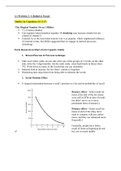
U-shaped relationship between a word’s position in a list and its probability of recall
Recency effect = better recall for
items at the end of the list (items
were still in STM at time of recall,
but didn’t move on to more
permanent form of memory)
Primacy effect = better recall for
items at start of list (they don’t
need to compete with any earlier
items, and they are rehearsed more
frequently)
Generally, people have better
recall of items at beginning & end
of list, not so much middle
, Semantic Similarity of the Items in STM
Semantics = meaning of words/sentences
Proactive interference = previously learned material interferes w/new material
Retroactive interference = new material interferes w/old material
In a list: if you make all the items the same, you will struggle to remember last item
bc of interference from previous items. But if you make the last item different, you
will experience release from proactive interference. Shift in semantic category helps
with memory
Matlin: In Cognition (111-117)
‘The Magical Number Seven’ (Miller)
7+/-2 items (chunks)
Can organise letters/numbers together chunking (can increase chunks but not
content of chunks?)
Unusual, bc at the time behaviourism was very popular, which emphasised influence
of external events, but Miller suggested that we engage in internal processes
(chunking)
Early Research on Short-Term Capacity Limits
1. Brown/Peterson & Peterson technique
Take out 6 index cards, on one side write one of the groups of 3 words, on the other
side, write the 3-digit number. Set the cards aside, count backwards in threes from
792. Write down as many of the words that you can remember
Material held in memory for less than 1 minute is forgotten
Distracting task stops them from being able to rehearse the words
2. Serial Position Effect
U-shaped relationship between a word’s position in a list and its probability of recall
Recency effect = better recall for
items at the end of the list (items
were still in STM at time of recall,
but didn’t move on to more
permanent form of memory)
Primacy effect = better recall for
items at start of list (they don’t
need to compete with any earlier
items, and they are rehearsed more
frequently)
Generally, people have better
recall of items at beginning & end
of list, not so much middle
, Semantic Similarity of the Items in STM
Semantics = meaning of words/sentences
Proactive interference = previously learned material interferes w/new material
Retroactive interference = new material interferes w/old material
In a list: if you make all the items the same, you will struggle to remember last item
bc of interference from previous items. But if you make the last item different, you
will experience release from proactive interference. Shift in semantic category helps
with memory