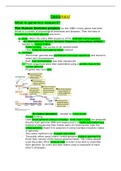
Genomics!
What is genomics research?
The Human Genome project: by the 1980’s many genes had been
linked to a variety of physiological processes and diseases. Then the idea of
sequencing the entire genome was born…
Goal: obtain the entire DNA sequence of the HAPLOID human genome
(A) International Human Genome Sequence Consortium (IHGSC) –
headed by Francis Collins.
- Public funding, free access to all, started ealier
- Used mapping overlapping clones method
Strategy:
- The human genome was partitioned into large sequences and stored in
yeast mini-chromosomes.
- Each mini chromosome was then sequenced
- These sequences were then assembled using a genetic map of the
human genome
- Progress was very slow
: (B) Celera Genomics – headed by Craig Venter
- Private funding
- Used whole genome shotgun strategy: small insert clones are prepared
directly from genomic DNA and sequenced in a highly automated way.
Instead of sequencing from known parts of chromosome, take the
whole genome, digest it & sequence it using overlaps (requires copies
of genome).
- The celera method is far cheaper and faster.
- The public effort used Celera’s whole genome shotgun approach to
finish their version of the human genome faster. The Celera people
used the public effort physical map in order to be able to assemble
their genome. So in the end both teams used a composite of each
other’s strategies.
, - Shot gun sequencing opened the door for the sequencing of other
eukaryotes. The bacterium Haemophilas influenza was the first fee-
living organism to be sequenced.
- Contig = a set of overlapping fragments that form a continuous stretch
of DNA
Great expectations from the HGP: within 10 years we will understand the
function of genes, the genomic basis of many diseases including cancer
and will be able to use this knowledge to diagnose and cure these
diseases… clearly, these promises were not met. The challenge is to
understand how genomes evolve and encode phenotypes.
What is genomics? The study of genomes. Using a variety of tools to
sequence genomes, study sequence variation and gene activity levels at a
genomic scale to answer questions in all areas of biology.
Structural genomics: determines the DNA sequences of entire
genomes. Aims to understand the organisation and sequence of genetic
information contained within a genome.
- The analysis of the human genome revealed only a fraction of the total
number of genes previously expected. The prior educated guess was
that we would see around 50.000-1000.000 genes in a human genome
to account for the difference in complexity – these estimates have
been revised down to 20,000-22,000.
- Composition of the human genome: nuclear genome – 22 autosomal
chromosomes, 2 sex chromosomes, 1.5% protein coding & 50%
repeats. Mitochondrial genome – single circular chromosome, multiple
copies per cell, 93% is coding. Selection not strong enough to get rid of
non-coding DNA due to small human population size.
- Many human genes remain uncharacterised (molecular function
unknown)
Comparative genomics:
- Refers to the comparison of genomes from different species to
understand evolution of genes and species and the function of genes
What is genomics research?
The Human Genome project: by the 1980’s many genes had been
linked to a variety of physiological processes and diseases. Then the idea of
sequencing the entire genome was born…
Goal: obtain the entire DNA sequence of the HAPLOID human genome
(A) International Human Genome Sequence Consortium (IHGSC) –
headed by Francis Collins.
- Public funding, free access to all, started ealier
- Used mapping overlapping clones method
Strategy:
- The human genome was partitioned into large sequences and stored in
yeast mini-chromosomes.
- Each mini chromosome was then sequenced
- These sequences were then assembled using a genetic map of the
human genome
- Progress was very slow
: (B) Celera Genomics – headed by Craig Venter
- Private funding
- Used whole genome shotgun strategy: small insert clones are prepared
directly from genomic DNA and sequenced in a highly automated way.
Instead of sequencing from known parts of chromosome, take the
whole genome, digest it & sequence it using overlaps (requires copies
of genome).
- The celera method is far cheaper and faster.
- The public effort used Celera’s whole genome shotgun approach to
finish their version of the human genome faster. The Celera people
used the public effort physical map in order to be able to assemble
their genome. So in the end both teams used a composite of each
other’s strategies.
, - Shot gun sequencing opened the door for the sequencing of other
eukaryotes. The bacterium Haemophilas influenza was the first fee-
living organism to be sequenced.
- Contig = a set of overlapping fragments that form a continuous stretch
of DNA
Great expectations from the HGP: within 10 years we will understand the
function of genes, the genomic basis of many diseases including cancer
and will be able to use this knowledge to diagnose and cure these
diseases… clearly, these promises were not met. The challenge is to
understand how genomes evolve and encode phenotypes.
What is genomics? The study of genomes. Using a variety of tools to
sequence genomes, study sequence variation and gene activity levels at a
genomic scale to answer questions in all areas of biology.
Structural genomics: determines the DNA sequences of entire
genomes. Aims to understand the organisation and sequence of genetic
information contained within a genome.
- The analysis of the human genome revealed only a fraction of the total
number of genes previously expected. The prior educated guess was
that we would see around 50.000-1000.000 genes in a human genome
to account for the difference in complexity – these estimates have
been revised down to 20,000-22,000.
- Composition of the human genome: nuclear genome – 22 autosomal
chromosomes, 2 sex chromosomes, 1.5% protein coding & 50%
repeats. Mitochondrial genome – single circular chromosome, multiple
copies per cell, 93% is coding. Selection not strong enough to get rid of
non-coding DNA due to small human population size.
- Many human genes remain uncharacterised (molecular function
unknown)
Comparative genomics:
- Refers to the comparison of genomes from different species to
understand evolution of genes and species and the function of genes