

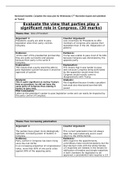
Homework booklet. Complete the essay plan for Wednesday 17 th November (typed and submitted
on Teams)
Evaluate the view that parties play a
significant role in Congress. (30 marks)
Theme One: Role of President
Argument 1: Counter Argument:
Presidents usually are able to pass Less incentives for Presidents to offer
legislation when their party controls members of Congress who oppose their
Congress legislation than in the UK. (Separation of
powers)
Evidence: Evidence:
At the start of the presidential premiership, Trump was unable to pass most of his bills
they are quite successful and popular because Congress was dominated by the
because their party is the same in opposite party.
Congress.
Explanation: Explanation:
This means that a party would be able to This means that it was harder to pass
pass legislation quicker because it would be laws because Congress being dominated
approved of quicker. by the opposition would mean that
Congress would mostly come to
disagreements with Trump.
Analysis: Analysis:
This is quite significant as during Trump's This is significant because it makes a president
time as president, he did not have the
same party of Congress thus making it
look weak since they barely have their bills
harder to pass laws, passed.
Mini Conclusion:
Latter as the president’s power to pass legislation varies and can easily be impacted by
the party control of Congress.
Theme Two: Increasing polarisation
Argument 1: Counter Argument:
The parties have grown more ideologically This current polarisation has not always
opposed, increasing power of leaders in been the case historically and it could
Congress. return to the 1970s format.
Evidence: Evidence:
Party conflict in Congress has been rising With regard to the appointments,
since the mid 1970s. committees make recommendations but the
In an increasing proportion of congressional final decision rests with the whole Senate.
votes, more than 90% of one party cotes 2/3 majorities are needed in the Senate for
against 90% of the opposing party. ratification of treaties and simple majorities
in both chambers for legislation to be
approved, a presidential veto requires a 2/3
on Teams)
Evaluate the view that parties play a
significant role in Congress. (30 marks)
Theme One: Role of President
Argument 1: Counter Argument:
Presidents usually are able to pass Less incentives for Presidents to offer
legislation when their party controls members of Congress who oppose their
Congress legislation than in the UK. (Separation of
powers)
Evidence: Evidence:
At the start of the presidential premiership, Trump was unable to pass most of his bills
they are quite successful and popular because Congress was dominated by the
because their party is the same in opposite party.
Congress.
Explanation: Explanation:
This means that a party would be able to This means that it was harder to pass
pass legislation quicker because it would be laws because Congress being dominated
approved of quicker. by the opposition would mean that
Congress would mostly come to
disagreements with Trump.
Analysis: Analysis:
This is quite significant as during Trump's This is significant because it makes a president
time as president, he did not have the
same party of Congress thus making it
look weak since they barely have their bills
harder to pass laws, passed.
Mini Conclusion:
Latter as the president’s power to pass legislation varies and can easily be impacted by
the party control of Congress.
Theme Two: Increasing polarisation
Argument 1: Counter Argument:
The parties have grown more ideologically This current polarisation has not always
opposed, increasing power of leaders in been the case historically and it could
Congress. return to the 1970s format.
Evidence: Evidence:
Party conflict in Congress has been rising With regard to the appointments,
since the mid 1970s. committees make recommendations but the
In an increasing proportion of congressional final decision rests with the whole Senate.
votes, more than 90% of one party cotes 2/3 majorities are needed in the Senate for
against 90% of the opposing party. ratification of treaties and simple majorities
in both chambers for legislation to be
approved, a presidential veto requires a 2/3


