Cardiovascular System
DESCRIBE THE SITES OF BLOOD CELL PRODUCTION
● Blood cells are formed in red bone marrow / myeloid tissue
● Hematopoiesis ( formation of blood cells) is controlled by cytokines (small proteins, paracrine) released by
supporting cells in the bone marrow and by erythropoietin - a hormone secreted by kidneys
● As a foetus blood is produced in the liver and spleen (6 weeks old - 7 months) as skeleton develops
● Lymphocyte production is in spleen and lymphoid tissue
● Red marrow is in trunk, skull, upper ends of humerus and femur, vertebrae, pelvis
● Yellow marrow is fatty areas of bone which can convert to red if more blood is needed urgently
Discuss stem cell production and hematopoiesis
● All types of blood cells are derived from a pluripotent (capable of giving rise to several different cell types)
hematopoietic stem cells
● These stem cells differentiate into progenitor stem cells that then differentiate into precursor cells which
represent the different type of blood cells
● Precursor cells undergo terminal differentiation into mature blood cells
● Lymphoid progenitor stem cells migrate from bone marrow to thymus and other lymphoid tissue
● Colony stimulating factors - erythropoietin, thrombopoietin, interleukins - stimulate progenitor stem
cells to increase and differentiate rapidly
,Discuss erythropoiesis
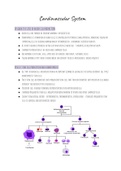
● Hematopoietic stem cells divide in bone marrow to produce myeloid
stem cells.
● These cells differentiate into proerythroblasts that undergo
erythroblast stages.
● After four days the erythroblast will eject its nucleus and become a
reticulocyte which will enter and circulate the blood stream where it
will synthesise haemoglobin, helping it gain its infamous red
colour until it matures into an erythrocyte.
● This process is regulated by erythropoietin (EPO) which is released when
low oxygen levels are detected. EPO will stimulate cell division rates
in erythroblasts and speed up erythrocyte maturation by increasing
the rate of haemoglobin synthesis which as a result will increase
oxygen transportation as a result of an increased number of red
blood cells.
Describe the characteristics of red blood cells
● Mature red blood cells lack nucleus and organelles = unable to repair hence short life span and no energy
reserves hence anaerobic metabolism of glucose for energy - mitochondria would steal oxygen
● Biconcave disc
● Flat shape with large area to volume ratio to allow for fast absorption and release of oxygen between the
lungs and peripheral tissues
● Flat shape also allows red blood cells to form stacks so they may flow smoothly through blood vessels and
allow them to bend in small capillaries
● Haemoglobin gives red blood cell its red pigment
○ Transports oxygen and carbon dioxide
○ Four polypeptide chains - 2 alpha and 2 beta
○ Each chain contains a heme molecule - total four on one haemoglobin
○ Each heme molecule holds an iron which interacts with and carries oxygen in haemoglobin. This
interaction is weak hence oxygen can move freely on and off haemoglobin
, Describe the lifespan and breakdown of red blood cells
● Red blood cells lifespan is 120 days in circulation
● 1% of circulating cells is destroyed each day and must be replaced by reticulocytes
● As they age in circulation their volume decreases as KCL and water is lost
making the rbc dense
● Red blood cells are removed from circulation by macrophages in red bone
marrow, spleen and liver
● Within macrophage rbc haemoglobin is broken down
○ Amino acids of globin is released into general amino acid pool
○ Heme groups are broken down by microsomal enzymes
■ Iron released to extracellular protein transferrin to be
transported to erythroblasts to be used in new rbc or to
iron stores
■ Remainder of heme group is converted to bilirubin that
enters blood and is attached to albumin in blood and
carried to liver it is then secreted to bile to be excreted in
urine
Discuss the white blood cell
● Leukocytes have nuclei and other organelles and lack haemoglobin
● Develop in the bone marrow
● Circulate bloodstream for a shorter time than rbc and travel from one organ to another looking for
infected tissue or injured tissue - if they detect problems they leave the bloodstream and enter the damaged
area
● Leukocytes are attracted to specific chemical stimuli, the characteristic is called positive chemotaxis which
guides the wbc to pathogens and damaged tissues
● Wbc are capable of phagocytosis - engulf pathogens and cell debris
● Wbc are divided into two groups based on their appearance after staining
○ Granular - abundant stained granules - neutrophils, eosinophils, basophils - part of nonspecific
defences which do not discriminate between one type of threat and another
DESCRIBE THE SITES OF BLOOD CELL PRODUCTION
● Blood cells are formed in red bone marrow / myeloid tissue
● Hematopoiesis ( formation of blood cells) is controlled by cytokines (small proteins, paracrine) released by
supporting cells in the bone marrow and by erythropoietin - a hormone secreted by kidneys
● As a foetus blood is produced in the liver and spleen (6 weeks old - 7 months) as skeleton develops
● Lymphocyte production is in spleen and lymphoid tissue
● Red marrow is in trunk, skull, upper ends of humerus and femur, vertebrae, pelvis
● Yellow marrow is fatty areas of bone which can convert to red if more blood is needed urgently
Discuss stem cell production and hematopoiesis
● All types of blood cells are derived from a pluripotent (capable of giving rise to several different cell types)
hematopoietic stem cells
● These stem cells differentiate into progenitor stem cells that then differentiate into precursor cells which
represent the different type of blood cells
● Precursor cells undergo terminal differentiation into mature blood cells
● Lymphoid progenitor stem cells migrate from bone marrow to thymus and other lymphoid tissue
● Colony stimulating factors - erythropoietin, thrombopoietin, interleukins - stimulate progenitor stem
cells to increase and differentiate rapidly
,Discuss erythropoiesis
● Hematopoietic stem cells divide in bone marrow to produce myeloid
stem cells.
● These cells differentiate into proerythroblasts that undergo
erythroblast stages.
● After four days the erythroblast will eject its nucleus and become a
reticulocyte which will enter and circulate the blood stream where it
will synthesise haemoglobin, helping it gain its infamous red
colour until it matures into an erythrocyte.
● This process is regulated by erythropoietin (EPO) which is released when
low oxygen levels are detected. EPO will stimulate cell division rates
in erythroblasts and speed up erythrocyte maturation by increasing
the rate of haemoglobin synthesis which as a result will increase
oxygen transportation as a result of an increased number of red
blood cells.
Describe the characteristics of red blood cells
● Mature red blood cells lack nucleus and organelles = unable to repair hence short life span and no energy
reserves hence anaerobic metabolism of glucose for energy - mitochondria would steal oxygen
● Biconcave disc
● Flat shape with large area to volume ratio to allow for fast absorption and release of oxygen between the
lungs and peripheral tissues
● Flat shape also allows red blood cells to form stacks so they may flow smoothly through blood vessels and
allow them to bend in small capillaries
● Haemoglobin gives red blood cell its red pigment
○ Transports oxygen and carbon dioxide
○ Four polypeptide chains - 2 alpha and 2 beta
○ Each chain contains a heme molecule - total four on one haemoglobin
○ Each heme molecule holds an iron which interacts with and carries oxygen in haemoglobin. This
interaction is weak hence oxygen can move freely on and off haemoglobin
, Describe the lifespan and breakdown of red blood cells
● Red blood cells lifespan is 120 days in circulation
● 1% of circulating cells is destroyed each day and must be replaced by reticulocytes
● As they age in circulation their volume decreases as KCL and water is lost
making the rbc dense
● Red blood cells are removed from circulation by macrophages in red bone
marrow, spleen and liver
● Within macrophage rbc haemoglobin is broken down
○ Amino acids of globin is released into general amino acid pool
○ Heme groups are broken down by microsomal enzymes
■ Iron released to extracellular protein transferrin to be
transported to erythroblasts to be used in new rbc or to
iron stores
■ Remainder of heme group is converted to bilirubin that
enters blood and is attached to albumin in blood and
carried to liver it is then secreted to bile to be excreted in
urine
Discuss the white blood cell
● Leukocytes have nuclei and other organelles and lack haemoglobin
● Develop in the bone marrow
● Circulate bloodstream for a shorter time than rbc and travel from one organ to another looking for
infected tissue or injured tissue - if they detect problems they leave the bloodstream and enter the damaged
area
● Leukocytes are attracted to specific chemical stimuli, the characteristic is called positive chemotaxis which
guides the wbc to pathogens and damaged tissues
● Wbc are capable of phagocytosis - engulf pathogens and cell debris
● Wbc are divided into two groups based on their appearance after staining
○ Granular - abundant stained granules - neutrophils, eosinophils, basophils - part of nonspecific
defences which do not discriminate between one type of threat and another