

Management of Patients with Structural, Infections, and Inflammatory
Cardiac Disorders
Valvular Disorders
Regurgitation: The valve does not close properly, and blood backflows through the valve (issue
with closure- backflow)
Stenosis: The valve does not open completely, and blood flow through the valve is reduced
(issue with opening- flow reduced)
Valve prolapse: The stretching of an atrioventricular valve leaflet into the atrium during diastole
(stretching of the valve)
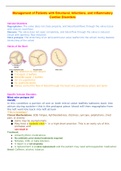
Valves of the Heart
● Pay attention to the closure
● Tricuspid- 3 leaflets
● Mitral/Bicuspid- 2 leaflets
● AV- tricuspid/mitral
● SL- pulmonic/aortic
● Valves control the flow of blood through the heart into pulmonary artery and aorta
Specific Valvular Disorders
Mitral valve prolapse (AV
VALVE)
In this condition a portion of one or both mitral valve leaflets balloons back into
atrium during systole→ this is the prolapse piece- blood will then regurgitate from
the left ventricle back into left atrium
*This is hereditary*
Clinical Manifestations: SOB, fatigue, lightheadedness, dizziness, syncope, palpitations, chest
pain, or anxiety
● Some may be asymptomatic
● May hear a systolic click→ in a high-level practice. This is an early s/s of this
prolapse and
can result in
Treatment:
● Antiarrhythmic medications
● No antibiotic prior dental treatments required
● Nitrates, CCB, or beta blockers
● A repair is a valvuloplasty
● A replacement is a valve replacement and the patient may need anticoagulation medication
Avoid: Caffeine, alcohol, tobacco
,Complications: Pt can develop infective endocarditis and the pt may need antibiotic therapy
Mitral regurgitation
There is blood backflow from the left ventricle into the left atrium during systole. With each beat
of the ventricle blood is forced back into the left atrium and we get hypertrophy and the lungs
will become congested and we develop systolic HF (LEFT)
Etiology:
● Mitral valve prolapse, rheumatic heart disease
Clinical manifestations: (pt can be asymptomatic)
● severe congestive HF, dyspnea, fatigue, weakness, palpitations, SOB on exertion,
cough, systolic murmur, pulse deficit can occur
Management:
● Similar to HF - afterload reduction medications (ACE, ARBS, beta blockers)
Diagnostics:
● echocardiogram can determine if condition is progressing
Complication: HF
Mitral stenosis
Obstruction of blood flowing from the left atrium into the left ventricle. The leaflets
fuse in this case. We have an OPENING issue → the diameter will narrow, and the LA
has difficulty moving blood and we have decreased cardiac output. This will affect perfusion
and the HR will increase and CO decreases and pulmonary pressure increases
Etiology:
● Rheumatic Endocarditis
Clinical Manifestations:
● Pt may present with a fib and be at risk for clots
● Dyspnea on exertion, dry cough, wheezing, progressive fatigue, exercise intolerance,
hemoptysis, palpitations, orthopnea, PND, repeated respiratory infections
Diagnostic:
● Echo is used to diagnose how stenotic the valve is
● ECG
● Exercise testing
● Cardiac catheterization
Management:
● Anticoagulants necessary to decrease the chance of atrial thrombus
● If Afib develops→ cardioversion
● Control ventricular HR with beta-blockers, digoxin, or CCB
● Avoid activities that can increase HR
Aortic regurgitation
We have a closing problem this is the flow of blood back into the LV from the aorta during diastole
Etiology:
● inflammation, ineffective or rheumatic endocarditis
Clinical manifestations:
● Many patients will have no s/s
, ● Some may feel a forceful HB
● Visible or palpable pulsation
○ We would look for a heave or lift
● Symptomatic of progressive left ventricular failure such as breathing difficulties or
orthopnea, PND (patient is woken up during sleep in difficulty in breathing)
● Pulse pressure – difference between systolic and diastolic pressure
Management:
● Avoid strenuous activity
● Treated for dysrhythmia and HTN
● Restrict sodium intake and avoid fluid volume overload
● Prevent bacterial infections
Aortic stenosis
This is an opening issue where there is narrowing of the orifice between the left ventricle and
aorta
Etiology:
● Degenerative calcification → over time there is progressive narrowing of the valve
(usually takes several years to decades to form)
Clinical Manifestations:
● Dyspnea, Orthopnea, PND, Pulmonary edema, Dizziness, Angina
● Syncope (from decreased blood flow from the brain)
● Harsh systolic murmur and S4
Nursing Management: Valvular Heart Disorders #1
● Patient education- HF s/s→ salt intake (nutrition)
● Monitor VS trends- is HR fast when pt wakes up
● Monitor for complications
○ Heart failure
■ Patient education; such as nutrition, salt intake, and monitor VS
■ Daily weights
○ Dysrhythmias- electrical conditions ( PAC or PVC? )
○ Other symptoms: dizziness, syncope → caused by decreased oxygenation
● Medication schedule: education
● Daily weights: monitor for weight gain
● Plan activity with rest periods
● Sleep with head of bed elevated
Question #1
The nurse is providing education for a client diagnosed with mitral valve prolapse (MVP). What should
be included in the teaching plan? (Select all that apply.)
1. MVP is not hereditary
2. Caffeine is tolerated in small
amounts 3. Avoid alcohol
4. Stop use of tobacco products
5. Prophylactic antibiotics are not prescribed before dental procedures
Rationale: MVP is a hereditary, and caffeine should be avoided
, Surgical Management: Valvular Heart Disorders
Valvuloplasty → REPAIR is a valvuloplasty
Do not require continuous anticoagulation because it is their own tissue
● Commissurotomy
● Balloon valvuloplasty (this is a bridge to central valve repair)
● Annuloplasty
● Leaflet repair
● Chordoplasty
Valve Replacement
Before surgery the heart has gotten used to the issue. It is compensated sometimes surgery will
abruptly correct the way is blood is flowing abnormally and sometimes the patient can have
complications related to the sudden changes in internal pressures
This is a foreign entity in the body
Require long term use for anticoagulants→ at risk for thrombus emboli
2 types→
● Mechanical- prosthetic (more risk for clots) - lifetime coagulation therapy
● Tissue (less risk for clots)
Types of tissue→
● Bioprosthesis- (another species) do not need anticoagulation therapy for this procedure
● Homografts- tissue comes from a cadaver
● Autografts- patient's own tissue (most common in children)
Balloon Valvuloplasty
Annuloplasty Ring Insertion
● Balloon goes into the vessel is inflated and opens up the vessel
● Showing the anatomical location→ pulling the thread tight to close the opening
Cardiac Disorders
Valvular Disorders
Regurgitation: The valve does not close properly, and blood backflows through the valve (issue
with closure- backflow)
Stenosis: The valve does not open completely, and blood flow through the valve is reduced
(issue with opening- flow reduced)
Valve prolapse: The stretching of an atrioventricular valve leaflet into the atrium during diastole
(stretching of the valve)
Valves of the Heart
● Pay attention to the closure
● Tricuspid- 3 leaflets
● Mitral/Bicuspid- 2 leaflets
● AV- tricuspid/mitral
● SL- pulmonic/aortic
● Valves control the flow of blood through the heart into pulmonary artery and aorta
Specific Valvular Disorders
Mitral valve prolapse (AV
VALVE)
In this condition a portion of one or both mitral valve leaflets balloons back into
atrium during systole→ this is the prolapse piece- blood will then regurgitate from
the left ventricle back into left atrium
*This is hereditary*
Clinical Manifestations: SOB, fatigue, lightheadedness, dizziness, syncope, palpitations, chest
pain, or anxiety
● Some may be asymptomatic
● May hear a systolic click→ in a high-level practice. This is an early s/s of this
prolapse and
can result in
Treatment:
● Antiarrhythmic medications
● No antibiotic prior dental treatments required
● Nitrates, CCB, or beta blockers
● A repair is a valvuloplasty
● A replacement is a valve replacement and the patient may need anticoagulation medication
Avoid: Caffeine, alcohol, tobacco
,Complications: Pt can develop infective endocarditis and the pt may need antibiotic therapy
Mitral regurgitation
There is blood backflow from the left ventricle into the left atrium during systole. With each beat
of the ventricle blood is forced back into the left atrium and we get hypertrophy and the lungs
will become congested and we develop systolic HF (LEFT)
Etiology:
● Mitral valve prolapse, rheumatic heart disease
Clinical manifestations: (pt can be asymptomatic)
● severe congestive HF, dyspnea, fatigue, weakness, palpitations, SOB on exertion,
cough, systolic murmur, pulse deficit can occur
Management:
● Similar to HF - afterload reduction medications (ACE, ARBS, beta blockers)
Diagnostics:
● echocardiogram can determine if condition is progressing
Complication: HF
Mitral stenosis
Obstruction of blood flowing from the left atrium into the left ventricle. The leaflets
fuse in this case. We have an OPENING issue → the diameter will narrow, and the LA
has difficulty moving blood and we have decreased cardiac output. This will affect perfusion
and the HR will increase and CO decreases and pulmonary pressure increases
Etiology:
● Rheumatic Endocarditis
Clinical Manifestations:
● Pt may present with a fib and be at risk for clots
● Dyspnea on exertion, dry cough, wheezing, progressive fatigue, exercise intolerance,
hemoptysis, palpitations, orthopnea, PND, repeated respiratory infections
Diagnostic:
● Echo is used to diagnose how stenotic the valve is
● ECG
● Exercise testing
● Cardiac catheterization
Management:
● Anticoagulants necessary to decrease the chance of atrial thrombus
● If Afib develops→ cardioversion
● Control ventricular HR with beta-blockers, digoxin, or CCB
● Avoid activities that can increase HR
Aortic regurgitation
We have a closing problem this is the flow of blood back into the LV from the aorta during diastole
Etiology:
● inflammation, ineffective or rheumatic endocarditis
Clinical manifestations:
● Many patients will have no s/s
, ● Some may feel a forceful HB
● Visible or palpable pulsation
○ We would look for a heave or lift
● Symptomatic of progressive left ventricular failure such as breathing difficulties or
orthopnea, PND (patient is woken up during sleep in difficulty in breathing)
● Pulse pressure – difference between systolic and diastolic pressure
Management:
● Avoid strenuous activity
● Treated for dysrhythmia and HTN
● Restrict sodium intake and avoid fluid volume overload
● Prevent bacterial infections
Aortic stenosis
This is an opening issue where there is narrowing of the orifice between the left ventricle and
aorta
Etiology:
● Degenerative calcification → over time there is progressive narrowing of the valve
(usually takes several years to decades to form)
Clinical Manifestations:
● Dyspnea, Orthopnea, PND, Pulmonary edema, Dizziness, Angina
● Syncope (from decreased blood flow from the brain)
● Harsh systolic murmur and S4
Nursing Management: Valvular Heart Disorders #1
● Patient education- HF s/s→ salt intake (nutrition)
● Monitor VS trends- is HR fast when pt wakes up
● Monitor for complications
○ Heart failure
■ Patient education; such as nutrition, salt intake, and monitor VS
■ Daily weights
○ Dysrhythmias- electrical conditions ( PAC or PVC? )
○ Other symptoms: dizziness, syncope → caused by decreased oxygenation
● Medication schedule: education
● Daily weights: monitor for weight gain
● Plan activity with rest periods
● Sleep with head of bed elevated
Question #1
The nurse is providing education for a client diagnosed with mitral valve prolapse (MVP). What should
be included in the teaching plan? (Select all that apply.)
1. MVP is not hereditary
2. Caffeine is tolerated in small
amounts 3. Avoid alcohol
4. Stop use of tobacco products
5. Prophylactic antibiotics are not prescribed before dental procedures
Rationale: MVP is a hereditary, and caffeine should be avoided
, Surgical Management: Valvular Heart Disorders
Valvuloplasty → REPAIR is a valvuloplasty
Do not require continuous anticoagulation because it is their own tissue
● Commissurotomy
● Balloon valvuloplasty (this is a bridge to central valve repair)
● Annuloplasty
● Leaflet repair
● Chordoplasty
Valve Replacement
Before surgery the heart has gotten used to the issue. It is compensated sometimes surgery will
abruptly correct the way is blood is flowing abnormally and sometimes the patient can have
complications related to the sudden changes in internal pressures
This is a foreign entity in the body
Require long term use for anticoagulants→ at risk for thrombus emboli
2 types→
● Mechanical- prosthetic (more risk for clots) - lifetime coagulation therapy
● Tissue (less risk for clots)
Types of tissue→
● Bioprosthesis- (another species) do not need anticoagulation therapy for this procedure
● Homografts- tissue comes from a cadaver
● Autografts- patient's own tissue (most common in children)
Balloon Valvuloplasty
Annuloplasty Ring Insertion
● Balloon goes into the vessel is inflated and opens up the vessel
● Showing the anatomical location→ pulling the thread tight to close the opening


