RESPIRATORY STUDY GUIDE
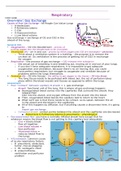
Overview: Gas Exchange Causes of Poor Gas Exchange - All People Can Value Lungs A-Atelectasis P-Pulmonary edema C-Clot V-Vasoconstriction L-Low blood volume Gas exchange = exchange of O2 and CO2 in the alveoli of the lungs. General Info • Oxygenation – O2 into bloodstream - process of putting oxygen into the bloodstream to be circulated. • Ventilation (V) – air in and out - process by which oxygen and CO2 are exchanged = perfusion. o Think about a ventilation system in a building – the purpose is to remove the unclean air. So ventilation is the process of getting rid of CO2 in exchange for oxygen • Respiration – the process of gas exchange – CO2 released with exhalation o the actual act of breathing in and breathing out, moving air in and out of your lungs. o If you don’t have adequate respirations, it is impossible to get adequate oxygenation and ventilation, because there’s no air moving. But, you could have perfect respirations, but struggle to oxygenate and ventilate because of problems within the lungs themselves. • Perfusion (Q) – O2 into tissues - the ability to get oxygen to the tissues = O2 into blood. o The lung tissue needs to be perfused with blood, but, the act of perfusion takes place within the blood vessels and tissues as opposed to within the lungs. Assessment • Poor “contact” between capillary & alveoli = ↓ gas exchange o Alveoli functional unit of the lung, this is where all gas exchange happens ▪ Deoxygenated blood comes into the capillaries that surround the alveoli, they release their CO2 into the alveoli, and oxygen diffuses from the alveoli into the blood. ▪ Then, oxygenated blood leaves the capillary bed to return to the heart. ▪ What we’ll see is that there needs to be contact, so-to-speak, between the air in the alveoli and the blood in the capillaries. ▪ All of this happens by diffusion, but if anything causes a disconnect here, it’s going to impair gas exchange. o Collapsed alveoli contact points between the alveoli and the capillaries are decreased. ▪ Atelectasis & Pulmonary edema & pneumonia - physiological • Decreased blood flow you have a normally inflated alveoli here except that for whatever reason the blood flow is not getting to this capillary bed adequately o Clot = blocks blood flow all together, o Low blood volume = less perfusion o Vasoconstriction = reduces blood flow to the lungs • V/Q mismatch: common cause of acute respiratory failure. o B pneumonia, atelectasis, tumor, mucus plugging o C PE, cardiogenic shock o D pneumothorax, ventilation and perfusion problem
Document information
- Uploaded on
- May 30, 2022
- Number of pages
- 27
- Written in
- 2021/2022
- Type
- Exam (elaborations)
- Contains
- Questions & answers