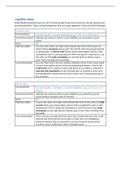
Liquidity ratios
Weak liquidity positions have the risk of not being able to pay the income tax, interest expense and
declared dividends. These are fixed obligations that must paid regardless of the cash flow challenges
Current ratio
Formula (how) Current assets: current liabilities (e.g. 1.73:1 or 1.73 times)
Information (what) Indicates the extent to which current liabilities are covered by current
assets
Norm 2:1
High (favorable) A current ratio that is too high could indicate that most of the assets are
either held as inventory (comes with risk of theft, items becoming obsolete
or being spoilt), or held as cash (entity could receive higher returns if they
invested the cash or cash equivalents in PPE or long term investment or use
the other) or the trade receivables are too high (will our debtors pay in
time? Risk of writing off as bad debt)
Low (unfavorable) A current ratio that is too low could be indicative of too much money owed
to short term lenders which could lead to liquidity problems. Check if the
credit terms of the creditors match with those of our debtors. A decline in
cash and cash equivalents can be matched with an increase in short term
borrowings which shows that the entity cannot use its most liquid asset to
buy inventory.
Quick ratio
Formula (how) Current assets - inventory: current liabilities (e.g. 1.73:1 or 1.73
times)
Information (what) Indicates the extent to which current liabilities are covered by current
assets without relying on sale of inventory
Norm 1:1
High (favorable) A quick ratio that is too high could indicate that most of the assets are held
as cash (entity can receive higher returns if they invested the cash or cash
equivalents in PPE or long term investment or use the other) or the trade
receivables are too high (will our debtors pay in time? Risk of writing off as
bad debt)
Low (unfavorable) If the current is too high while the quick ratio is below the norm this could
indicate that the entity will not be able to meet short term obligations
without inventory sales or that there’s too much current assets held as
inventory which could lead to theft or obsolete stock
, Asset management ratios/ working capital management
On top of looking at the ratios, you can also look at the increases in inventory and receivables and
see if this is reflected in increased sales, if not then it shows inefficiency in inventory and accounts
receivables.
Increased inventory amounts could be caused by diversifying inventory lines, poor inventory
management, decreased sales, higher expectation of sales in the future.
increased receivables could indicate increased credit terms to encourage sales but it could also
show poor accounts receivables management.
Inventory turn-over
Formula (how) 𝐶𝑜𝑠𝑡 𝑜𝑓 𝑠𝑎𝑙𝑒𝑠 𝑠𝑎𝑙𝑒𝑠
or (e.g. 31.3 times) or 365/31.3= 11.66
𝑖𝑛𝑣𝑒𝑛𝑡𝑜𝑟𝑦 𝑖𝑛𝑣𝑒𝑛𝑡𝑜𝑟𝑦
days
Information (what) The number of times inventory is sold or replaced. Is the inventory levels
are seasonal then it would be better to use average inventory or inventory
for a period
Norm Compare with industry norms. E.g. perishable food should have a high rate
while machinery sold would have a relatively lower rate
High (favorable) A high rate indicates high levels of sales because it means you are replacing
stock at a faster rate. But check if the sales increase proportionally to this. If
the inventory turnover is high but sales are low, then the stock is replaced
faster because it’s obsolete or stolen.
Low (unfavorable) A low rate indicates a buildup of inventories which is an investment with
low to zero return and risk of inventories being obsolete or stolen
Note If given the inventory and the number months sales and you need to
𝑖𝑛𝑣𝑒𝑛𝑡𝑜𝑟𝑦
calculate sales 𝑥 12 (refer to 5-47)
𝑛𝑜.𝑜𝑓 𝑚𝑜𝑛𝑡ℎ𝑠 𝑠𝑎𝑙𝑒𝑠
Average collection period
Formula (how) 𝑎𝑐𝑐𝑜𝑢𝑛𝑡𝑠 𝑟𝑒𝑐𝑖𝑒𝑣𝑎𝑏𝑙𝑒
(e.g. 12.46 days)
𝑠𝑎𝑙𝑒𝑠/365
Information (what) The average length of time that a firm has to wait after making a sale before
receivable the cash. The number of days’ sales tied up in receivables
Norm Compare with the average payment period or industry norms as well the
credit terms
Low (favorable) Less days are favorable because it means that the firm doesn’t have to wait
long before receiving payments of debts. And it means the debtors are
paying within the credit terms
High (unfavorable) An increased debtors’ collection period (days sales outstanding) indicates
that the company must wait longer before receiving cash. Although credit
policy may have been relaxed to encourage sales, the increase collection
period could also reflect an increased level of doubtful debtors. An
examination of the ageing schedule is necessary to determine the
recoverability of the debtor balances.
Note Remember that the sales amount should be credit sales amount. But if they
use both credit and cash sales, be careful to use the credit sales and note
the total. If split not given, then use the sales amount given
Weak liquidity positions have the risk of not being able to pay the income tax, interest expense and
declared dividends. These are fixed obligations that must paid regardless of the cash flow challenges
Current ratio
Formula (how) Current assets: current liabilities (e.g. 1.73:1 or 1.73 times)
Information (what) Indicates the extent to which current liabilities are covered by current
assets
Norm 2:1
High (favorable) A current ratio that is too high could indicate that most of the assets are
either held as inventory (comes with risk of theft, items becoming obsolete
or being spoilt), or held as cash (entity could receive higher returns if they
invested the cash or cash equivalents in PPE or long term investment or use
the other) or the trade receivables are too high (will our debtors pay in
time? Risk of writing off as bad debt)
Low (unfavorable) A current ratio that is too low could be indicative of too much money owed
to short term lenders which could lead to liquidity problems. Check if the
credit terms of the creditors match with those of our debtors. A decline in
cash and cash equivalents can be matched with an increase in short term
borrowings which shows that the entity cannot use its most liquid asset to
buy inventory.
Quick ratio
Formula (how) Current assets - inventory: current liabilities (e.g. 1.73:1 or 1.73
times)
Information (what) Indicates the extent to which current liabilities are covered by current
assets without relying on sale of inventory
Norm 1:1
High (favorable) A quick ratio that is too high could indicate that most of the assets are held
as cash (entity can receive higher returns if they invested the cash or cash
equivalents in PPE or long term investment or use the other) or the trade
receivables are too high (will our debtors pay in time? Risk of writing off as
bad debt)
Low (unfavorable) If the current is too high while the quick ratio is below the norm this could
indicate that the entity will not be able to meet short term obligations
without inventory sales or that there’s too much current assets held as
inventory which could lead to theft or obsolete stock
, Asset management ratios/ working capital management
On top of looking at the ratios, you can also look at the increases in inventory and receivables and
see if this is reflected in increased sales, if not then it shows inefficiency in inventory and accounts
receivables.
Increased inventory amounts could be caused by diversifying inventory lines, poor inventory
management, decreased sales, higher expectation of sales in the future.
increased receivables could indicate increased credit terms to encourage sales but it could also
show poor accounts receivables management.
Inventory turn-over
Formula (how) 𝐶𝑜𝑠𝑡 𝑜𝑓 𝑠𝑎𝑙𝑒𝑠 𝑠𝑎𝑙𝑒𝑠
or (e.g. 31.3 times) or 365/31.3= 11.66
𝑖𝑛𝑣𝑒𝑛𝑡𝑜𝑟𝑦 𝑖𝑛𝑣𝑒𝑛𝑡𝑜𝑟𝑦
days
Information (what) The number of times inventory is sold or replaced. Is the inventory levels
are seasonal then it would be better to use average inventory or inventory
for a period
Norm Compare with industry norms. E.g. perishable food should have a high rate
while machinery sold would have a relatively lower rate
High (favorable) A high rate indicates high levels of sales because it means you are replacing
stock at a faster rate. But check if the sales increase proportionally to this. If
the inventory turnover is high but sales are low, then the stock is replaced
faster because it’s obsolete or stolen.
Low (unfavorable) A low rate indicates a buildup of inventories which is an investment with
low to zero return and risk of inventories being obsolete or stolen
Note If given the inventory and the number months sales and you need to
𝑖𝑛𝑣𝑒𝑛𝑡𝑜𝑟𝑦
calculate sales 𝑥 12 (refer to 5-47)
𝑛𝑜.𝑜𝑓 𝑚𝑜𝑛𝑡ℎ𝑠 𝑠𝑎𝑙𝑒𝑠
Average collection period
Formula (how) 𝑎𝑐𝑐𝑜𝑢𝑛𝑡𝑠 𝑟𝑒𝑐𝑖𝑒𝑣𝑎𝑏𝑙𝑒
(e.g. 12.46 days)
𝑠𝑎𝑙𝑒𝑠/365
Information (what) The average length of time that a firm has to wait after making a sale before
receivable the cash. The number of days’ sales tied up in receivables
Norm Compare with the average payment period or industry norms as well the
credit terms
Low (favorable) Less days are favorable because it means that the firm doesn’t have to wait
long before receiving payments of debts. And it means the debtors are
paying within the credit terms
High (unfavorable) An increased debtors’ collection period (days sales outstanding) indicates
that the company must wait longer before receiving cash. Although credit
policy may have been relaxed to encourage sales, the increase collection
period could also reflect an increased level of doubtful debtors. An
examination of the ageing schedule is necessary to determine the
recoverability of the debtor balances.
Note Remember that the sales amount should be credit sales amount. But if they
use both credit and cash sales, be careful to use the credit sales and note
the total. If split not given, then use the sales amount given