

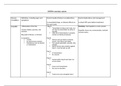
SYSTEM: excretory system
Disease Definition, including signs and Dental (medical history) considerations Dental implications and management
/Condition symptoms
ie associated drugs, or disease effects on Ie check INR score before treatment
the oral cavity
Hepatitis Inflammation of the liver. Hep A: Dentistry- Viral hepatitis is a main concern.
Transmitted via faeco-oral route, but
Causes malaise, jaundice, and can also be transmitted via saliva or Hepatitis viruses are communicable, maintain
anorexia sexually.
Little risk of transmission in properly immune status.
May lead to fibrosis, or cirrhosis. carried out dental procedures.
Is caused by Hep B:
Viruses Serious and can lead to cirrhosis,
An autoimmune reaction cancer, liver failure and death.
Substances such as alcohol Can spread parentally, sexually, dirty
or medications needles.
Hep B vaccine also protects against
Hep D- must be kept up with.
Hep C:
IV transmission
No vaccine
Hep D:
Carried within Hep B and does not
survive alone.
Hep E:
Faceo-oral transmission
Not seen in dentistry
Hep G:
Tends to be seen alongside Hep C
, Jaundice Common in newborns. Liver disease can lead to bleeding tendency
Normally revolves unless there is an Also can cause drug tolerances, particularly
underlying factor. paracetamol.
Often a sign of liver disease/ damage Remember the link between alcohol and liver
as it is caused by impairment of the function, chronic alcohol abusers are likely to
bilirubin breakdown by the liver and have hepatic dysfunction.
its concentration rises in the
bloodstream.
Bilirubin is a breakdown
product of haeme, normally
collected in the gall bladder
and excreted by the bile
duct.
Responsible for the
colouration of urine, faeces
and bruises.
Blood The liver fails to synthesise Liver disease can lead to bleeding tendency
coagulation substances needed for blood
defects clotting. Also can cause drug tolerances, particularly
paracetamol.
Platelet production is impaired,
purpura and bleeding may occur. Remember the link between alcohol and liver
function, chronic alcohol abusers are likely to
have hepatic dysfunction.
Metabolism Drug metabolism: any drug that is Liver disease can lead to bleeding tendency
introduced to the body must be
eliminated by either metabolised or Also can cause drug tolerances, particularly
excreted.
Disease Definition, including signs and Dental (medical history) considerations Dental implications and management
/Condition symptoms
ie associated drugs, or disease effects on Ie check INR score before treatment
the oral cavity
Hepatitis Inflammation of the liver. Hep A: Dentistry- Viral hepatitis is a main concern.
Transmitted via faeco-oral route, but
Causes malaise, jaundice, and can also be transmitted via saliva or Hepatitis viruses are communicable, maintain
anorexia sexually.
Little risk of transmission in properly immune status.
May lead to fibrosis, or cirrhosis. carried out dental procedures.
Is caused by Hep B:
Viruses Serious and can lead to cirrhosis,
An autoimmune reaction cancer, liver failure and death.
Substances such as alcohol Can spread parentally, sexually, dirty
or medications needles.
Hep B vaccine also protects against
Hep D- must be kept up with.
Hep C:
IV transmission
No vaccine
Hep D:
Carried within Hep B and does not
survive alone.
Hep E:
Faceo-oral transmission
Not seen in dentistry
Hep G:
Tends to be seen alongside Hep C
, Jaundice Common in newborns. Liver disease can lead to bleeding tendency
Normally revolves unless there is an Also can cause drug tolerances, particularly
underlying factor. paracetamol.
Often a sign of liver disease/ damage Remember the link between alcohol and liver
as it is caused by impairment of the function, chronic alcohol abusers are likely to
bilirubin breakdown by the liver and have hepatic dysfunction.
its concentration rises in the
bloodstream.
Bilirubin is a breakdown
product of haeme, normally
collected in the gall bladder
and excreted by the bile
duct.
Responsible for the
colouration of urine, faeces
and bruises.
Blood The liver fails to synthesise Liver disease can lead to bleeding tendency
coagulation substances needed for blood
defects clotting. Also can cause drug tolerances, particularly
paracetamol.
Platelet production is impaired,
purpura and bleeding may occur. Remember the link between alcohol and liver
function, chronic alcohol abusers are likely to
have hepatic dysfunction.
Metabolism Drug metabolism: any drug that is Liver disease can lead to bleeding tendency
introduced to the body must be
eliminated by either metabolised or Also can cause drug tolerances, particularly
excreted.


