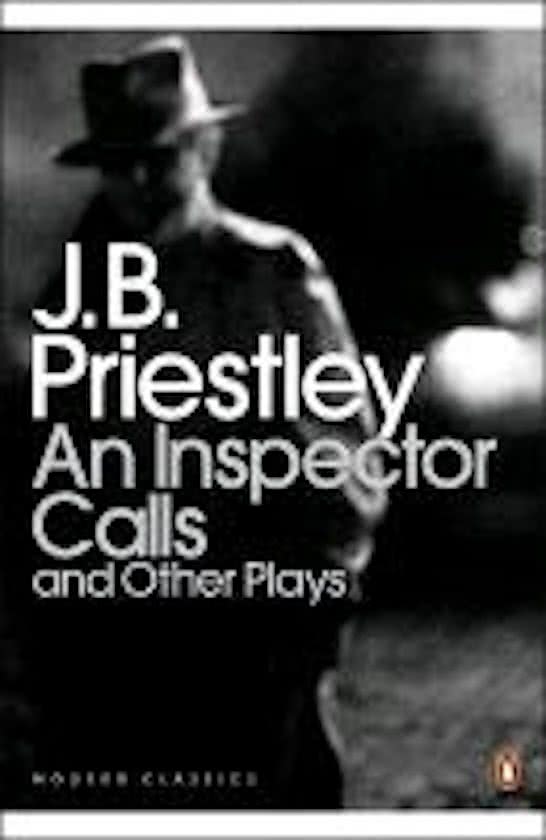
J B Priestley wrote An Inspector Calls after the First World War and like much of his work
contains controversial, politically charged messages.
J B Priestley
John Boynton Priestley was born in
Yorkshire in 1894. He knew early on that
he wanted to become a writer, but
decided against going to university as he
thought he would get a better feel for the
world around him away from academia.
Instead, he became a junior clerk with a
local wool firm at the age of 16.
J B Priestley
When the First World War broke out, Priestley joined the infantry and only just escaped
death on a number of occasions. After the war, he gained a degree from Cambridge
University, then moved to London to work as a freelance writer. He wrote successful
articles and essays, then published the first of many novels, The Good Companions, in 1929.
He wrote his first play in 1932 and went on to write 50 more. Much of his writing was
ground-breaking and controversial. He included new ideas about possible parallel universes
and strong political messages.
During the Second World War he broadcast a massively popular weekly radio programme
which was attacked by the Conservatives as being too left-wing. The programme was
eventually cancelled by the BBC for being too critical of the Government.
He continued to write into the 1970s, and died in 1984.
Political views
During the 1930's Priestley became very concerned about the consequences of social
inequality in Britain, and in 1942 Priestley and others set up a new political party, the
Common Wealth Party, which argued for public ownership of land, greater democracy, and
a new 'morality' in politics. The party merged with the Labour Party in 1945, but Priestley
was influential in developing the idea of the Welfare State which began to be put into place
at the end of the war.
He believed that further world wars could only be avoided through cooperation and mutual
respect between countries, and so became active in the early movement for a United
Nations. And as the nuclear arms race between West and East began in the 1950s, he
helped to found CND, hoping that Britain would set an example to the world by a moral act
of nuclear disarmament.
1912 to 1945
This was the period of the Russian Revolution, two appalling world wars, the Holocaust and
the Atom Bomb.
contains controversial, politically charged messages.
J B Priestley
John Boynton Priestley was born in
Yorkshire in 1894. He knew early on that
he wanted to become a writer, but
decided against going to university as he
thought he would get a better feel for the
world around him away from academia.
Instead, he became a junior clerk with a
local wool firm at the age of 16.
J B Priestley
When the First World War broke out, Priestley joined the infantry and only just escaped
death on a number of occasions. After the war, he gained a degree from Cambridge
University, then moved to London to work as a freelance writer. He wrote successful
articles and essays, then published the first of many novels, The Good Companions, in 1929.
He wrote his first play in 1932 and went on to write 50 more. Much of his writing was
ground-breaking and controversial. He included new ideas about possible parallel universes
and strong political messages.
During the Second World War he broadcast a massively popular weekly radio programme
which was attacked by the Conservatives as being too left-wing. The programme was
eventually cancelled by the BBC for being too critical of the Government.
He continued to write into the 1970s, and died in 1984.
Political views
During the 1930's Priestley became very concerned about the consequences of social
inequality in Britain, and in 1942 Priestley and others set up a new political party, the
Common Wealth Party, which argued for public ownership of land, greater democracy, and
a new 'morality' in politics. The party merged with the Labour Party in 1945, but Priestley
was influential in developing the idea of the Welfare State which began to be put into place
at the end of the war.
He believed that further world wars could only be avoided through cooperation and mutual
respect between countries, and so became active in the early movement for a United
Nations. And as the nuclear arms race between West and East began in the 1950s, he
helped to found CND, hoping that Britain would set an example to the world by a moral act
of nuclear disarmament.
1912 to 1945
This was the period of the Russian Revolution, two appalling world wars, the Holocaust and
the Atom Bomb.