Mental Hesi Exam Questions & Answers.
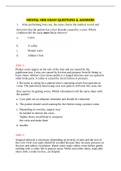
MENTAL HESI EXAM QUESTIONS & ANSWERS 1. After performing foot care, the nurse checks the medical record and discovers that the patient has a foot disorder caused by a virus. Which condition did the nurse most likely observe? a. Corns b. A callus c. Plantar warts d. Athlete’s foot ANS: C Plantar warts appear on the sole of the foot and are caused by the papillomavirus. Corns are caused by friction and pressure from ill-fitting or loose shoes. Athlete’s foot (tinea pedis) is a fungal infection and can spread to other body parts. A callus is caused by local friction or pressure. 2.The nurse is caring for a patient who is reporting severe foot pain due to corns. The patient has been using oval corn pads to self-treat the corns, but they seem to be getting worse. Which information will the nurse share with the patient? a. Corn pads are an adequate treatment and should be continued. b. The patient should avoid soaking the feet before using a pumice stone. c. Depending on severity, surgery may be needed to remove the corns. Tighter shoes would help to compress the corns and make them d. smaller. ANS: C Surgical removal is necessary, depending on severity of pain and the size of the corn. Oval corn pads should be avoided because they increase pressure on the toes and reduce circulation. Warm water soaks soften corns before gentle rubbing with a callus file or pumice stone. Wider and softer shoes, especially shoes with a wider toe box, are helpful. 3.The patient is diagnosed with athlete’s foot (tinea pedis). The patient says that he is relieved because it is only athlete’s foot, and it can be treated easily. Which information should the nurse consider when formulating a response to the patient? a. Contagious with frequent recurrences b. Helpful to air-dry feet after bathing c. Treated with salicylic acid d. Caused by lice ANS: A Athlete’s foot spreads to other body parts, especially the hands. It is contagious and frequently recurs. Drying feet well after bathing and applying powder help prevent infection. It is caused by a fungus, not lice, and is treated with applications of griseofulvin, miconazole, or tolnaftate. Plantar wars are treated with salicylic acid or electrodesiccation. 4.When assessing a patient’s feet, the nurse notices that the toenails are thick and separated from the nail bed. What does the nurse most likely suspect is the cause of this condition? a. Fungi b. Friction c. Nail polish d. Nail polish remover ANS: A Inflammatory lesions and fungus of the nail bed cause thickened, horny nails that separate from the nail bed. Ask women whether they frequently polish their nails and use polish remover because chemicals in these products cause excessive nail dryness. Friction and pressure from ill-fitting or loose shoes causes keratosis (corns). It is seen mainly on or between toes, over bony prominences. 5.The nurse is providing education about the importance of proper foot care to a patient who has diabetes mellitus. Which primary goal is the nurse trying to achieve? a. Prevention of plantar warts b. Prevention of foot fungus c. Prevention of neuropathy d. Prevention of amputation ANS: D Foot ulceration is the most common single precursor to lower extremity amputations among persons with diabetes. Prevention of plantar warts and foot fungus are important but not the primary goal. Neuropathy is a degeneration of the peripheral nerves usually due to poor control of blood glucose levels; it is not a direct result of foot care. 6.The nurse is providing oral care to an unconscious patient and notes that the patient has extremely bad breath. Which term will the nurse use when reporting to the oncoming shift? a. Cheilitis b. Halitosis c. Glossitis d. Dental caries ANS: B Halitosis is the term for “bad breath.” Cheilitis is the term for cracked lips. Dental caries are cavities in the teeth and could be a cause of the halitosis. Glossitis is the term for inflamed tongue. 7.The nurse is caring for a patient with diabetes. Which task will the nurse assign to the nursing assistive personnel? a. Providing nail care b. Teaching foot care c. Making an occupied bed d. Determining aspiration risk
Document information
- Uploaded on
- March 8, 2022
- Number of pages
- 14
- Written in
- 2021/2022
- Type
- Exam (elaborations)
- Contains
- Questions & answers